Taipei, Taiwan (CNA) – The tech industry has siphoned off a large number of science and engineering teachers, prompting the Ministry of Education (MOE) to propose amending regulations. Professionals with over six years of industry experience, after completing an 8-credit educational professional course, would be eligible to serve as specialized and technical teachers in senior high and vocational schools. Directors of county and city education bureaus have suggested extending this policy to junior high schools, and Minister of Education Cheng Ying-yao has indicated that this proposal is open for discussion.
Taiwan's tech industry has a high demand for talent, leading many science and engineering teachers and teacher-training students to abandon their teaching careers and seek employment in science parks. The MOE will amend the "Regulations Governing the Appointment of Specialized and Technical Teachers in Senior High Schools" in 2025. A new category, "Specialized Subjects," will be added, encompassing "general subjects that are difficult to recruit and require strengthened cultivation," such as physics and chemistry in general high schools. Under certain conditions (e.g., holding a bachelor's degree and completing 8 educational credits), these individuals can also be appointed under this regulation, thereby attracting industry talent to teach.
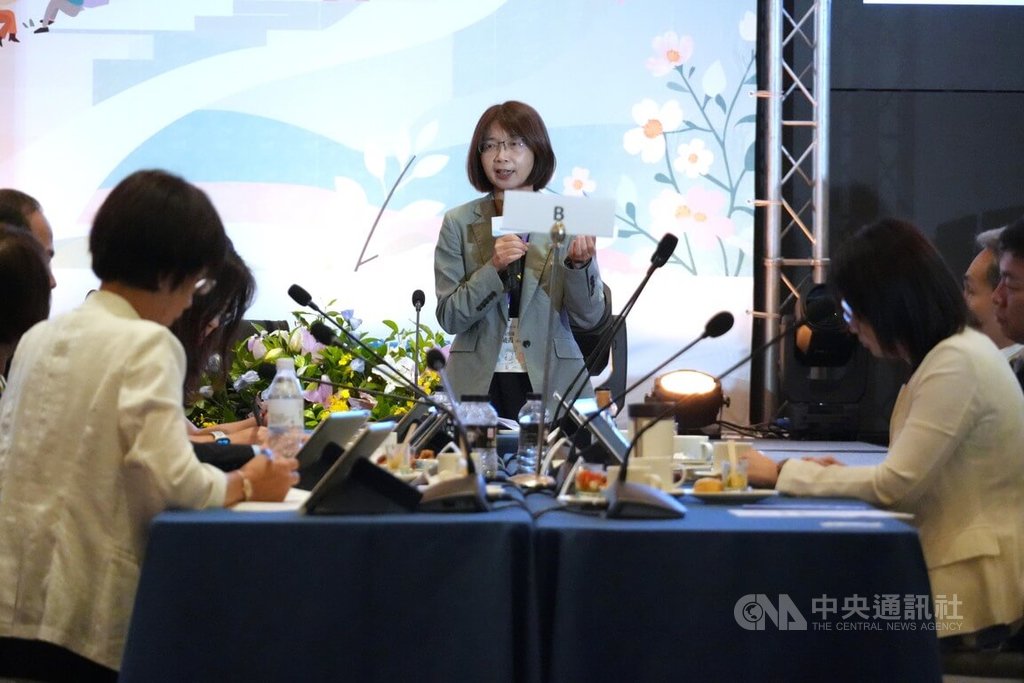
Today, the MOE convened the 2026 National Directors of Education Bureaus Meeting in Hsinchu County. During the breakout session, county and city representatives, facing the increasingly severe "teacher shortage," proposed further extending the aforementioned system, which applies to high schools, "downward" to junior high schools to attract individuals with industry experience to become teachers.
Cheng Ying-yao stated that Taiwan cultivates more teachers than the demand, but recently, due to the booming industry demand, many trained teachers have gone to the tech industry. The aforementioned system is a way to bring these individuals with industry experience back to schools to contribute their expertise.
Cheng Ying-yao said that in the past, some educational groups worried that this move would lower the standard of teachers, "but this is an overestimation." Most of these talents hold master's degrees or higher and have extensive professional experience after years of industry immersion. He is optimistic about the proposal from the county and city education bureau directors and will further research it.
In addition, regarding the teacher shortage issue, Wu Hsiao-chia, Director-General of the MOE's Department of Teacher and Principal Education and Arts Education, added that starting in 2027, a master's degree program with public funding will be established to cultivate STEM (Science, Technology, Engineering, and Mathematics) teachers. The first year will offer 60 slots, with completion and placement within two years. Sixteen cities and counties, including New Taipei City and Tainan City, have already reserved slots, and the program will be continuously adjusted in the future.
Wu Hsiao-chia also mentioned that the revision of regulations is expected to be completed by the end of July. In the future, graduates of publicly funded teacher training programs who are unwilling to teach in remote areas will have to repay 1.5 times the public funding (previously, they had to repay the full amount without an increment), thereby strengthening the contractual responsibility of publicly funded students. (Edited by: Li Heng-shan) 20260708
Stand with facts, your every donation is a force to protect the freedom of the press
Download CNA's "One-Stop News" APP for real-time updates
The text, images, and audio on this website may not be reproduced, broadcast, publicly transmitted, or used without authorization.
FACT BOX
- Source: CNA (Central News Agency)
- Category: 政策