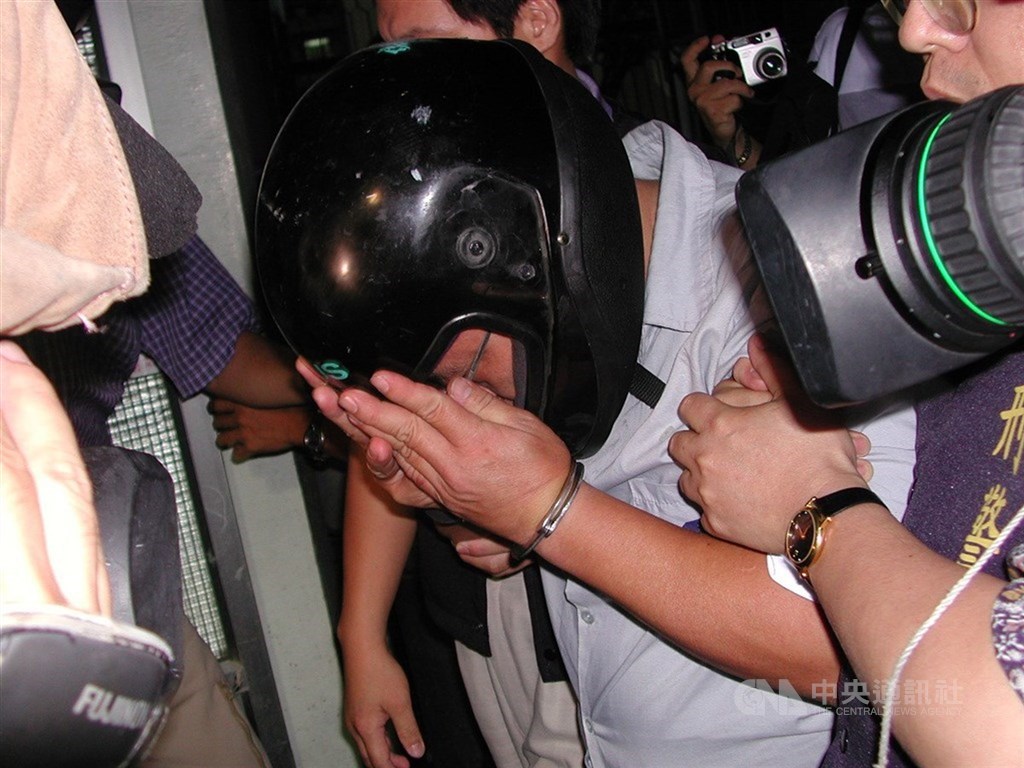
(CNA reporter Lin Chang-shun Taipei, July 9) Ouyang Rong, who was sentenced to death for kidnapping, murdering, dismembering, and discarding the body of a Kaohsiung construction magnate, had his death sentence finalized. The Prosecutor General filed a special appeal. The Supreme Court ruled that the final judgment violated legal procedures and today vacated the original death sentence. As Ouyang Rong passed away from illness in January of this year, the court declared the case moot.
Ouyang Rong, after becoming unemployed in 1999, met the general manager of a construction company surnamed Lu. Ms. Lu rented a storefront to Ouyang Rong for his business and lent him money monthly. However, Ms. Lu stopped providing financial support in 2003. Ouyang Rong was accused of murdering Ms. Lu at her home, dismembering her body, discarding it, and then calling the Lu family to demand ransom. He was arrested by the police.
In 2011, the Supreme Court upheld the ruling of the sixth retrial by the Kaohsiung Branch of the Taiwan High Court, finding that Ouyang Rong murdered and dismembered the victim for her property and demanded ransom. Ouyang Rong was sentenced to death and deprived of his civil rights for life for murder and discarding the body, and the case was finalized.
On September 20, 2024, the Constitutional Court issued "113 Constitutional Interpretation No. 8" regarding the death penalty. It ruled that the death penalty as the maximum punishment under the Penal Code is constitutional only when the crime is of the most serious nature and the criminal proceedings meet the most stringent constitutional due process requirements.
Following the "113 Constitutional Interpretation No. 8" ruling, the Supreme Prosecutors Office began reviewing cases and successively filed special appeals for death row inmates including Huang Chun-chi, Chen Yi-lung, Kuo Chun-wei, Wang Hung-wei, and Ouyang Rong.
During its review, the Supreme Prosecutors Office discovered procedural flaws in Ouyang Rong's finalized judgment, such as "no oral arguments in the third trial" and "lack of unanimous decision during deliberation." The prosecutor in charge reviewed the case files, confirmed these issues, and, based on the Constitutional Court's interpretation, determined that grounds for a special appeal existed. The then Prosecutor General Hsing Tai-chao filed a special appeal with the Supreme Court last year.
On January 25 of this year, 70-year-old Ouyang Rong, who was held at the Kaohsiung Second Prison under the Agency of Corrections, Ministry of Justice, passed away from illness. The Qiaotou District Prosecutors Office conducted an autopsy, determining the cause of death to be diabetic ketoacidosis, upper gastrointestinal bleeding, and acute kidney failure.
The Supreme Court ruled that the failure to conduct oral arguments in the finalized judgment at the time was inconsistent with the intent of "113 Constitutional Interpretation No. 8" and constituted a violation of legal procedures. Therefore, it vacated the death sentence today and, due to Ouyang Rong's death, declared the case moot. (Editor: Li Hsi-chang) 1150709
Stand with facts, your every contribution is a force to protect press freedom
Download CNA's "First Hand News" APP to get the latest news in real-time
This website's text, images, and videos may not be reproduced, broadcast, transmitted, or used without authorization.
FACT BOX
- Source: CNA (Central News Agency)
- Category: 法律