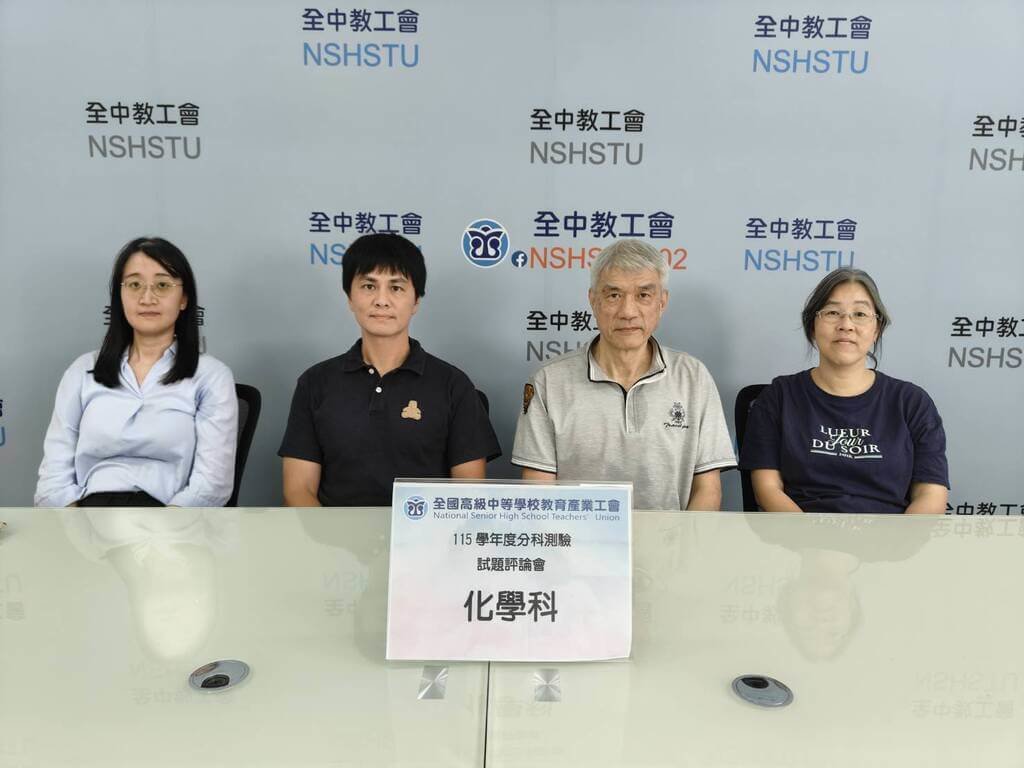
Central News (CNA reporter Chen Zhizhong, Taipei, July 13) The 115th Advanced Placement Chemistry Exam included questions on Metal-Organic Frameworks (MOFs), a concept awarded the 2024 Tang Prize and 2025 Nobel Prize in Chemistry, highlighting the connection between chemistry and contemporary scientific research.
American chemist Omar M. Yaghi developed a new synthesis method for generating materials using reticular chemistry, which can be applied to carbon capture, hydrogen and methane storage, and water collection in arid regions. He was awarded the 2024 Tang Prize for Sustainable Development and the 2025 Nobel Prize in Chemistry along with two other scientists.
Question 15 (multiple-choice) of the 115th Advanced Placement Chemistry Exam tested the concept of MOFs having a high surface area-to-mass ratio in their internal pores, giving them the potential to adsorb large amounts of various molecules. The question designed a scenario where zinc ions and phthalic acid can synthesize porous materials in an aqueous organic solvent, requiring students to identify the correct description.
The National Teachers' Association's problem-solving team noted that this year's questions seem to favor Nobel Prize-winning concepts, incorporating high school-level knowledge. In addition to MOFs, questions 24 and 25 covered the 2022 concept of 'click chemistry,' and questions 6 and 7 covered the 2016 concept of 'molecular machines.' As for the experimental questions, they were presented in a 'new bottle, old wine' format, testing classic experiments. Overall, the exam was well-designed.
The National Federation of Senior High School Education Unions' problem-solving team pointed out that the Nobel Prize-related questions demonstrate the connection between chemistry and contemporary scientific research. The difficulty level is similar to last year, leaning towards the challenging side, with a good level of discrimination. The proportion of experimental and investigative practical questions is high, emphasizing students' understanding of textbook knowledge, data analysis, and scientific reasoning abilities, rather than just memorization. (Editor: Huang Mingxi) 1150713
FACT BOX
- Source: CNA (Central News Agency)
- Category: Taiwan