(Central News Agency reporter Tseng I-Ning, Taipei, July 13) The Chung Lian edible oil scandal continues to escalate. The Ministry of Education announced today that a total of 1,380 schools across Taiwan had used cooking oil from three downstream suppliers of Chung Lian Oils. The Ministry is currently reviewing a policy to permanently disqualify any food supplier once publicly implicated in a major food safety incident, with implementation guidelines expected within one month.
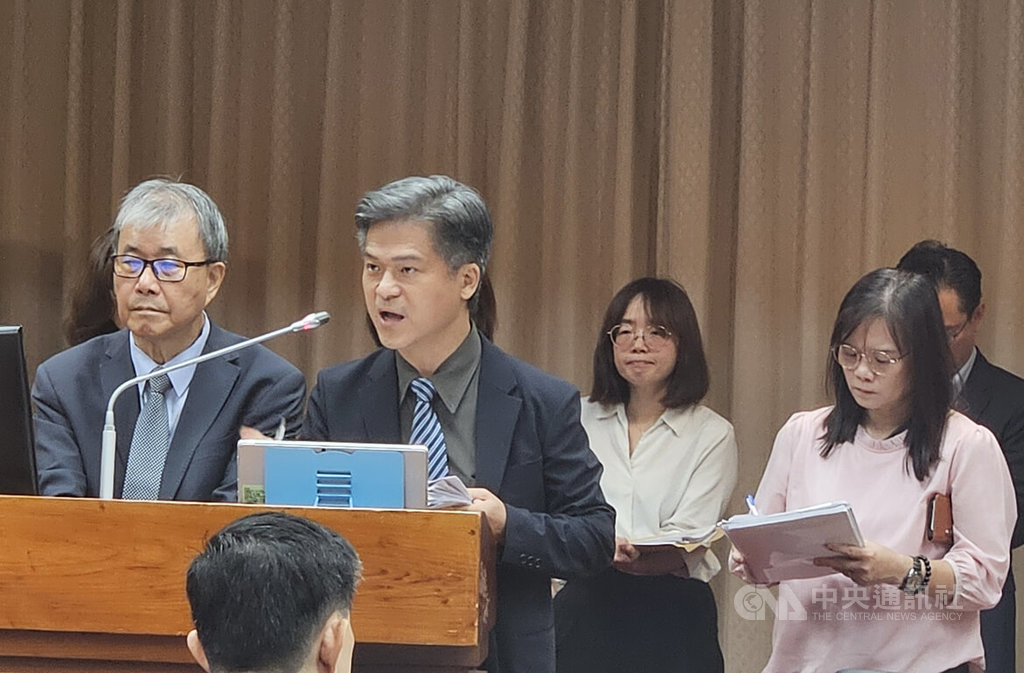
The Education and Culture Committee of the Legislative Yuan convened today, inviting Minister of Education Cheng Ying-yao, Deputy Minister of Health and Welfare Lin Ching-i, and Director Hsu Fu of the Executive Yuan's Food Safety Office, to deliver a special report on 'Campus Food Safety Oversight Mechanisms and Response Measures to the Carcinogenic Oil Incident,' followed by legislative questioning.
Democratic Progressive Party (DPP) legislator Chen Hsiu-pao questioned the risks associated with long-term reliance on a single type of cooking oil for school lunches. She urged the establishment of a flexible procurement mechanism, including periodic rotation of cooking oils, to diversify and mitigate food safety risks. She also pointed out that many public kindergartens now offer summer extended care services with meals, yet the campus food ingredient registration platform does not include summer meal data.
Minister Cheng Ying-yao responded that discussions on flexible oil usage and risk reduction could be held with local governments. He emphasized that any oil products under safety suspicion would not be allowed into schools until all concerns were resolved. Regarding summer extended care meals, he stated that local authorities would be reminded to ensure proper registration.
DPP legislator Kuo Yu-ching asked whether the Ministry had identified the number of schools using Chung Lian-related problematic oils and urged the creation of a high-risk supplier early-warning list for campus food providers to enable timely risk management.
Minister Cheng confirmed that, after a comprehensive review, 1,380 schools were found to have used oil from three downstream manufacturers of Chung Lian.
Director Peng Fu-yuan of the National Academy for Educational Research explained that the Ministry of Health and Welfare has proposed improvements to industry self-regulation mechanisms. The Ministry of Education is currently discussing with group meal providers to strengthen source-level management. He stated that suppliers publicly implicated in food safety violations in the education sector would be permanently banned: 'Once they are found guilty, they will never have another opportunity to supply schools.' The Ministry expects to finalize the implementation plan within one month, in coordination with the Ministry of Health and Welfare's review.
Kuomintang (KMT) legislator Lo Ting-wei raised concerns about whether the contaminated soybeans used to produce the problematic oil might have also been used in soy sauce, soy milk, or other soy products, or whether the soybean meal residue could have entered the animal feed supply chain, potentially creating additional undetected risks.
After the session, Deputy Minister Lin Ching-i told reporters from the Central News Agency that benzo[a]pyrene forms during oil processing and is not present in the manufacturing processes of soy sauce or other soy-based products. She added that soybean meal, the protein-rich residue after oil extraction, theoretically would not contain benzo[a]pyrene.
Regarding the five batches of oil currently under scrutiny, Lin stated that if legislators have concerns, further traceability investigations could be conducted to determine whether the same batch of soybeans was used in other products. However, she noted that the initial assessment suggests this is unlikely, and even if the same batch of soybeans were used in products like soy sauce, the same contamination issue would not arise. (Edited by Su Lung-chi) 1150713
FACT BOX
- Source: CNA (Central News Agency)
- Category: Taiwan