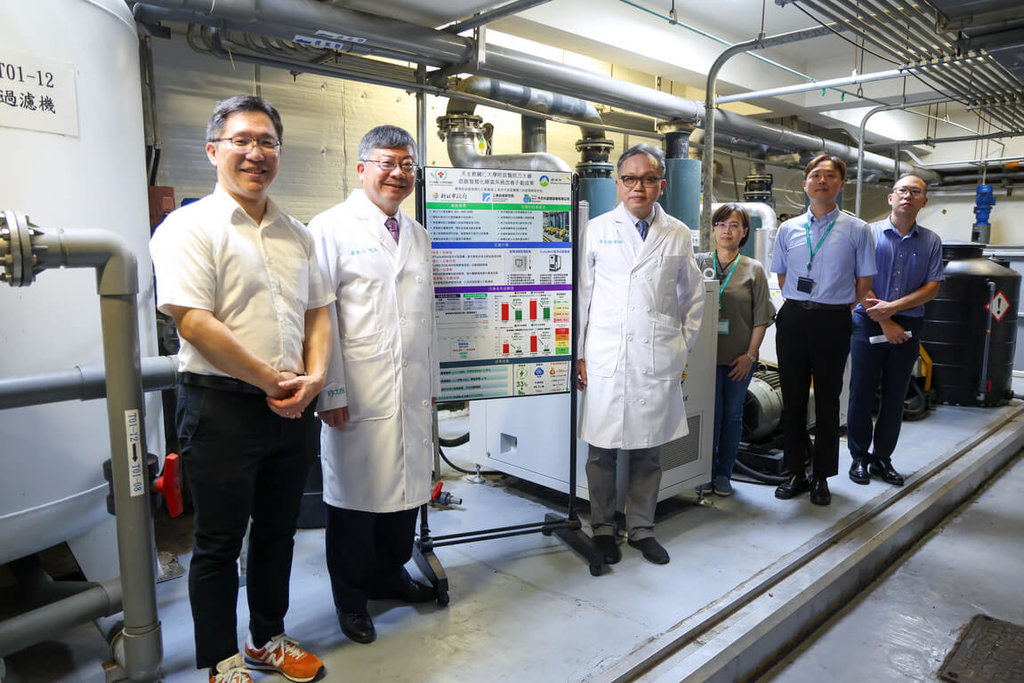
Fu Jen Catholic University Hospital announced today that, in response to global trends toward net-zero carbon emissions and sustainable development, it has completed the replacement of lobe blowers with aerofloat blowers and simultaneously introduced a smart aeration control system, establishing a low-carbon, intelligent wastewater treatment demonstration site.
In a press release, Hospital President Huang Jui-Jen stated, "Sustainability in hospitals goes beyond delivering quality healthcare—it must start from daily operations, implementing energy-saving and carbon-reduction measures in every aspect. Wastewater treatment, though an invisible infrastructure to the public, is a critical component in maintaining stable hospital operations."
He added that the replacement of lobe blowers with aerofloat blowers, along with the integration of a smart aeration control system, has not only effectively reduced energy consumption and carbon emissions but also improved wastewater treatment efficiency and equipment operating conditions. This achievement has been recognized as an Environmental Protection Administration-designated low-carbon, smart demonstration site, positioning the hospital as a key benchmark for low-carbon initiatives among medical institutions across Taiwan.
The hospital noted that the aeration system in wastewater treatment facilities is the most energy-intensive component, with blower power consumption accounting for over half of all mechanical equipment usage. The newly introduced high-efficiency aerofloat blowers, smart dissolved oxygen monitoring system, intelligent aeration control, and energy management system can automatically adjust aeration levels in real time based on biological tank oxygen demands. This prevents equipment from running at full speed for extended periods, significantly reducing energy consumption.
FACT BOX
- Source: CNA (Central News Agency)
- Category: Taiwan