By Central News Agency Reporter Su Ssu-Yun, Taipei, July 14
Recently, travelers have reported significant disruptions to their return trips due to typhoons, forcing them to extend their stays overseas unexpectedly. As many cannot provide proof of pre-paid expenses, the daily reimbursement cap of NT$2,000 for accommodation and transportation under travel inconvenience insurance is often insufficient to cover actual costs. The Financial Supervisory Commission (FSC) has directed the Property Insurance Association to interpret insurance contracts in favor of policyholders when disputes arise and to establish unified claims guidelines for insurers to follow.
Currently, property insurers in Taiwan offer not only travel accident insurance for personal protection but also personal overseas travel inconvenience insurance. Among these, "Trip Cancellation Insurance" and "Trip Modification Insurance" operate on a reimbursement basis (actual expense coverage), following the principle of indemnity.
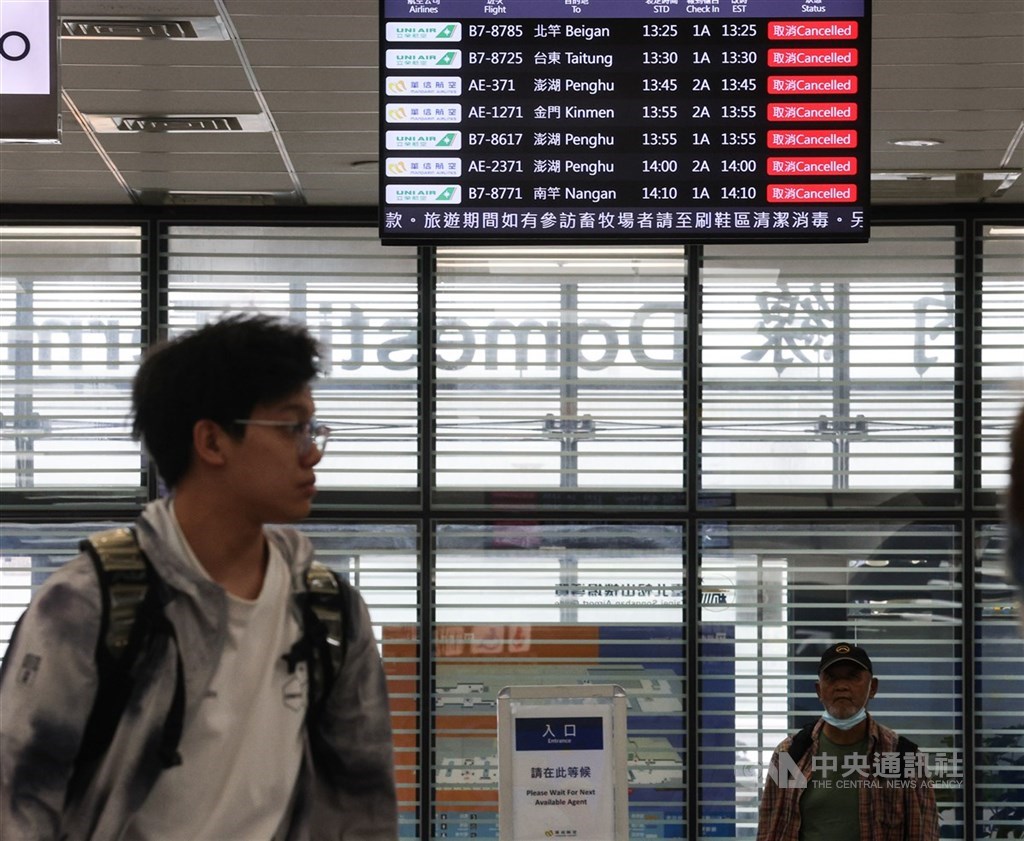
Media reports indicate that travelers returning to Taiwan have encountered typhoons, requiring them to stay an additional one to two nights abroad. However, because the accommodation is arranged last-minute, they often lack proof of original pre-paid fees or refunds. As a result, they fall under the category with a daily reimbursement cap of NT$2,000 for combined accommodation and transportation—amounts that frequently fail to cover actual expenses.
Tsai Huo-Yen, Deputy Director of the FSC’s Insurance Bureau, explained that Trip Modification Insurance under overseas travel inconvenience coverage follows a reimbursement model based on actual expenses incurred. If a traveler modifies their itinerary due to war, natural disasters, or other unforeseen events at the destination or departure point, the insurer covers additional transportation or accommodation costs incurred.
Tsai noted that the reimbursable amount is calculated as actual expenses minus any refunds received from hotels, transportation providers, or travel agencies. The maximum payout is capped at 120% of the originally scheduled transportation or daily accommodation cost. However, if travelers cannot provide proof of pre-payment or refunds, the daily combined limit for transportation and accommodation is NT$2,000.
Tsai further emphasized that the Insurance Bureau has instructed the Property Insurance Association to follow Article 54, Paragraph 2 of the Insurance Act, which states that insurance contract interpretation must reflect the true intent of the parties and should not be strictly bound by wording. In cases of ambiguity, interpretations must favor the insured. The Association will therefore develop standardized claims guidelines for industry-wide compliance.
Additionally, media have raised concerns about certain life insurance policies that only activate partial benefits starting from the second policy year, potentially creating a coverage gap. The FSC recently stated that such policies are classified as filed products and will require insurers to provide explanations. A comprehensive review will be conducted, and if issues are found, the FSC may order suspensions or other administrative penalties.
Tsai stated that companies are currently being asked to explain individual cases, and administrative procedures are still ongoing. Any findings or violations will be made public, and penalties will be imposed if necessary. (Edited by Pan Yi-Ching) 1150714
FACT BOX
- Source: CNA (Central News Agency)
- Category: Taiwan