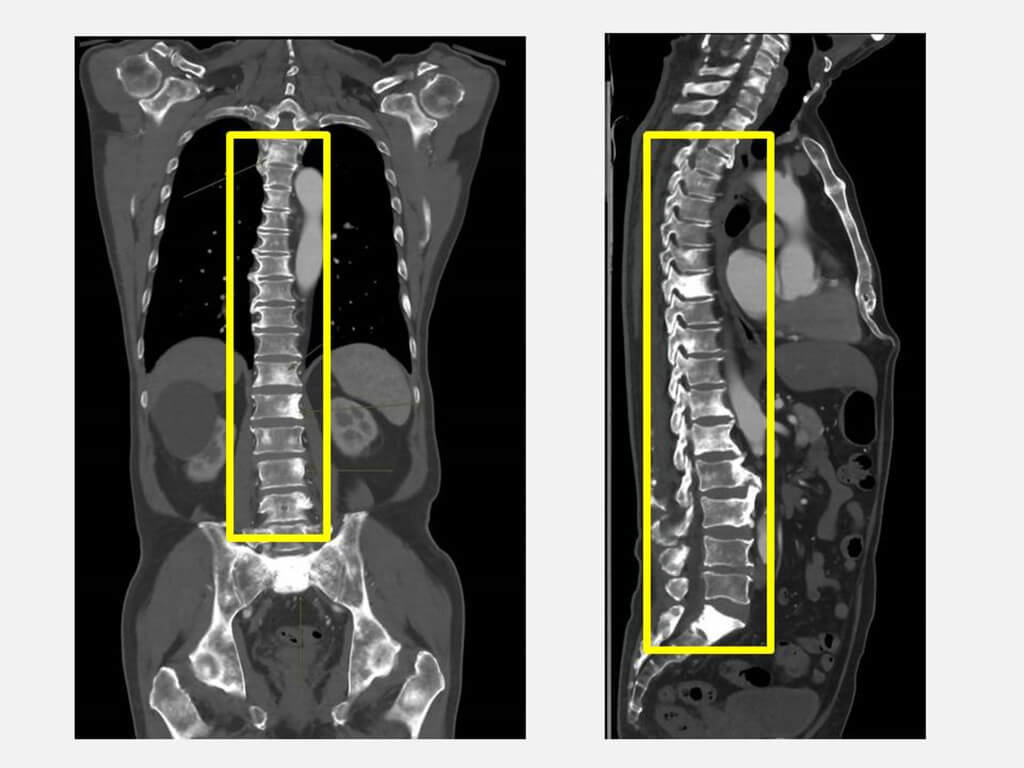
Ren-Ai Chang Gung Alliance Hospital (Dali Ren-Ai Hospital) today issued a press release stating that a 70-year-old man, Mr. Yu, had been suffering from severe back pain for several months, significantly impacting his quality of life. He initially attributed it to age-related spinal degeneration or muscle soreness, relying on painkillers and hot compresses for relief, and thus did not actively seek medical attention. During a recent health check-up at the hospital, Mr. Yu was found to have significantly abnormal prostate-specific antigen (PSA) and alkaline phosphatase (ALK-P) levels. He was then referred to the urology outpatient clinic, where he was diagnosed with prostate cancer with diffuse bone metastasis. After treatment, his condition is currently under control. Dr. Liu Wei-yang, Director of Urology at Dali Ren-Ai Hospital, explained that prostate cancer is a common cancer among Taiwanese men. In its early stages, it usually has no obvious symptoms. Many patients often seek medical attention only when they experience difficulty urinating, frequent nighttime urination, hematuria, or, like Mr. Yu, bone pain, at which point the disease is often already in an advanced stage. Dr. Liu stated that prostate cancer is more prevalent in men over 50, with an even higher risk for those with a family history. PSA is the most representative screening tool, and it is recommended that men over 50 undergo annual testing. If they belong to a high-risk group (e.g., a direct relative has had the disease), testing should begin at age 45. Regarding the treatment of prostate cancer bone metastasis, Dr. Liu pointed out that the primary first-line treatment is hormonal therapy (male hormone suppression), combined with new-generation targeted hormonal drugs or chemotherapy. At the same time, bone-protective drugs are administered for bone metastasis, or radiation therapy is used to relieve bone pain and improve quality of life. Huang Pei-ju, Director of the Health Management Center at Dali Ren-Ai Hospital, suggested that middle-aged and elderly men should develop the habit of regular health check-ups, especially not neglecting PSA testing. If symptoms such as frequent urination, nighttime urination, hematuria, or persistent bone pain occur, they should seek medical examination as soon as possible. (Editor: Chang Ming-kun) 1150407
FACT BOX
- Source: CNA (Central News Agency)
- Category: Taiwan