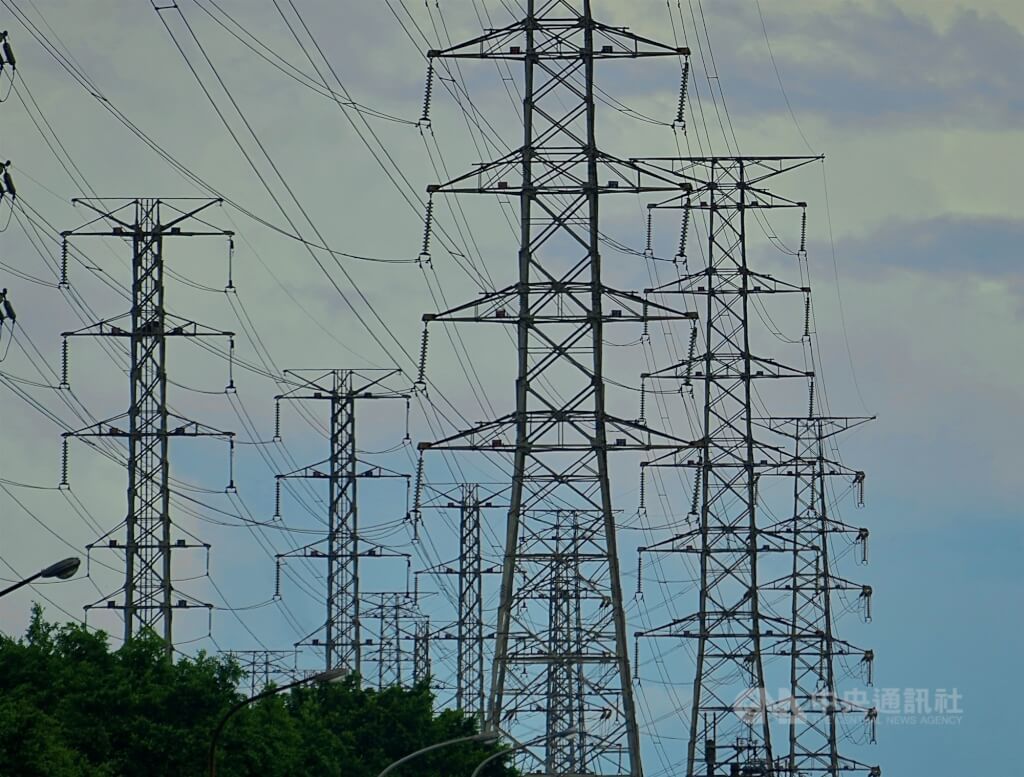
(CNA, Taipei, May 21, by reporter Pan Tzu-yu) The ongoing conflict in the Middle East is pressuring some traditional industries, but it has not affected the artificial intelligence (AI) boom. The Taiwan Research Institute (TRI) announced today that the April electricity prosperity indicator continued to flash a "red light," representing a booming economy. Due to the effective support of structural AI demand for the domestic economy, the economic growth rate for April is estimated at 10.3%. The TRI pointed out that despite disruptions from the Middle East conflict, AI demand continues to drive domestic industrial electricity consumption. The nationwide industrial electricity consumption for high-voltage and above users grew by 3.27% year-on-year, and the electricity prosperity indicator continued to show a booming red light, marking the 12th consecutive month of red lights since April of last year (with a combined indicator for January and February). Looking at industry performance, the semiconductor industry is driven by demand for AI model training, high-performance computing (HPC), and cloud data center expansion. Advanced process and advanced packaging capacities like CoWoS remain fully loaded, and wafer foundries, IC design, and memory supply chains are maintaining high production momentum. Simultaneously, countries are accelerating their deployment of AI infrastructure and sovereign AI, further boosting long-term semiconductor demand. The TRI believes that even with rising energy and logistics costs from the escalating Middle East conflict, the semiconductor supply chain's operations remain stable, demonstrating high industry resilience and a continued strong expansionary trend. In contrast, traditional industries are relatively conservative. The TRI noted that the Middle East conflict has pushed up energy prices and transportation costs. Under pressure from oversupply, traditional industries such as chemical materials and steel have shown negative growth in electricity consumption. The electricity prosperity indicator for the chemical materials industry remains a "blue light" for recession, with the sector still in a bottoming-out and adjustment phase. The steel industry's indicator is a "yellow-blue light." Considering the domestic and international economic situation, the TRI believes that Taiwan's economy can grow steadily despite external disturbances like the Middle East conflict, with the key being that AI demand has become a crucial force supporting the domestic economy and exports. However, the conflict's impact on global supply chains and energy markets adds to concerns about inflation and slowing economic growth, requiring close monitoring of future developments. It is worth noting that when looking only at Taipower's data for high-voltage and above electricity consumption, affected by the increased proportion of green energy use by enterprises, the overall industrial electricity consumption in April increased by 0.79% annually, while manufacturing electricity consumption decreased by 0.3% annually. The TRI pointed out that driven by ESG and green electricity procurement needs, the semiconductor industry is gradually increasing its use of green power. With the rapid growth of renewable energy generation, the scope of industrial electricity use is no longer limited to electricity sold by Taipower and self-generation but must also include renewable energy wheeling and direct supply to fully reflect the actual electricity consumption structure. (Editor:
FACT BOX
- Source: CNA (Central News Agency)
- Category: 產業