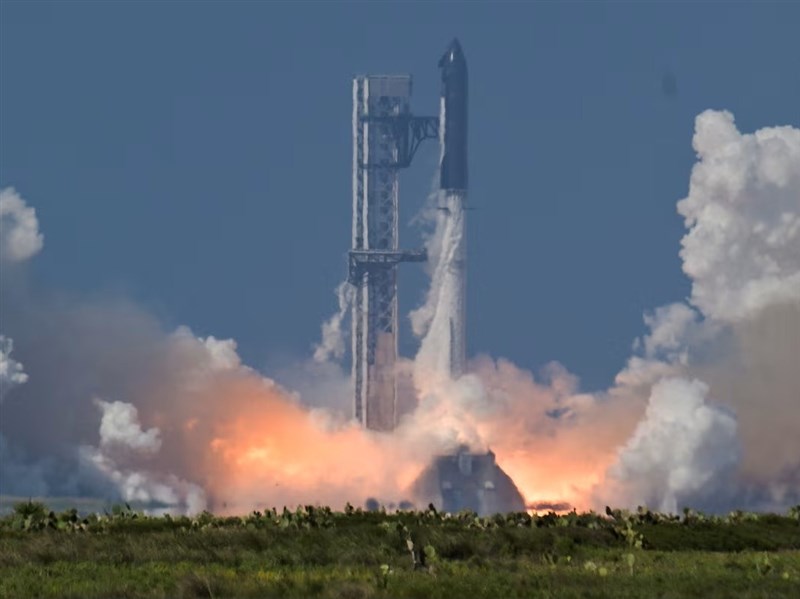
After a delay due to technical issues, SpaceX's latest version of the Starship rocket successfully pierced the Texas sky and splashed down in the Indian Ocean. The massive V3 rocket launched just after 5:30 PM local time, marking a highly anticipated test flight as Elon Musk's company prepares for a high-profile IPO. The 'Super Heavy' booster separated as expected, but failed to complete the 'boost-back burn.' The booster fell back to Earth in an uncontrolled state into the Gulf of Mexico. SpaceX did not plan to recover the booster but hoped for a precise return. During the flight, one engine failed, causing a deviation in the trajectory, which was corrected by extending the burn time of the remaining five engines. SpaceX employees cheered as the spacecraft deployed mock satellites. This flight demonstrates progress in SpaceX's ambitious plans and NASA's Artemis program. The new design is larger than its predecessor, standing over 124 meters tall. SpaceX is committed to making Starship a fully reusable system.
FACT BOX
- Source: CNA (Central News Agency)
- Category: Technology/Business
- Organizations: SpaceX / NASA