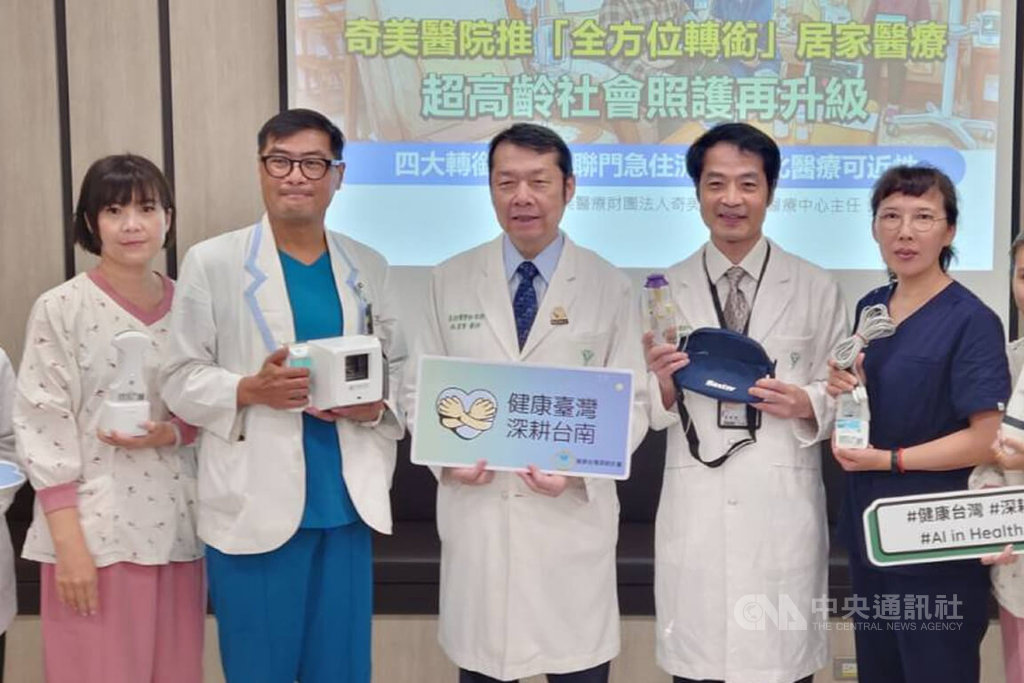
Central News Agency, Tainan, May 26. Chi Mei Medical Center has been promoting home-based medical care for nearly a decade, establishing a multidisciplinary team of nearly 50 physicians across 14 specialties. Currently, the hospital has surpassed 2,000 active home-care cases and nearly 500 acute home-care cases, with the administration hoping to become a model for medical transformation in a super-aged society.
During a health education event today, Chi Mei Medical Center Superintendent Lin Hung-jung stated that the primary value of home-based care lies in addressing gaps that the traditional medical system cannot cover. Many elderly patients face difficulties such as being unable to travel, lacking caregivers, or losing medical support after discharge. The hospital has long supported home-based care, successfully bringing outpatient and inpatient services directly to patients' homes.
Lin noted that Chi Mei has established a 'comprehensive transition home-care framework.' A dedicated transition nurse serves as a single point of contact, helping patients and families quickly access resources. This includes referrals after outpatient assessments, pre-discharge care planning, initiating home care directly from the emergency room, and direct applications from families, all aimed at ensuring patients receive care as early as possible.
Huang Chien-cheng, Director of the Integrated Medical Center at Chi Mei, explained that home-based care allows patients who prefer not to be hospitalized to receive appropriate care at home, while also alleviating congestion in emergency rooms and reducing the pressure on inpatient bed availability. The team currently spans 14 specialties, allowing for cross-departmental consultations and support. Certain invasive procedures and minor surgeries can even be performed in the patient's home.
He stated that the hospital's home-care capacity leads the nation. Under the current National Health Insurance system, home-based care does not significantly boost hospital revenue, so Chi Mei has long treated it as a 'mission,' encouraging medical staff participation through stipends.
Huang pointed out that with support from the 'Healthy Taiwan' initiative, the hospital hopes to further integrate medical and home-based services, serving as a key demonstration for healthcare transformation in a super-aged society.
FACT BOX
- Source: CNA (Central News Agency)
- Category: Healthcare Policy & Hospital Service