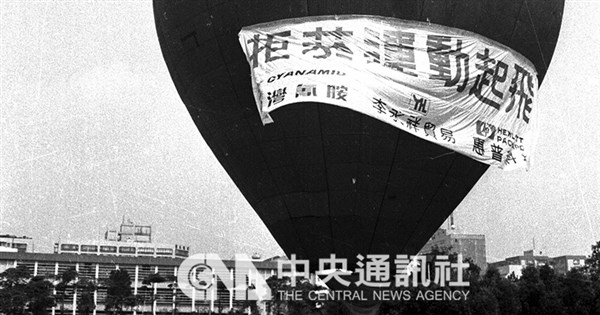
Starting June 1, the Ximending commercial district will implement a total smoking ban. For Taiwan today, smoking bans in public places have become part of daily life, but compared to the 1980s, the concept of "refusing secondhand smoke" was still quite novel. In 1987, Taiwan opened its market to foreign cigarette imports. Foreign tobacco companies entered the market with massive marketing budgets, ushering in a "golden age" of cigarette advertising and promotions. Scenes of people smoking were ubiquitous on the streets and in film and television works. On June 1 of that same year, a giant hot air balloon rose into the Taipei sky. An anti-smoking campaign initiated by the John Tung Foundation took place in the plaza in front of the Sun Yat-sen Memorial Hall. As the balloon slowly ascended, the words "Anti-smoking movement takes off" drifted into the sky. The event was lively, with celebrities Sun Yueh and Feng Fei-fei riding the balloon together. The two shouted, "The anti-smoking movement starts today!" and proceeded to scatter anti-smoking flyers and stickers from the basket. "We have the right to refuse secondhand smoke" thus became the most important demand of the anti-smoking movement at the time. Sun Yueh publicly stated that when facing smokers, one should not remain silent out of embarrassment, but should have the courage to fight for one's rights. Through years of promotion by the John Tung Foundation and various sectors, the "Tobacco Hazards Prevention Act" was enacted in 1997. The regulations stipulated a total smoking ban in enclosed public transport and small venues, required designated smoking areas in large public venues, and prohibited smoking for those under 18. Looking back at this simple promotional event, it actually marked a significant shift in Taiwan's public health awareness, allowing "refusing secondhand smoke" to evolve from a mere slogan into an important norm affecting daily life.
FACT BOX
- Source: CNA (Central News Agency)
- Category: feature