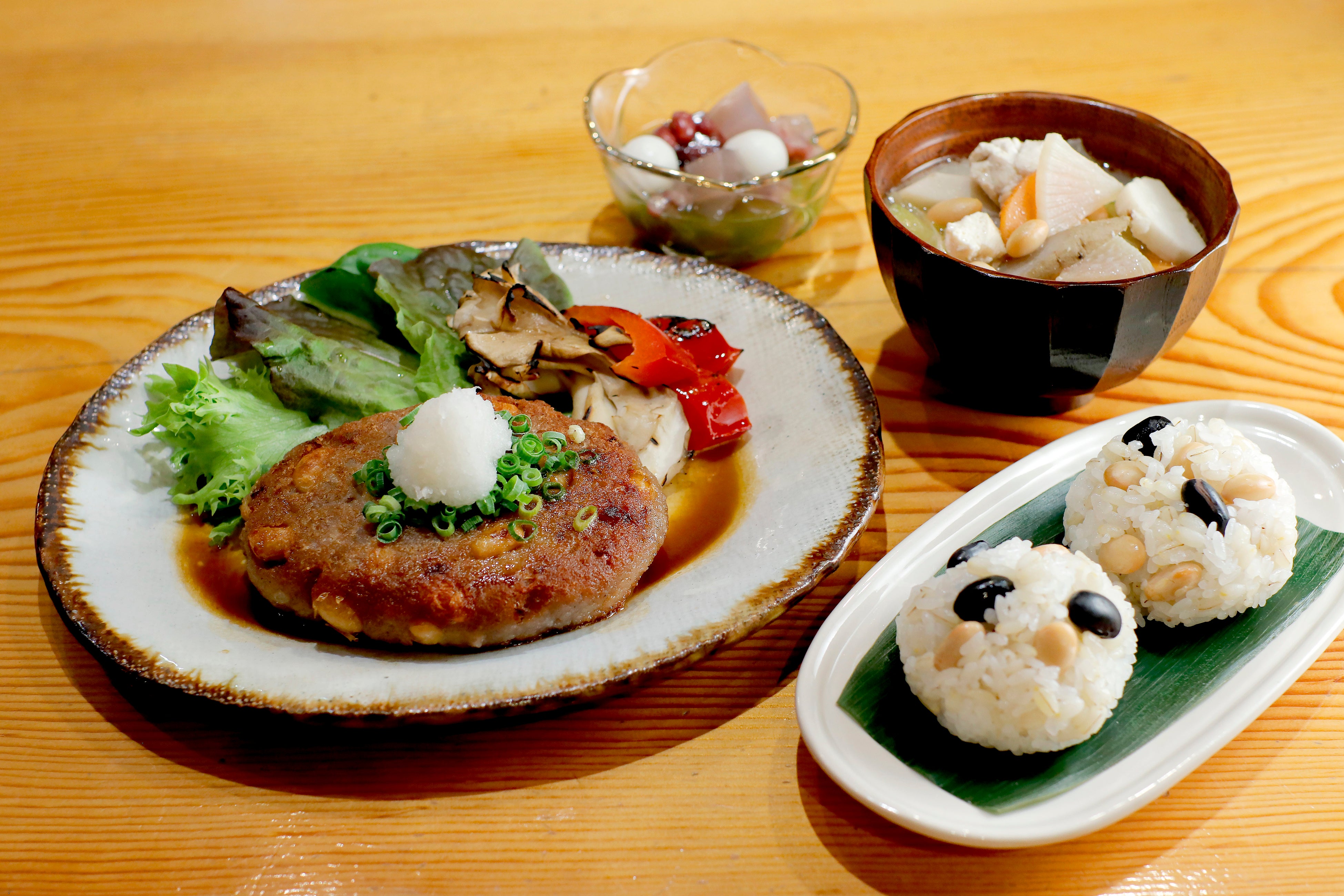
Maruyanagi Oguraya Co., Ltd. (Higashinada-ku, Kobe; President & CEO: Yuji Yanagimoto), a manufacturer of steamed beans, boiled beans, and seasoned simmered dishes, will jointly host a 'Parent-Child Cooking Class' with Osaka Gas Network Co., Ltd. (Chuo-ku, Osaka; President & CEO: Shinichi Ueda) on July 20, 2026 (Monday, national holiday). The event will take place at 'hu+g MUSEUM' (hereinafter 'Hug Museum'), a showroom dedicated to food and living spaces. This event is part of the 'Let’s Enjoy Japanese Flavor! – A National Food Movement to Connect the Heart of Japan' (abbreviated as 'Tanoshimi Project'), a public-private initiative promoted by the Ministry of Agriculture, Forestry and Fisheries. Maruyanagi and Osaka Gas Network aim to help families enjoyably learn about the charm of traditional Japanese cuisine and ingredients, and experience their deliciousness and importance through cooking.
Overview of the 'Parent-Child Cooking Class'
Chef Naoya Ueno of Kappo 'Genzai'
This cooking class, themed 'Future Meals in 2050', will explore how traditional Japanese ingredients such as soybeans, mochi barley, kelp, and root vegetables can help save the planet. Participants will learn in a fun and engaging way about the connections between food, health, and the global environment. On the day, Michelin-recognized chef Naoya Ueno from Kappo 'Genzai' will serve as instructor, demonstrating authentic dashi preparation and sharing practical cooking tips for home use.
Event Name: Maruyanagi × Osaka Gas Network Collaboration Lesson 'Parent-Child Cooking Class'
Date & Time: July 20 (Mon, Holiday), 11:00–13:30 (tentative)
11:05– Lecture (by Maruyanagi) 11:20– Demonstration Cooking (by Chef Ueno of 'Genzai') 12:00– Hands-on Cooking & Tasting
Main Content: Lectures on food, health, and the environment; live cooking demonstration by a professional chef; cooking lessons using soybeans and mochi barley
Menu: 'Future Onigiri' (rice ball), Steamed Soybean and Lotus Root Hamburgers, Hearty Kenchin-jiru Soup, and a Dessert of Bean Puree with Tapioca Dumplings
Venue: Osaka Gas Hug Museum (3-2-59 Chiyozaki-minami, Nishi-ku, Osaka)
Instructor: Naoya Ueno, Kappo 'Genzai' (4-16-14 Nakayamatedori, Chuo-ku, Kobe, Hyogo)
Key Points of the Lesson
Maruyanagi introduced the 'Future Onigiri' at the Osaka Healthcare Pavilion during the Osaka-Kansai Expo. This 'Future Onigiri' is deeply connected to societal challenges such as food, health, and environmental issues.
● Maruyanagi believes that traditional Japanese ingredients hold the key to a sustainable future. They have reimagined the white rice ball—considered a soul food of Japan—by adding 'steamed soybeans' and 'mochi barley' to create the 'Future Onigiri'.
● The 'Future Onigiri' has the potential to address three major challenges we face: 'health issues such as lifestyle diseases', 'protein crisis and environmental problems', and 'social and economic sustainability'.
● 'Health issues such as lifestyle diseases': One serving (120g) of 'Future Onigiri' contains 5.3g of dietary fiber and 6.7g of protein. It helps cover the average dietary fiber deficiency (approximately 3g) among Japanese people in a single meal.
● 'Protein crisis and environmental problems': Compared to beef, soybeans require only 1/8 of the water and emit about 1/85 of the greenhouse gases during production, making them a low-environmental-impact food. Soybeans can be harvested just four months after sowing, and the protein content in steamed soybeans is comparable to that of beef, making them a promising alternative protein source to meat and fish.
● 'Social and economic sustainability': In Kato City, Hyogo Prefecture—the main production area of mochi barley—expanding cultivation has led to local restaurant collaborations, food education programs, and regional promotion events, contributing to sustainable agriculture and regional revitalization.
The ability to consciously choose healthy foods is called 'Sen-shoku-ryoku' (the power to choose food). We believe it is important for children to develop the ability to make independent food choices from an early age. We hope this class and cooking experience will help nurture that skill.
(Appendix) About the 'Tanoshimi Project'
The Ministry of Agriculture, Forestry and Fisheries previously promoted the 'Let’s! Japanese Meal Project' to increase opportunities for children and parenting generations to eat 'washoku' (Japanese meals). In response to societal changes such as the rise in dual-income households, the initiative has evolved into a broader campaign. Starting November in Reiwa 7 (2025), it has been rebranded as 'Let’s Enjoy Japanese Flavor! – A National Food Movement to Connect the Heart of Japan' (shortened to 'Tanoshimi Project'), as part of a national washoku promotion effort. The project is restructuring its approach around three pillars: 'exploring new washoku demands', 'expanding opportunities to eat washoku', and 'promoting easier washoku preparation', aiming to realize a delicious, healthy, and inclusive Japanese dining culture for all.
FACT BOX
- Source: PR TIMES
- Category: Event