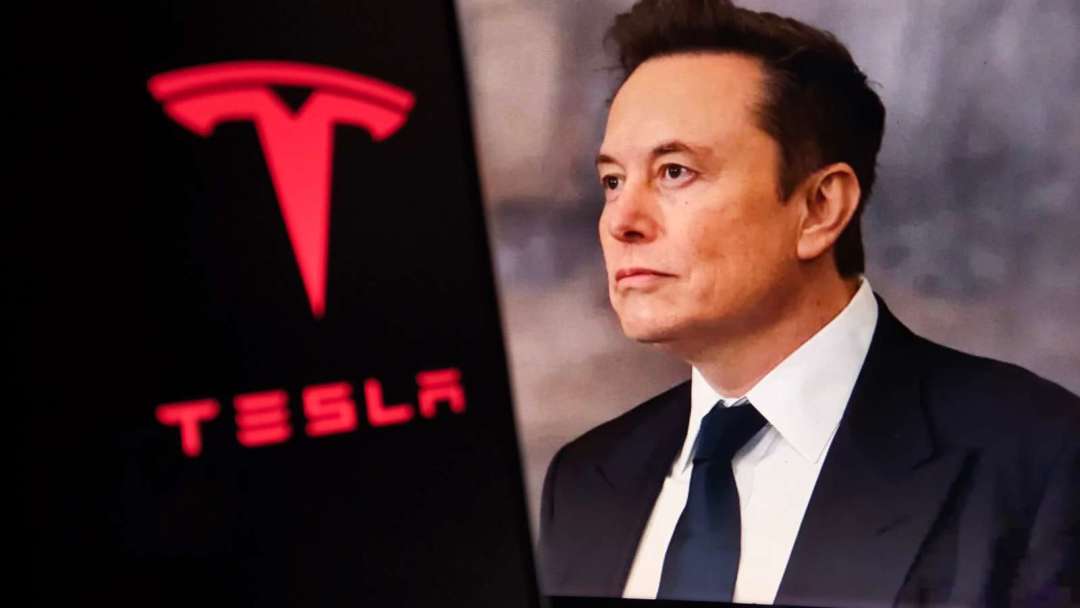
Although a merger between Tesla (TSLA-US) and SpaceX (SPCX-US) may be difficult, Wall Street is increasingly taking the possibility of a combination between Elon Musk’s two major companies seriously. Analysts believe Tesla’s stock price could rise 20% due to a potential merger with SpaceX.
According to MarketWatch, Tesla and SpaceX have collaborated for years, and their relationship has recently grown tighter. In March, Musk announced the two companies would jointly develop a project aimed at building a manufacturing plant capable of producing chips with one terawatt of computing power annually.
Louie DiPalma, an analyst at financial services firm William Blair, believes this move appears to “foreshadow” a potential acquisition of Tesla by SpaceX. Such speculation has been rampant in investment circles for months.
CNBC reported in May that Musk had internally discussed integrating his companies.
Musk himself has publicly stated that his companies are “moving toward convergence.” SpaceX’s prospectus even revealed plans to further explore “strategic cooperation” with Tesla, which holds a partial stake in SpaceX.
Gwynne Shotwell, SpaceX’s Chief Operating Officer, said last month: “There is no doubt that Tesla and SpaceX are highly complementary, and their future development will be interconnected and mutually beneficial.”
Tom Narayan, an analyst at Royal Bank of Canada (RBC), pointed out that the main driver for SpaceX seeking a merger is “operational synergy,” and raised Tesla’s price target from $475 to $500, implying about 22% upside from the current stock price.
He specifically highlighted the Terafab chip project, SpaceX’s reliance on Tesla’s Megapack energy storage products, and collaboration in AI training as valid reasons for deeper integration.
Narayan predicts the most likely scenario is a stock-only acquisition of Tesla by SpaceX, offering a 20% to 30% acquisition premium.
He added that Tesla’s board may be inclined to accept a higher premium to compensate for giving up voting control, especially if Musk’s voting power in the combined company exceeds 50%.
Narayan also noted that currently only two executives serve on both companies’ leadership teams: Musk and Ira Ehrenpreis, a senior Tesla director who joined SpaceX’s board in February.
Meanwhile, Royal Bank of Canada included SpaceX in its research coverage for the first time on Tuesday (July 7), setting a $225 price target—about 48% above current trading levels.
On Tuesday, Tesla’s stock fell 4%, while SpaceX shares plunged 6.8%. SpaceX was also officially added to the Nasdaq-100 index before market open.
While JPMorgan believes a stock-only acquisition is the most likely outcome, a team led by analyst Doug Anmuth has proposed alternative scenarios beyond an all-stock deal.
Anmuth noted that merging SpaceX and Tesla into a newly formed company could create a more “equal merger,” while phased or partial integration could help reduce regulatory and corporate governance risks.
He stated that another option could be a cash-and-stock acquisition by SpaceX, which might offer Tesla shareholders a higher premium but could further strain SpaceX’s already pressured free cash flow.
In terms of timing, some analysts predict the merger could be completed as early as 2027. Baird analyst Ben Kallo, in a report on June 23, suggested the merger could occur within 12 to 18 months.
Anmuth believes the probability of a merger will “significantly increase” within the next one to two years, though he acknowledged it is not imminent. He stated that due to misaligned governance structures, significant valuation gaps, and a complex regulatory environment, the deal remains “difficult to achieve.”
Notably, SpaceX is a key U.S. defense contractor, meaning any corporate combination would face strict scrutiny. Tesla’s close business ties with China could also trigger antitrust or national security investigations.
Fundamentals present another concern. Tesla’s Q1 profit slightly exceeded Wall Street expectations, but Q2 performance remains to be seen.
Last week, Tesla reported that its Q2 electric vehicle deliveries significantly outperformed market expectations, though its energy business slightly underperformed. Tesla will release its Q2 earnings on July 22.
William Blair analyst Jed Dorsheimer expressed optimism, viewing the stabilization of Tesla’s auto business as a positive sign and expecting energy storage demand and deployments to accelerate in the second half of 2026.
FACT BOX
- Source: PR Times
- Category: Partnership
- Organizations: William Blair / Royal Bank of Canada / JPMorgan
- Products / services: Tesla Megapack