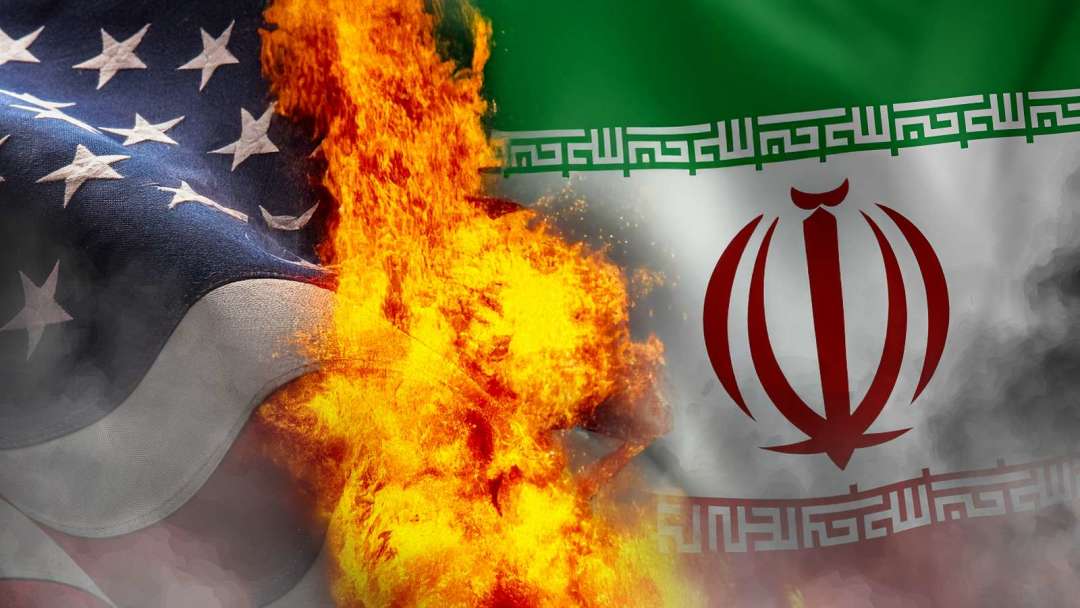
Following the U.S. military's expanded attacks on Iranian military facilities, multiple explosions were again reported in southern Iran on Thursday (10th), including strikes on military installations in Bushehr and Konarak. However, U.S. defense officials stated that American forces had not conducted any airstrikes against Iran in the past several hours. Analysts suggest that the latest wave of attacks may have been carried out by Israel.
According to Iranian state media, the country's military facilities were attacked again. A military headquarters in the outskirts of Bushehr was hit by projectiles, prompting local air defense systems to activate temporarily. Konarak, located in southeastern Iran and home to a key naval base, also came under two waves of attacks by enemy fighter jets. Two explosions were reported at the scene, and rescue and security units have rushed to the site. The incident is still under investigation.
Regarding the latest explosions, U.S. defense officials stated that the U.S. military did not participate in recent attacks and did not identify the responsible party.
The U.S. reiterated that its recent military operations have primarily targeted Iranian anti-ship missiles, coastal radars, air defense systems, and other military facilities that could threaten shipping safety in the Strait of Hormuz, aiming to weaken Iran's ability to disrupt international maritime traffic.
Dan Grazier, a former U.S. Marine Corps officer, analyzed that if the latest airstrikes were not conducted by U.S. forces, "Israel is indeed a likely perpetrator."
He noted that if the U.S. military had carried out the attacks, President Donald Trump would likely have claimed responsibility directly. However, since late February, the U.S. and Israel have maintained close cooperation throughout the conflict, leaving open the possibility that Israel acted independently.
Grazier believes the recent attack targets indicate that both the U.S. and Israel continue to focus on Iranian air defense systems, small speedboats, and missile launch sites, aiming to further weaken Iran's ability to threaten shipping in the Strait of Hormuz.
Meanwhile, the Iranian government has characterized recent U.S. airstrikes as Washington escalating regional tensions once again.
Iran's Ministry of Health reported that earlier U.S. airstrikes on multiple targets across five Iranian provinces caused dozens of casualties, including both civilians and military personnel. Targets reportedly included the Bushehr Nuclear Power Plant.
Iran's Ministry of Foreign Affairs condemned the U.S. military actions as violations of international law and Iranian sovereignty. Foreign Minister Abbas Araghchi also warned the U.S. against taking further military adventurism.
Notably, the latest round of conflict coincides with the burial ceremony of Iran's Supreme Leader Ali Khamenei in his hometown of Mashhad. Iranian authorities linked the U.S. airstrikes with Khamenei's funeral, emphasizing that Iran will continue its "resistance" path and respond to U.S. pressure.
Regional security conditions continue to deteriorate. Iran's Ministry of Foreign Affairs stated that Araghchi held a phone call with Saudi Arabia's Foreign Minister Faisal bin Salman to discuss the latest security situation.
Additionally, Israeli Prime Minister Benjamin Netanyahu spoke with Trump, and both leaders agreed to continue coordinating bilateral cooperation across various fields.
According to a statement from the Israeli Prime Minister's Office, Trump briefed Netanyahu on the latest U.S. military operations in the Persian Gulf. Netanyahu referenced recent remarks by Turkish President Recep Tayyip Erdogan toward Israel and emphasized the importance of maintaining secure border zones.
As hostilities intensify, shipping through the Strait of Hormuz is being disrupted.
British maritime data firm Lloyd's List Intelligence noted a sharp decline in vessel traffic through the Strait of Hormuz, with tracked vessel movements along the U.S.-coordinated Oman route nearly coming to a halt. Maritime intelligence company Kpler also reported that recent vessel traffic has decreased from 36 to 23 ships, with some vessels rerouting to the northern passage near Iran's Larak Island to avoid risks.
FACT BOX
- Source: PR Times
- Category: News