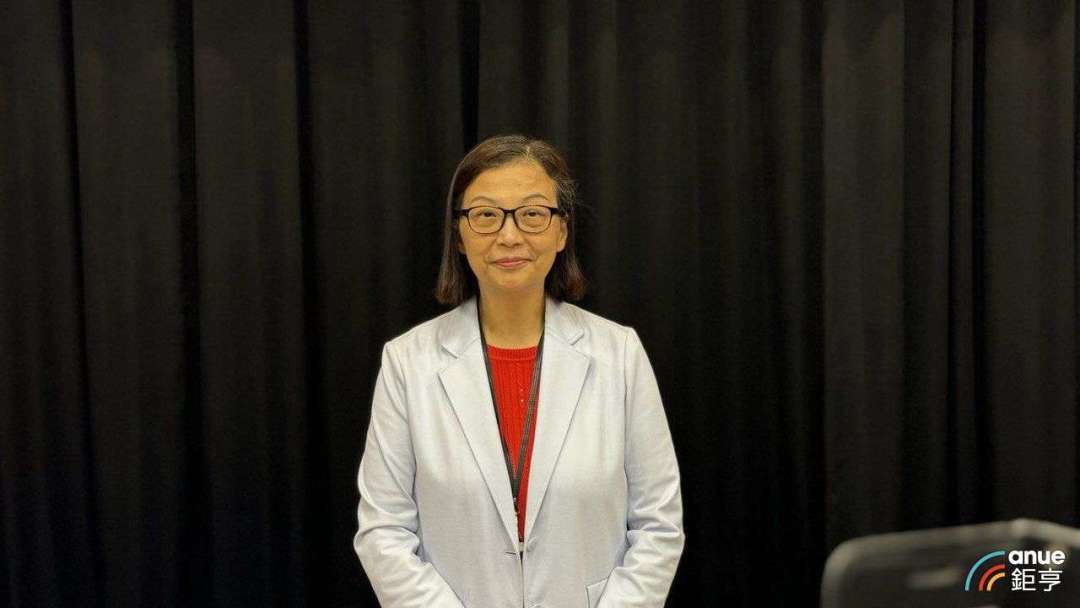
GlobalWafers (6488-TW), a leading silicon wafer manufacturer, announced today (9th) that it has signed a 10-year long-term supply contract with Micron (MU-US) and secured a strategic funding of $500 million from Micron to support its U.S. operations. Hsu Hsiu-Lan, Chairman of GlobalWafers, stated that due to the volume commitment under the long-term contract, Phase II planning for the Texas plant must begin immediately, and an increase in U.S. capital expenditure is 'inevitable.' Specific figures will be disclosed as early as next year.
Hsu emphasized that the core of this collaboration with Micron is Micron’s desire for GlobalWafers to increase direct supply from the U.S., strengthening local supply capabilities. The primary principle of this 10-year agreement is to fulfill deliveries as much as possible from the U.S. Ideally, the entire contract volume would be supplied from the U.S. plant, but for risk management purposes, Asian plants can serve as backup in case of unexpected disruptions such as power outages at the U.S. facility.
Regarding market interest in the Texas plant’s future expansion timeline, Hsu stated that Phase II planning and preparation must begin now, though this does not mean immediate equipment installation. The company will first assess whether there is room to enhance productivity within Phase I; maximizing output within existing space could reduce the urgency of launching Phase II.
She further explained that although the company has not yet entered the construction or large-scale equipment installation phase, spatial design, engineering planning, and equipment procurement evaluations must begin in advance. With equipment lead times now extending to 9, 12, or even 16 months, and new equipment specifications differing from those procured three years ago during Phase I, engineering and operations teams require time for reassessment.
Hsu stated that increasing U.S. shipment volumes inevitably requires higher capital expenditure. However, expanding capacity benefits the Texas plant’s overall financial health. She noted that if only Phase I capacity exists, the entire building cost and depreciation are borne by Phase I. But with increased Phase I output or the addition of Phase II capacity, the larger volume reduces depreciation as a percentage of revenue, improving cost structure and profitability.
The Texas plant’s Phase I has a monthly capacity of approximately 300,000 wafers. Hsu said that if Phase II has an identical product mix, capacity could theoretically approach Phase I levels. However, actual capacity will vary due to differences in product specifications, advanced process mix, equipment configuration, and ramp-up speed.
Regarding the amount of capital expenditure increase and the timing of final approval, Hsu noted that the 10-year contract was finalized only in the past few days. While the company has preliminary estimates, it is not yet ready to disclose specifics. Detailed calculations by engineering and operations teams—evaluating equipment types, pricing, product direction, and Texas plant profitability—will inform a more precise budget.
Hsu expects that further details on U.S. capital expenditure plans may be shared at next year’s earnings call. By then, the company will have a clearer understanding of the Texas plant’s profitability and can determine the optimal level of investment. If profitability remains insufficient in the short term, alternative implementation strategies may be adopted to accelerate financial improvement.
The $500 million from Micron, Hsu explained, has a prepayment nature but is more than just a simple advance—it is strategic financial support. This funding ensures contract fulfillment and helps GlobalWafers reduce financial pressure and capital costs associated with U.S. expansion.
Hsu also stated that this 10-year agreement with Micron is the longest in GlobalWafers’ history, surpassing the previous record of eight years, and is likely the largest in total value.
She emphasized that this collaboration reflects customers’ confidence in GlobalWafers’ supply capability and supply chain resilience, responding to long-term demand from AI, high-performance computing, data centers, and advanced memory. Customers’ willingness to commit for ten years signals stronger confidence in future demand and market cycles compared to previous cycles.
FACT BOX
- Source: PR Times
- Category: Partnership