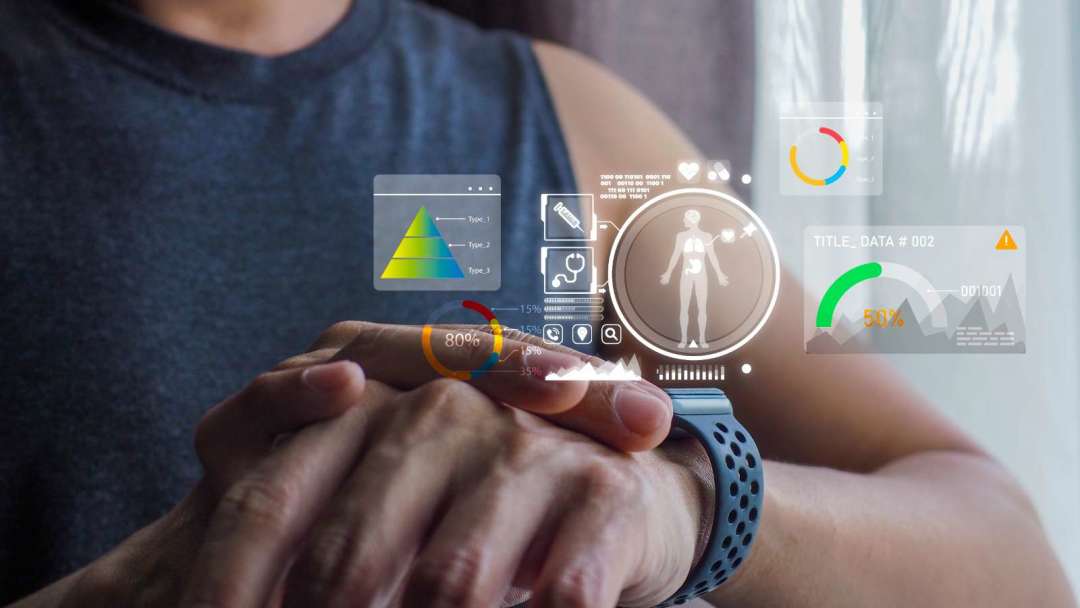
Research firm Counterpoint Research reports that global shipments of smartwatches with Edge AI capabilities grew 70% year-on-year in the first quarter of 2026, achieving a market penetration rate of 25%. Apple (AAPL-US) leads the market, accounting for approximately 90% of Q1 shipments. The growth is primarily driven by increasing consumer demand for health and fitness features, which now extend beyond basic step, heart rate, and sleep monitoring to include advanced health analytics and personalized functions.
Advancements in low-power neural accelerators now allow AI inference to be performed directly on the device while maintaining battery life. As a result, smartwatches can offer fall detection, arrhythmia alerts, and personalized health recommendations without relying on smartphones or cloud services, enhancing data privacy.
Anshika Jain, Principal Analyst at Counterpoint Research, stated, "Brands are continuously upgrading smartwatch hardware to enhance on-device AI processing. Edge AI enables faster health analysis and quicker responses, while also improving data privacy. Currently, Edge AI remains concentrated among a few leading brands, with Apple accounting for about 90% of global Edge AI smartwatch shipments in Q1 2026."
Health monitoring is the primary application of Edge AI in smartwatches. Devices can now analyze heart rate, sleep patterns, and body temperature data directly on the device to detect health conditions such as atrial fibrillation, sleep apnea, and elevated blood pressure, without transmitting data to the cloud.
In Q1 2026, shipments of smartwatches with blood pressure monitoring capabilities doubled compared to the same period last year, while shipments of devices supporting sleep apnea detection tripled. Brands are also beginning to invest in health management features for conditions like diabetes.
On the supply chain side, chipmakers are continuously enhancing the AI capabilities of wearable platforms. Apple introduced its S9 chip with a quad-core Neural Engine in 2023. Huawei launched the Kirin W80 chip in 2025, paired with its Celia assistant. In 2026, Qualcomm announced the Snapdragon Wear Elite with a dedicated NPU, and Google is expected to release its next-generation wearable chip based on the Tensor architecture, further boosting AI integration.
Beyond platforms with dedicated NPUs, on-device AI is also being achieved through software. For example, the Ambiq Apollo platform leverages Arm Helium vector processing extensions and the heliaCORE software core to run AI inference without a dedicated NPU, potentially expanding on-device AI to more wearable devices in the future.
Mohit Agrawal, Research Director at Counterpoint Research, noted, "Edge AI in smartwatches is evolving from hardware integration to hardware-software co-optimization. Smaller, more efficient AI models, combined with OS-level support for on-device inference, will enable more applications to run AI locally. This will drive real-time health alerts, gesture control, and enhanced personalization, leading us to forecast that Edge AI smartwatch penetration will approach 32% by 2026."
FACT BOX
- Source: PR Times
- Category: Survey
- Organizations: Apple / Huawei / Qualcomm