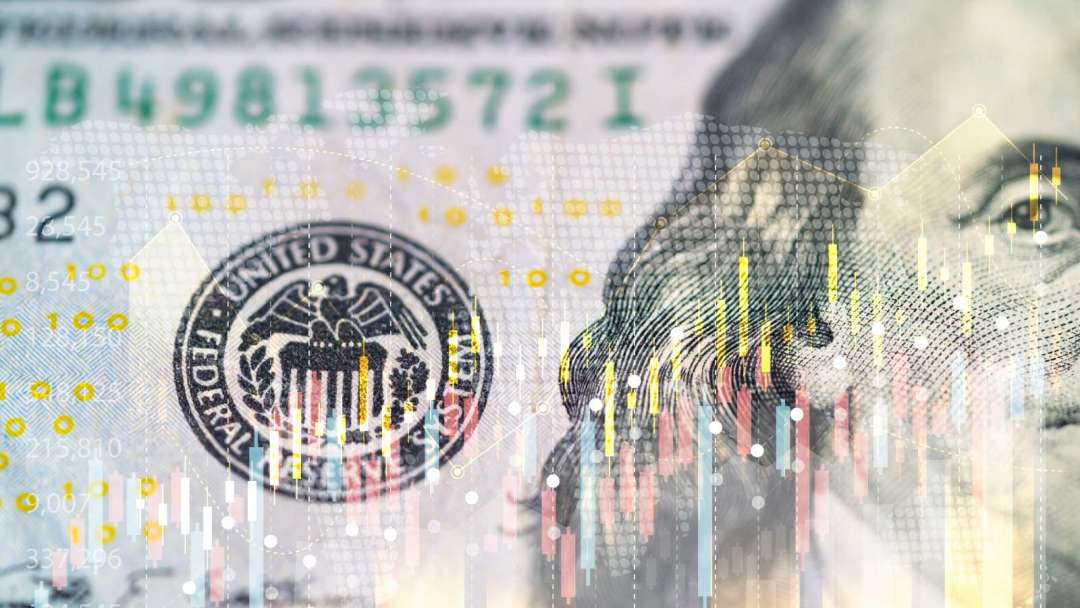
The dollar weakened on Thursday (9th) as falling oil prices reduced market concerns about inflation, coupled with the release of the Federal Reserve (Fed) meeting minutes the previous day, which showed clear divisions among policymakers regarding future interest rate direction.
At the close of trading in New York, the dollar index (DXY), which tracks the dollar against six major currencies, edged down to 100.96.
The minutes from the Federal Open Market Committee (FOMC) meeting held on June 16–17, released on Wednesday, revealed that a few officials had advocated for an immediate rate hike.
Ultimately, the FOMC decided to keep policy rates unchanged, but the updated dot plot was notably hawkish, as policymakers expected Middle East tensions pushing up oil prices to reignite inflation in the near term.
Nonetheless, the minutes also reflected a lack of consensus among officials on the interest rate outlook. A majority believed inflation could still gradually return to the Fed's 2% target without additional rate hikes. On the other hand, many officials expressed concern that strong demand driven by AI, Iran-related conflicts, and tariff policies could keep inflation elevated, meaning further rate hikes could not be ruled out.
Michael Feroli, economist at JPMorgan Chase, said the minutes were indeed hawkish but did not exceed market expectations, as the dot plot released three weeks earlier had already signaled the same policy direction. He noted that all attending officials supported holding rates steady, although a few believed there was sufficient justification for a rate hike, they ultimately agreed to maintain the status quo.
Since the Fed's June meeting, the inflation environment has changed significantly. On the same day the rate decision was announced, the U.S. and Iran reached a temporary peace agreement, causing oil prices to fall back to pre-war levels and easing market concerns about inflation.
However, this week saw the most intense military clashes between the two sides since the ceasefire, causing crude oil prices to rebound and reminding investors that the Middle East situation remains highly fragile, with any developments potentially pushing energy prices and inflation higher again.
Oil prices turned lower on Thursday after hitting a nearly three-week high the previous day. Prices began to fall after U.S. President Trump stated that Iran was "very eager to make a deal."
Earlier, the U.S. launched airstrikes on approximately 170 military targets inside Iran on Tuesday and Wednesday, following attacks on three commercial ships. Targets included air defense systems, missile and drone storage facilities, and over 60 small speedboats belonging to the Islamic Revolutionary Guard Corps. Iran, according to state media, retaliated by launching attacks on U.S. military bases in the Middle East.
Trump stated during the NATO summit in Turkey that the ceasefire with Iran was over and that he did not wish to engage with Iran again. However, upon leaving the summit and speaking to reporters aboard Air Force One, he said the U.S. military action was merely a retaliatory measure for the tanker attacks.
When asked whether the U.S. might face a full-scale war with Iran, Trump replied, "I don't know," adding, "They just called. They really want to make a deal. I just don't know if they're worth negotiating with, or if they'll honor the agreement—that's the real issue."
Markets interpreted these remarks as signaling that neither side wants the conflict to escalate further, leading oil prices to retreat and further alleviating inflation concerns.
Thierry Wizman, foreign exchange and interest rate strategist at Macquarie, believes that although oil prices have rebounded slightly over the past two days, they remain significantly lower than early June levels, and this shift is already influencing Fed officials' inflation assessments. He expects that if oil prices do not continue to rise in the coming week, Fed Chair Kevin Warsh will have room to moderate the hawkish stance taken since June.
However, he also warned that if oil prices surge again rapidly, not only the Fed but also major central banks such as the European Central Bank (ECB), the Bank of England (BoE), and the Reserve Bank of Australia (RBA) could revert to a more aggressive stance to combat inflation.
Regarding the timing of the Fed's next rate hike, Wizman believes oil prices will be the key indicator. If oil prices rise again, the Fed could act as early as September. If prices remain at current levels, a rate hike is more likely in October.
Meanwhile, the yen strengthened slightly against the dollar on Thursday, with USD/JPY down 0.1% to 162.40.
However, the yen remains near its lowest level in nearly 40 years, with the exchange rate still above 160. Since the Japanese government intervened in the foreign exchange market around this level earlier this year, markets are closely watching for any signs of renewed official intervention.
As of approximately 5:40 a.m. Taiwan time on Friday (10th), prices were:
DXY: 100.9329 (-0.0023%) EUR/USD: 1.1430 (0.0000%) GBP/USD: 1.3399 (-0.0746%) AUD/USD: 0.6936 (-0.0720%) USD/CAD: 1.4168 (0.0000%) USD/JPY: 162.3400 (-0.0246%)
FACT BOX
- Source: PR Times
- Category: News