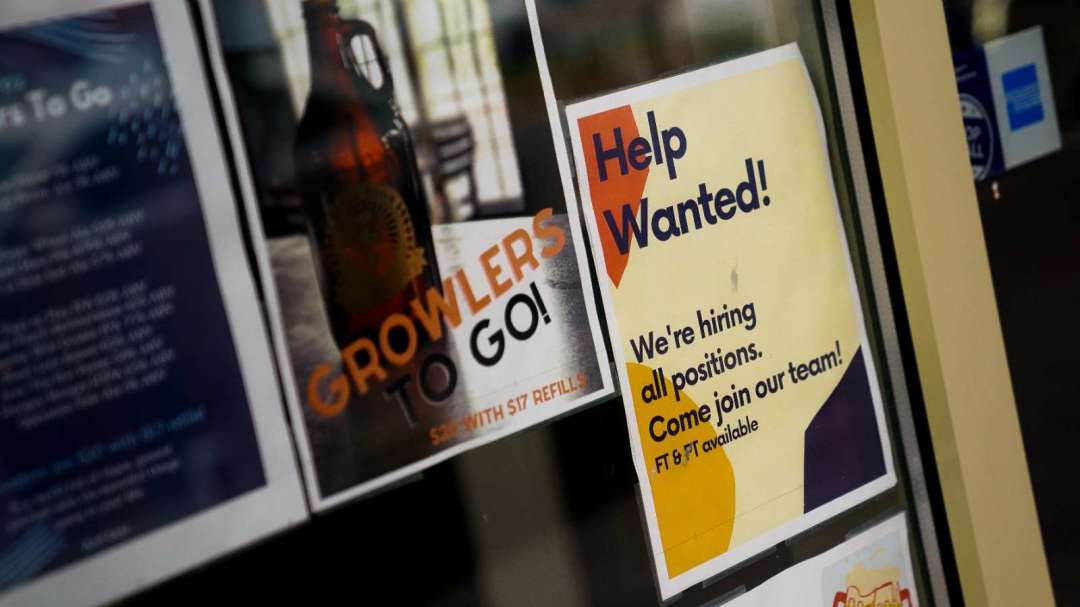
Initial jobless claims in the United States declined slightly last week, signaling that corporate layoffs remain at low levels and the overall labor market continues to stay stable, despite a noticeable slowdown in June job growth. The labor market persists in a 'Slow Hire, No Fire' pattern.
The U.S. Department of Labor (DOL) reported on Thursday (July 9) that seasonally adjusted initial jobless claims for the week ending July 4 decreased by 2,000 to 215,000. This figure came in better than the 217,000 expected by economists surveyed by Bloomberg and below the 218,000 forecast by Reuters.
Continuing claims for unemployment benefits (for the week ending June 27) rose by 8,000 to 1.814 million, slightly higher than the previous week's 1.806 million and the highest level since March. However, analysts noted that the increase in continuing claims is primarily due to seasonal adjustment factors related to school summer breaks and does not necessarily indicate a significant deterioration in the labor market.
On an unadjusted basis, initial jobless claims increased by nearly 10,000 last week, almost entirely driven by a surge in applications from California. Economists explained that at the end of the academic year, some states allow non-teaching staff to apply for unemployment benefits during summer breaks, which can distort government seasonal adjustment models. Therefore, the rise in jobless claims from late May to early June is largely viewed as statistical noise rather than a signal of weakening labor market conditions.
Although the latest non-farm payroll report showed a significant slowdown in June job growth, with downward revisions to April and May data, there are still no signs of widespread corporate layoffs. Analysts believe the U.S. labor market remains in a 'Slow Hire, No Fire' state—companies are slowing hiring but are generally reluctant to lay off employees.
The Federal Reserve (Fed) minutes from the June 16–17 meeting reflected similar views. Most officials expect the labor market to remain stable in the near term, with the unemployment rate likely to stay around current levels. However, some officials warned that if geopolitical risks or uncertainties about the broader economic outlook intensify, businesses might further slow hiring or even begin initiating layoffs.
The Fed held its benchmark interest rate steady in the 3.50% to 3.75% range at its June meeting, but the latest dot plot suggests rising chances of another rate hike this year. Markets will continue to monitor upcoming inflation and employment data to assess the Fed's next policy move.
FACT BOX
- Source: PR Times
- Category: News