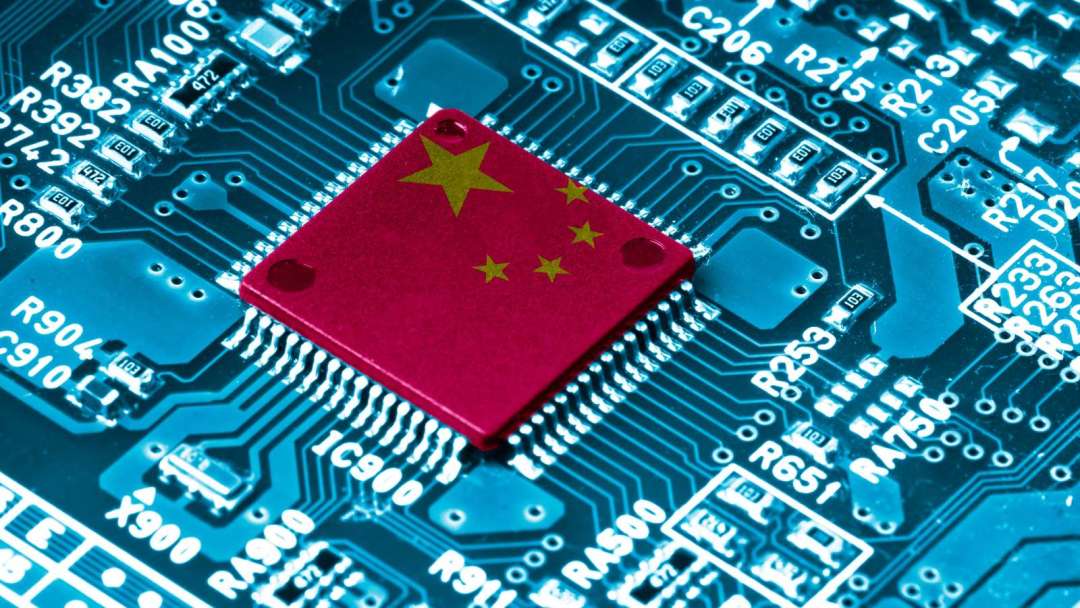
According to the latest survey by Bloomberg Intelligence (BI), over the next 12 months, the share of domestic AI chips in Chinese companies' computing power budgets will rise from the current 30% to 46%. This figure indicates a significant reversal from the previous procurement structure, which was dominated by NVIDIA.
Experts point out that the shift in Chinese corporate budgets toward domestic chips is driven not only by localization policies but also critically by the U.S. cutoff of NVIDIA's H20 chip supply. This has forced Chinese firms to elevate domestic AI chips from 'backup' to 'primary' solutions. However, industry insiders warn that the real bottleneck constraining the deployment of domestic AI computing power in China is not the GPU itself, but the shortage of HBM supply.
The survey reveals Beijing's urgency in pushing for computing self-reliance through several government policies. The government plans to invest approximately 2 trillion RMB over five years to build a national data center network and has set a target for at least 80% of core chips to be domestically supplied. Under the dual push of export controls and subsidy policies, cloud service providers such as Tencent, Alibaba, and Huawei are accelerating the use of domestic AI chips—such as Huawei's Ascend, Hygon, and Cambricon—to fill the computing power gap left by the H20. Currently, Ascend holds about 43% of the domestic AI chip market in China, while Cambricon accounts for approximately 11%.
However, the effectiveness of AI chips depends not only on computing power (TOPS) but also critically on memory bandwidth.
Experts explain that HBM is a key component that vertically stacks multiple DRAM dies and places them tightly adjacent to the computing chip. Without HBM, even the most powerful chips will idle due to insufficient data feeding.
Estimates suggest that China's demand for domestic AI chips this year is about 4.2 million units, but supply is only around 2.6 million, leaving a 1.6 million-unit gap. This shortfall is primarily due to insufficient HBM allocation, not chip design or production capacity.
The global HBM market has long been dominated by SK Hynix, Samsung Electronics, and Micron. China's weakest link in its domestic supply chain lies precisely here. While ChangXin Memory Technologies (CXMT) is actively expanding, its current DRAM monthly production capacity is expected to reach about 350,000 wafers by year-end, with a 2028 target of 500,000 wafers. However, its current AI-capable HBM production capacity is only about 5,000 wafers per month. HBM3 samples have just been delivered, with small-scale trial production expected by the end of 2026. HBM4 development has only just begun.
In other words, while China's domestic GPU designs have 'reached the table,' the most critical HBM component still 'depends on others.'
Looking back at China's semiconductor localization journey since 2018, a similar pattern has repeated: first blocked at advanced process foundry (TSMC), then at EUV lithography machines (ASML), and now at HBM for AI chips. In each case, 'design progress is fastest, but the most advanced upstream layer is the last to be cracked.' The 46% budget share reflects 'procurement intent and order direction,' not 'closed-loop capacity and performance.'
Industry insiders expect Huawei's Ascend ecosystem and Cambricon's market share to continue rising. Domestic chips will be prioritized for inference and small-to-medium-scale training applications. However, HBM supply will remain tight through 2026–2027. If global memory shortages worsen or export controls tighten further, China's expansion of domestic computing power could hit a supply ceiling.
Currently, Chinese firms face the dilemma of being unable to 'assemble HBM' even when they want to buy domestic chips. The key variable that will truly reverse this situation is the yield and monthly production ramp-up speed of CXMT's HBM. The market is closely watching whether it can scale from the current 5,000 wafers to tens of thousands.
Analysts recommend a 'dumbbell-type' approach to viewing China's domestic computing chain: one end focused on chip design (Huawei ecosystem, Hygon, Cambricon) and advanced packaging (HBM requires 2.5D/3D packaging), which will genuinely benefit, and the other end avoiding pure narrative-driven stocks without real HBM supply support.
Experts argue that while everyone focuses on how high the share of domestic chips can rise, the more critical question is: who will fill the 1.6 million HBM gap, and how long will it take? This is the true decisive factor for computing self-reliance.
FACT BOX
- Source: PR Times
- Category: Survey
- Organizations: NVIDIA