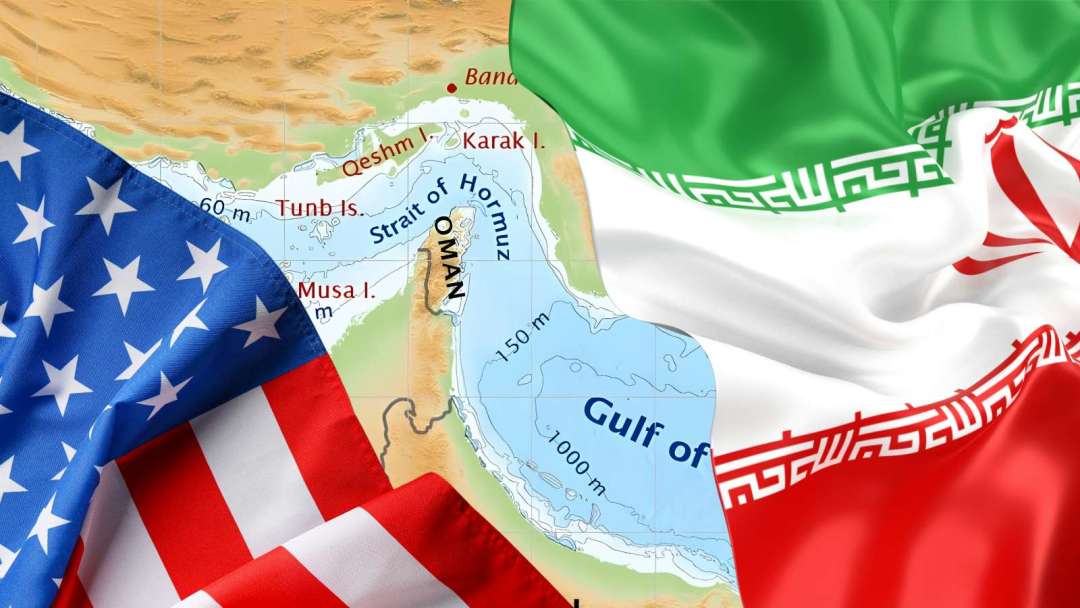
The United States and Iran have resumed hostilities, causing tracked oil tanker traffic through the Strait of Hormuz to drop nearly to a standstill, while the U.S. military has launched successive large-scale strikes against Iranian military targets. However, international oil prices have not returned to the previous highs of nearly $120 per barrel seen during earlier conflicts. U.S. stocks rose on Thursday (9th), driven by chip and AI-related stocks, indicating that markets currently perceive the conflict as a controllable energy supply risk.
Although London Brent crude rose this week amid escalating tensions, it remains far below previous conflict-era highs. The U.S. benchmark West Texas Intermediate (WTI) also spiked before quickly retreating.
International oil prices closed lower on Thursday. London Brent September futures fell 2.2%, closing at $76.30 per barrel; U.S. WTI August futures dropped 2%, ending at $72.08 per barrel.
Analysts believe that adjustments in global oil supply routes, accumulated exports during the ceasefire period, and major importers’ ability to regulate demand have collectively reduced short-term energy shocks.
### Global Adaptation to Middle East Energy Shocks
Dan Alamariu, analyst at Alpine Macro, stated that global oil export routes have gradually adjusted over recent months, and major importers like China have demonstrated faster-than-expected demand adjustment capabilities. As a result, the economic impact on the global economy may be smaller than initially feared.
He noted, "The world has already adapted."
However, he warned that if the conflict escalates and persists for several months, Brent crude prices could again approach $100 per barrel.
Tobin Marcus, analyst at Wolfe Research, believes that while the risk of further escalation has increased, the current base-case scenario remains manageable. He noted that while market assets have indeed moved toward risk-off positions, overall volatility remains relatively limited.
### U.S. Military Strikes Over 170 Targets in Two Days, Strait of Hormuz Shipping Freezes
Following accusations that Iran attacked three merchant vessels in and near the Strait of Hormuz this week, the U.S. military resumed military operations, launching over 80 strikes on Iranian targets in the first wave, followed by attacks on 90 additional military targets the next day.
According to ship-tracking data, shipping traffic through the Strait of Hormuz rapidly declined. Foreign media cited Kpler data showing that daily transits peaked at 59 on June 24 but have since dropped to around a dozen per day. However, as more vessels disable their AIS (Automatic Identification System) to avoid tracking, public data may underestimate actual traffic.
Kpler stated that while crude oil continues to flow through the Strait of Hormuz, recent attacks and reduced tanker deployments to the region have weakened market confidence in the waterway’s return to normal operations.
### Massive Shipments During Ceasefire Alleviate Short-Term Supply Pressure
Analysts pointed out that during the prior three-week ceasefire, large volumes of crude oil were successfully exported to global markets, keeping global oil supply relatively ample and reducing concerns over short-term supply disruptions.
U.S. President Trump stated on Wednesday that recent military conflicts have indeed pushed up oil prices, but he believes the situation will end quickly. He emphasized that the market remains in a state of abundant oil supply, as numerous tankers successfully passed through the Strait of Hormuz in recent weeks.
### Institutional Outlook: Oil Prices Could Stabilize by Year-End if Ceasefire Resumes
Hamad Hussain, climate and commodities economist at Capital Economics, said oil prices may remain highly volatile over the coming months. However, he believes that even if the U.S. reimposes sanctions on Iranian oil, China may continue purchasing Iranian crude, limiting the actual supply-side impact.
Hussain forecasts that if ceasefire is restored and shipping through the Strait of Hormuz normalizes, Brent crude prices could return to current levels by the end of the year.
FACT BOX
- Source: PR Times
- Category: News
- Organizations: Alpine Macro / Wolfe Research / Kpler
- Dates in source: Thursday, 9th / June 24