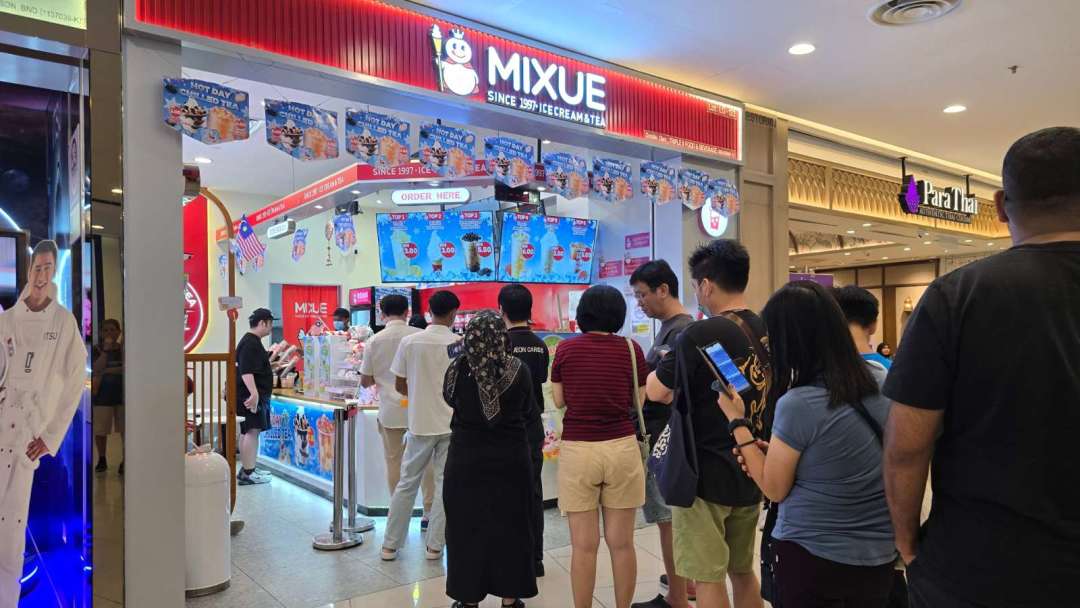
The spread of 'Made in China' is quietly enhancing China's international influence in ways Beijing did not initially anticipate. In developing countries, Chinese brands and products have become so embedded in daily life that their penetration now rivals the global dominance once enjoyed by American brands like Levi's (LEVI-US), Marlboro, and McDonald's (MCD-US) in the 1980s and 1990s.
According to a report by the U.S. magazine *Foreign Affairs*, in Hanoi, Vietnam, taxi drivers watch Chinese micro-dramas on their smartphones while waiting at red lights. Alongside Yamaha electric scooters, many people now ride in Chinese-made electric vehicles to escape the city's heat and dust.
At home, teenagers chat using Zalo, a messaging app similar to WeChat (Tencent (00700-HK) is a foreign shareholder in Zalo's parent company), or shop on Lazada, the e-commerce platform owned by Alibaba (09988-HK).
In South African households, Hisense (000921-CN) leads in TV and washing machine sales. In Brazil, Xiaomi (01810-HK) is already a household name, and newly opened stores of the Chinese ice cream chain Mixue Bingcheng often run out of tickets due to overwhelming demand.
The article analyzes that Chinese companies' aggressive overseas expansion stems from cutthroat domestic competition. Intense rivalry forces firms to seek new markets in Africa, Asia, and Latin America, where they rapidly adapt to local needs and embed themselves deeply into everyday life.
These entrepreneurs, struggling to survive abroad, are unintentionally shaping a positive and approachable image of China overseas.
Numbers further illustrate the scale of this trend. By 2025, China's total exports to developing economies are projected to reach $1.6 trillion—about 50% more than its combined exports to the United States and Western Europe. From home appliances and apps to cars, roads, ports, and smartphones, Chinese brands are visible in nearly every corner of the developing world.
The article argues that when a nation's products, services, and infrastructure blanket the globe, this omnipresence subtly shapes people's perceptions of 'capability,' 'modernity,' and 'future possibilities.'
This logic applied for over half a century when American goods dominated the world—and now, it increasingly fits China's reality, making Chinese brands the top choice for hundreds of millions of consumers.
The author shares a personal anecdote: back in 2015, in Abidjan, Ivory Coast's largest city, children were asked about China's influence in Africa. After some discussion, one child raised his phone and laughed, saying in French, 'China is great!' His impression came entirely from the Chinese smartphones and apps he used daily.
More than a decade later, such perceptions have shifted from isolated cases to the norm. Today, Boomplay, one of Africa's largest music streaming platforms, is co-developed by Chinese firms Transsion and NetEase (NTES-US). Meanwhile, TikTok has rapidly become a primary source of entertainment and information for local populations.
The article concludes that all of this allows China to expand its international influence without requiring other nations to endorse its political system, accept its ideology, or view it as a moral exemplar.
It further notes that the rush of Chinese enterprises into overseas markets intensifies local industrial competition. To profit, companies must tailor products to local demands, which in turn accelerates growth and deeper integration into people's lives.
More crucially, compared to Western and Japanese brands, Chinese brands excel at designing products for consumers with limited disposable income.
This phenomenon is likened to the 'Walmart Effect,' enabling middle- and low-income groups to access goods and services once out of reach. As Chinese brands grow more visible, Chinese products are becoming an indispensable part of local markets, further expanding China's influence.
FACT BOX
- Source: PR Times
- Category: Survey
- Organizations: Levi's
- Products / services: TikTok / Lazada