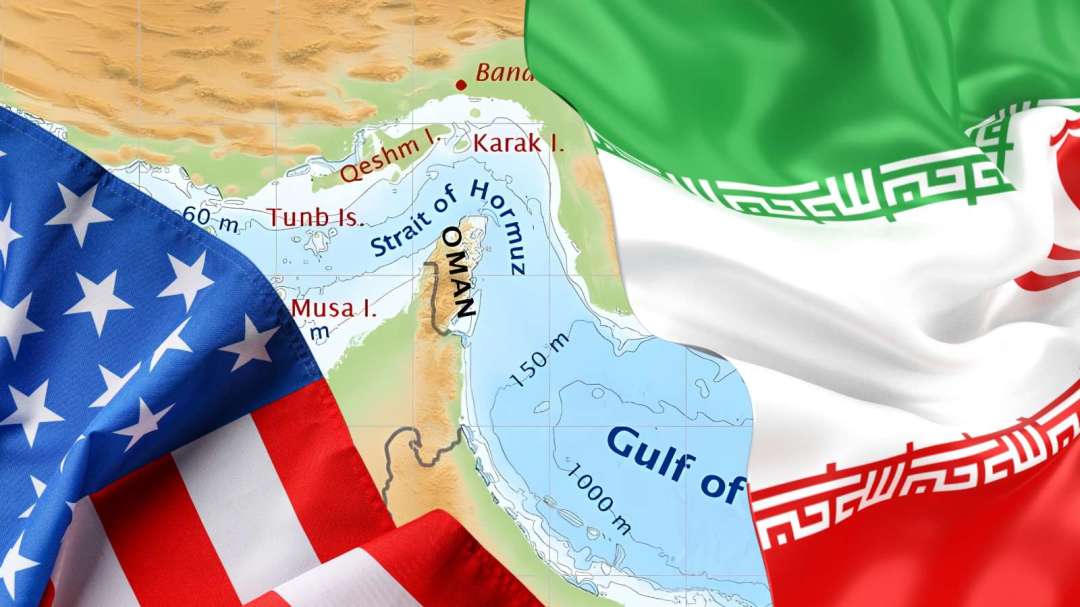
The International Maritime Organization (IMO) recently announced the launch of a special operation to assist over 100 merchant ships and more than 11,000 seafarers stranded in the Strait of Hormuz following a ceasefire agreement between the U.S. and Iran. However, the operation suffered a major setback immediately after its initiation when the Singapore-flagged cargo vessel 'Ever Lovely' was attacked while traveling along the designated evacuation route, forcing the suspension of the newly launched evacuation effort. Maritime traffic through the strait has once again stalled, triggering international concern over how geopolitical conflicts are eroding the right to free passage through global strategic waterways.
The IMO had originally planned to collaborate with Iran, Oman, and the United States to guide vessels through a southern route off Oman’s coast, avoiding Iranian coastal waters. However, the attack on the 'Ever Lovely' derailed this plan. While no group has claimed responsibility, Iran’s state broadcaster IRIB cited the Islamic Revolutionary Guard Corps in stating that any navigation route established without Iran’s participation is invalid, asserting that only Iran has the authority to determine passage routes.
Gregory Brew, an analyst at Eurasia Group, pointed out that Tehran is attempting to establish a 'new normal' by requiring prior notification and permission from vessels transiting the strait, as a countermeasure against U.S. efforts to diminish its influence.
Todd Huntley, an expert at Georgetown University, emphasized that the Strait of Hormuz is an international waterway, and unilateral control violates the long-standing principle of freedom of navigation. If such actions are tacitly accepted, they could set a dangerous precedent affecting other critical chokepoints such as the Strait of Gibraltar and the Strait of Malacca.
Ami Daniel, CEO of maritime intelligence firm Windward, warned that when powerful states weaponize strategic waterways, the security of other vital maritime zones could be jeopardized.
Nitya Labh, a scholar at the UK’s Royal Institute of International Affairs, analyzed that unlike the Bosporus Strait, which benefits from international mechanisms like the Montreux Convention, the Strait of Hormuz lacks sufficient diplomatic safeguards and insurance frameworks. The United Nations Convention on the Law of the Sea (UNCLOS) has proven inadequate in providing reliable protection against geopolitical tensions and attacks by non-state militias, highlighting a structural failure in international maritime rules and legal mechanisms in securing strategic waterways.
FACT BOX
- Source: PR Times
- Category: News
- Organizations: Windward