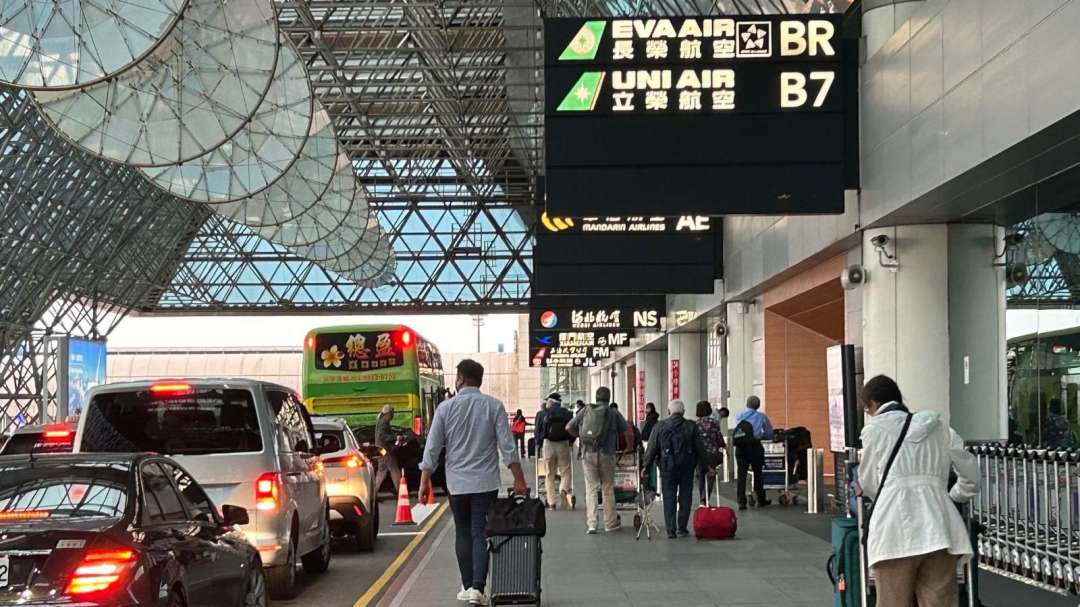
In recent years, frequent typhoons have hit Taiwan, leading to recurring consumer disputes over canceled overseas flights and forced international stay extensions. After the new version of overseas travel inconvenience insurance took effect on April 1, 2026, some travelers found their claims limited to NT$2,000 per day due to the inability to provide proof of 'prepaid accommodation' on their originally scheduled return date, sparking public scrutiny of policy terms. The Financial Supervisory Commission (FSC) tasked the Property Insurance Association with cross-company coordination, resulting in a unified decision to adopt a 'favorable-to-insured' lenient claims assessment principle, retroactively applicable to all policies from April 1, 2026. Fubon Insurance, Taiwan’s leading property insurer, has taken the lead in implementing the new standard, marking a significant upgrade in consumer protection.
Multiple typhoons have recently swept across Taiwan and Japan, severely disrupting international flights. Many outbound travelers preparing to return home faced unexpected multi-day overseas stays due to flight cancellations, incurring unplanned transportation and accommodation costs. However, when filing claims under the 'Journey Change Insurance' component of 'Personal Overseas Travel Inconvenience Insurance,' some policyholders discovered a significant gap between their understanding of the new policy terms and insurers’ actual interpretations, drawing widespread public attention.
In response, the FSC instructed the Property Insurance Association to act under Article 54 of the Insurance Act, which mandates that 'the true intent of the parties shall be ascertained, and in case of ambiguity, interpretation shall favor the insured.' The Association convened a member meeting, inviting all property insurers to discuss and establish a unified, reasonable claims guideline. To protect policyholders’ rights and reduce disputes, the Association clarified the interpretation of 'prepaid expenses' in cases of return-delayed stays during the final leg of travel, adopting a more policyholder-friendly approach.
The Association explained that the new Personal Overseas Travel Inconvenience Insurance, effective April 1, 2026, was designed with actual consumer needs in mind, significantly expanding coverage. Key enhancements include extending strike-related coverage to airport ground and operations staff; broadening war, riot, or natural disaster incidents to include the insured’s overseas location; and relaxing coverage to include spouse or third-degree relatives’ critical illness and policyholder’s own car accidents. The payout cap was also raised from the previous 'equivalent to original scheduled transportation and accommodation costs' to 'an additional 20% above original transportation or daily accommodation costs,' aiming to enhance protection.
However, based on the principles of indemnity and risk control, payouts must deduct any refunds received from service providers, with a maximum increase of 20%. To streamline claims and prevent moral hazard (e.g., intentional overstaying or upgrading to luxury hotels), the policy stipulates that 'if no proof of prepaid expenses or refunds is provided, the daily combined transportation and accommodation payout is capped at NT$2,000.'
Unexpectedly, in practice, most travelers do not book accommodations on their return day, causing their claims to be capped at NT$2,000 and failing to fully transfer risk—triggering the current dispute over 'prepaid expense' verification.
The Property Insurance Association and its member companies have reached a consensus on three lenient claims assessment principles for return-leg stay extensions due to natural disasters. First, if a policyholder is stranded during the final travel segment due to a natural disaster, providing proof of accommodation costs from the 'originally scheduled last day of travel' (e.g., hotel receipt or invoice) allows that amount to serve as the base, with an additional 20% increase applied as the daily accommodation payout limit during the stay extension.
For example, if the originally scheduled final night’s single-person accommodation cost was NT$4,000, the relaxed daily accommodation payout limit would rise to NT$4,800. If the receipt includes costs for others and cannot be separated, the amount is prorated by number of people.
Second, if a policyholder had no prepaid accommodation costs throughout the trip (e.g., staying with relatives), the current policy applies, with a maximum daily payout of NT$2,000 per person.
Third, the new policy is retroactive. This lenient assessment principle applies to all policyholders whose overseas stay extension occurred on or after April 1, 2026.
In response to increasingly volatile climate risks, the Property Insurance Association is now gathering stakeholder feedback to conduct a more comprehensive review and revision of inconvenience insurance terms. Fubon Insurance advises policyholders affected by typhoons and stranded overseas to carefully retain 'proof of original itinerary' and 'original receipts for all transportation and accommodation expenses incurred during the stay' to facilitate smooth claims processing.
FACT BOX
- Source: PR Times
- Category: News