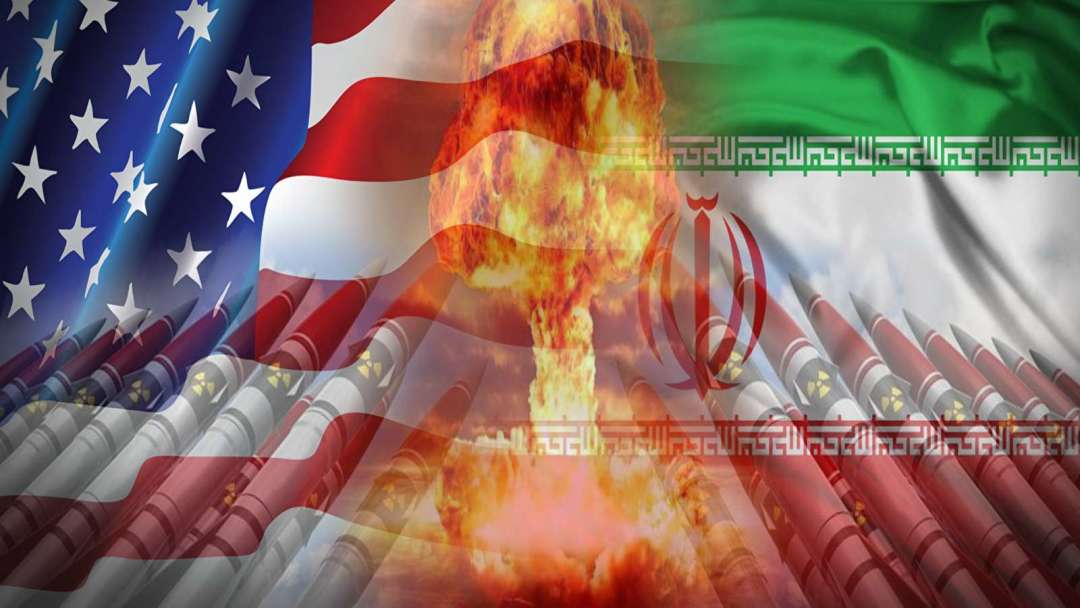
The US Central Command has confirmed that two American service members were killed in Jordan by an Iranian attack, with four others injured and one missing. This is the deadliest single day for US forces since the war began on February 28, bringing the total number of US military fatalities to 16.
According to Bloomberg, US Central Command stated that the personnel were attacked on Friday (17th) while defending against Iranian ballistic missiles and drone assaults.
The military announced via social media that the four injured personnel have been evacuated to hospitals in Jordan for treatment, but did not disclose further details.
On Saturday (18th), Tehran announced it would no longer comply with the terms of the temporary peace agreement and launched intense retaliatory attacks against Gulf neighboring countries in response to the latest US military actions.
Iran's Supreme Leader, Mojtaba Khamenei, warned in a written statement released on Saturday that the US would face an "unforgettable lesson."
Mojtaba stated in the declaration that the US violated the prior memorandum signed by both sides, which called for negotiations on reopening the Strait of Hormuz and limiting Iran's nuclear program during a 60-day ceasefire. "This once again proves to the world that the signature of the US president holds no value and no credibility."
Since a US airstrike killed his father and several family members and left him severely injured, Mojtaba has not appeared in public.
Over the past week, the US and Iran have continued launching attacks against each other, expanding targets from purely military facilities to civilian infrastructure such as bridges, utilities, and ports, indicating almost no possibility of returning to the fragile ceasefire agreement signed last month.
According to Iranian officials, US attacks have damaged multiple civilian desalination plants, bridges, and over 100 communication base stations. Since June 27, these attacks have resulted in 50 deaths and over 500 injuries.
Kuwait Airways has readjusted most of its flight schedules; Kuwait’s Ministry of Electricity and Water stated that firefighting operations are still ongoing at a power and desalination plant attacked by Iran.
Kuwait’s Ministry of Foreign Affairs condemned the attacks, stating that the repeated targeting of critical infrastructure "demonstrates a systematic pattern of aggression aimed at civilian facilities, endangering civilian lives and safety," in clear violation of international law.
According to Iran’s semi-official Tasnim News Agency, Iran also launched attacks on US radar installations and military aircraft in Qatar, one of the primary mediators between the US and Iran.
The US Central Command earlier stated that its seventh night of offensive operations against Iran concluded at 9:30 PM Eastern Time on Friday, with targets including surveillance facilities, military logistics infrastructure, underground weapons storage, and maritime operational capabilities.
This expansion of attacks to civilian infrastructure marks a further escalation since the ceasefire agreement, indicating little sign of de-escalation.
However, analysts note that the current tension remains far below the scale seen during the war’s peak in March to early April, when the US and Israel conducted massive bombings of Iranian cities, and Tehran responded by launching thousands of drones and missiles at Gulf Arab states and Israel.
Mojtaba’s call for unity between the people and government is seen as a response to growing criticism from Iran’s hardliners over the government’s diplomatic approach.
He stated: "Criticism of officials should not lead to injustice toward the innocent or undermine social unity."
Oil prices surge as US considers expanding military deployment
Brent crude futures rose approximately 4.6% on Friday, closing near $88 per barrel, marking the largest weekly gain since April.
The surge followed a report by Axios that the Trump administration had notified Israel of plans to deploy additional aerial refueling aircraft. Israeli military officials confirmed on Saturday that the US does plan to expand its military aircraft presence in Israel, potentially signaling a broader scope of US military operations.
The US Embassy in Jerusalem has urged American citizens to reconsider travel to or through the Middle East due to the risk of "unpredictable escalation," advising those continuing their journeys to confirm flight operations with airlines.
On Thursday evening, President Trump addressed the nation, once again portraying the Middle East situation as a success. He stated that the US is achieving "major victories" in Iran and that results would soon be visible, before shifting focus to domestic issues.
In the first three weeks after the conflict began, US forces lost 13 personnel in at least three separate attacks; in early July, another Navy pilot died in a helicopter crash in the Arabian Sea.
China and Pakistan have both expressed concern over the developments, calling on the US and Iran to cease hostilities and resume dialogue.
Experts: Both sides trapped in an escalating cycle
In addition to increasing the frequency of bombing Iran, the US has reimposed blockades on Iranian ports and revoked exemptions from sanctions on Iranian oil exports.
Mehran Kamrava, a political science professor at Georgetown University in Qatar, noted that as Iran continues maritime attacks and insists all vessels obtain its permission before passing through the Strait of Hormuz, tensions are highly likely to continue escalating.
Kamrava stated on Friday: "These attacks are an ominous sign, indicating that more and increasingly severe conflicts lie ahead."
He added: "Neither side wants the conflict to escalate, but both are now trapped in a rising cycle of retaliation that is difficult to escape. These tit-for-tat actions have become very dangerous, as attacks and counterattacks now target critical infrastructure."
(This article is not available for partner syndication)
FACT BOX
- Source: PR Times
- Category: News