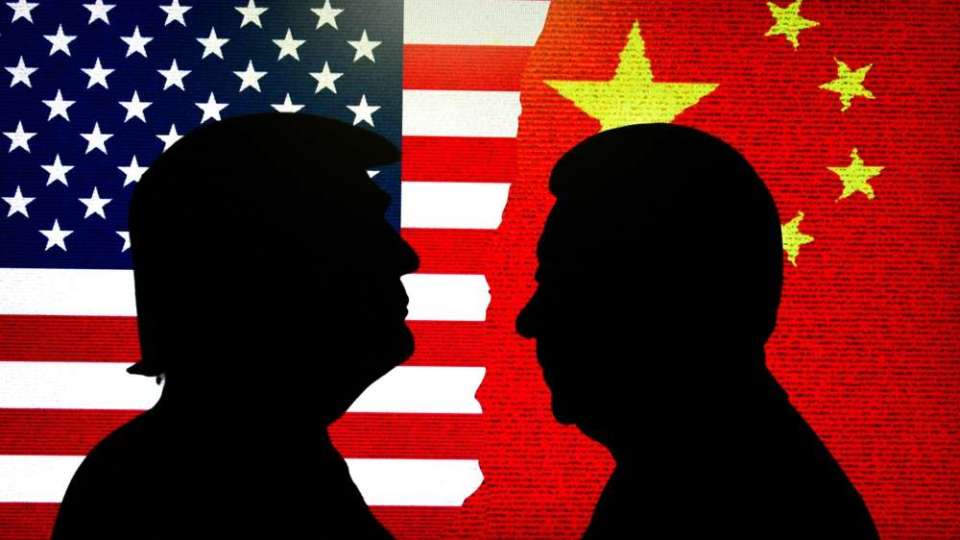
U.S. Secretary of State Marco Rubio stated that Chinese President Xi Jinping’s planned visit to the United States in September remains unchanged, despite President Donald Trump’s recent accusations that China interfered in the American election, raising concerns about the stability of the bilateral trade truce.
Rubio, speaking to the media before departing for Manila to attend the ASEAN foreign ministers’ meeting, said that preparations for the visit are ongoing and that Chinese coordination teams continue to travel to the U.S. as scheduled, with no signs of disruption.
Last week, Trump alleged that the Chinese government stole 220 million voter records during the 2020 U.S. election to influence the outcome. Although these claims have long been refuted by U.S. intelligence agencies, when asked whether Beijing’s alleged actions would incur consequences, Trump only stated that it would depend on the progress of future dialogue.
Xi’s visit marks the second of four planned meetings between the two leaders this year, following their May summit in Beijing. The visit aims to strengthen bilateral ties and uphold the trade truce reached last year. However, rising tensions between the two economic giants over visa policies and artificial intelligence (AI) are casting uncertainty over the trip.
Trump has revived a plan to impose 90-day visa restrictions on Chinese journalists—a policy proposed at the end of his first term but shelved by the Biden administration. Meanwhile, Xi last week led the formation of a global AI governance alliance comprising nearly 30 countries, excluding the U.S. Concurrently, the Chinese AI startup Moonshot AI launched its new model, Kimi K3, challenging the long-held perception of American dominance in AI technology.
This week’s ASEAN summit will provide Rubio with an opportunity to engage with Chinese Foreign Minister Wang Yi, as well as representatives from regional powers like Japan and South Korea, ahead of the U.S.-China leaders’ meeting.
"When two powerful nations like the U.S. and China interact, there will always be friction points," Rubio said. "But I believe nations of our influence have a responsibility to maintain dialogue and sustain bilateral relations."
FACT BOX
- Source: PR Times
- Category: News
- Organizations: Moonshot AI