The U.S. AI regulatory system is facing another personnel change. The U.S. Department of Commerce has confirmed that Chris Fall, director of the Center for AI Standards and Innovation (CAISI), has resigned just three months after taking office. Arvind Raman, director of the National Institute of Standards and Technology (NIST), will serve as interim director. The Department of Commerce has not disclosed the reason for Chris Fall's resignation.
CAISI, under the U.S. Department of Commerce, is responsible for establishing testing, evaluation, and collaborative research mechanisms for commercial AI models. It supports the government in formulating AI safety standards and provides technical assistance for federal AI capability assessments. This leadership change comes at a time when the U.S. is accelerating its AI regulatory efforts, drawing significant market attention.
Kristen Eichamer, spokesperson for the U.S. Department of Commerce, stated that Raman will serve as acting director of CAISI while continuing to lead NIST operations. However, officials have not revealed the reason for Chris Fall's resignation. Axios first reported the news, later confirmed by media outlets including CNBC and Reuters.
This change adds further uncertainty to the leadership structure of the Trump administration's AI policy. David Sacks, former White House AI and cryptocurrency lead, stepped down in March but has not yet been formally replaced, leaving the central coordination role for U.S. AI policy vacant.
Observers note that this occurs as U.S.-China AI competition intensifies rapidly. Chinese AI startup Moonshot AI recently launched Kimi K3, an open-source large language model claiming 2.8 trillion parameters. The model has reportedly matched or even surpassed some leading U.S. models in programming and agent-type AI benchmarks, attracting global attention. Demand surged so quickly after launch that computing capacity became insufficient, forcing the company to temporarily halt new user subscriptions—highlighting the rapidly rising competitiveness of Chinese AI models.
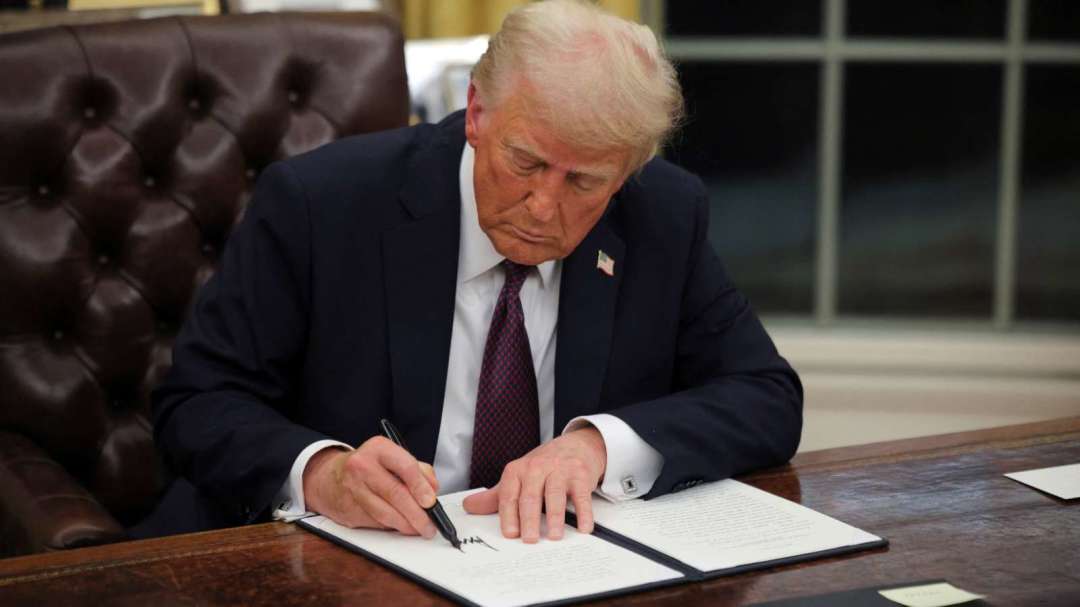
In response to China's rapid AI advancement, the U.S. has continued tightening regulations. In June, President Trump signed an AI executive order requiring AI developers to voluntarily submit models to the government for capability testing before full public release. It also mandates federal agencies to establish a unified evaluation framework within 60 days to strengthen AI safety review systems.
Following the executive order, major U.S. AI companies have already been affected. OpenAI announced that, at the U.S. government's request, its GPT-5.6 series models are initially available only to select 'trusted partners.' Anthropic also temporarily restricted external access to certain models in compliance with the Department of Commerce's export controls, before gradually resuming broader releases.
Meanwhile, the White House recently announced the launch of a new mechanism called 'Gold Eagle,' a platform for managing AI model safety and cybersecurity vulnerabilities. It aims to collect, verify, and prioritize AI-related security flaws and coordinate government procedures for managing cutting-edge AI models. However, public information indicates that CAISI is not currently included among Gold Eagle's primary implementing units.
Market analysts believe that amid China's rapid rise in AI models, the U.S.'s tightening AI regulations, and intensifying industry competition, the sudden leadership change in U.S. AI safety oversight will heighten market scrutiny over future AI testing standards, model review mechanisms, and industrial policy directions.
FACT BOX
- Source: PR Times
- Category: 人事
- Organizations: NIST / OpenAI / Anthropic
- Products / services: Kimi K3 / GPT-5.6