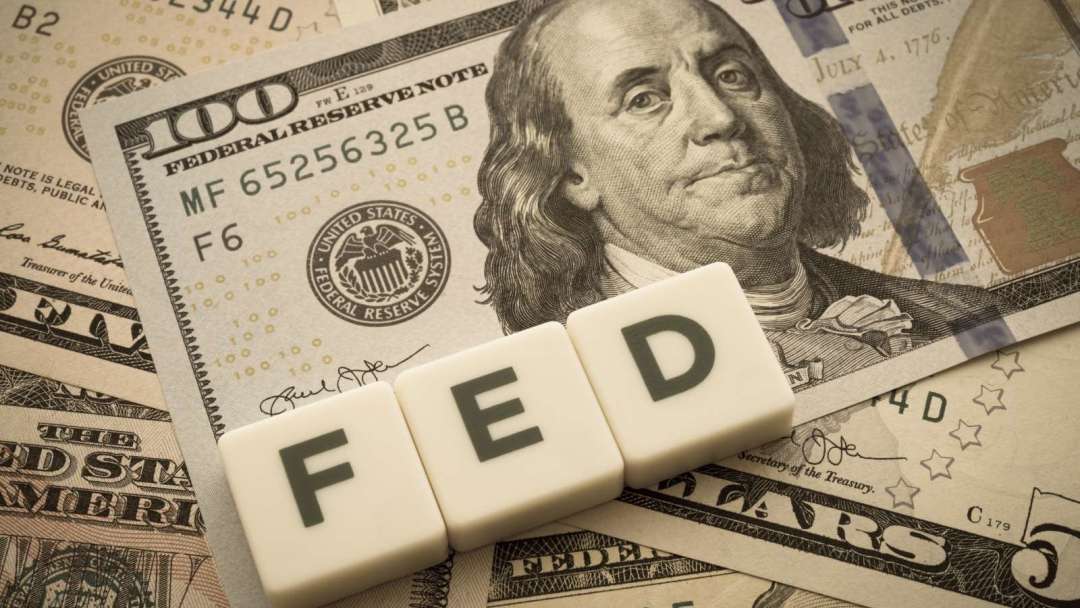
Deutsche Bank has issued a research report indicating that if the U.S. Federal Reserve (Fed) chooses to tighten monetary policy primarily through balance sheet reduction rather than interest rate hikes, it would represent a 'clearly negative' development for the U.S. dollar.
Under the leadership of new Chair Kevin Warsh, the Fed demonstrated a strongly hawkish stance last month. In the latest dot plot, at least half of the 18 Federal Open Market Committee (FOMC) participants expect at least one rate hike this year. Warsh has repeatedly reaffirmed the Fed's commitment to maintaining price stability in public statements and has initiated a comprehensive review of monetary policy operations.
In addition to raising interest rates, the Fed can tighten policy by reducing the money supply. Currently, the Fed's balance sheet stands at approximately $6.7 trillion, down from its peak of around $9 trillion in 2022. However, George Saravelos, Deutsche Bank's Global Head of FX Research, warns against this strategy by citing Japan's precedent.
Saravelos points out that despite the Bank of Japan withdrawing liquidity at a record pace in recent years—allowing large volumes of maturing Japanese Government Bonds (JGBs) to roll off its balance sheet—its quantitative tightening (QT) has been far more aggressive than that of other G10 economies, yet the yen has still fallen to a 40-year low.
He argues that unless balance sheet reduction is accompanied by rising front-end yields, it is not supportive of currency strength.
This aligns with empirical observations showing that a 'bear steepening' of the U.S. yield curve is far less supportive of the dollar than a 'flattening' of the yield curve.
Moreover, Saravelos notes that balance sheet reduction could conflict with the U.S. government's goal of maintaining low long-term yields. Just as Japan's finance minister has publicly discussed using domestic savings to defend government bonds, such actions could raise concerns about central bank independence.
Deutsche Bank emphasizes that, by certain metrics, the Fed's share of U.S. Treasury holdings is not unusually high and does not view balance sheet reduction as an effective tool against inflation. If the Fed ultimately shifts its focus from rate hikes to balance sheet reduction, markets should prepare for a bearish dollar move.
As of the latest quote, the U.S. Dollar Index (DXY), which tracks the dollar against a basket of currencies, was trading at 100.77.
FACT BOX
- Source: PR Times
- Category: Survey