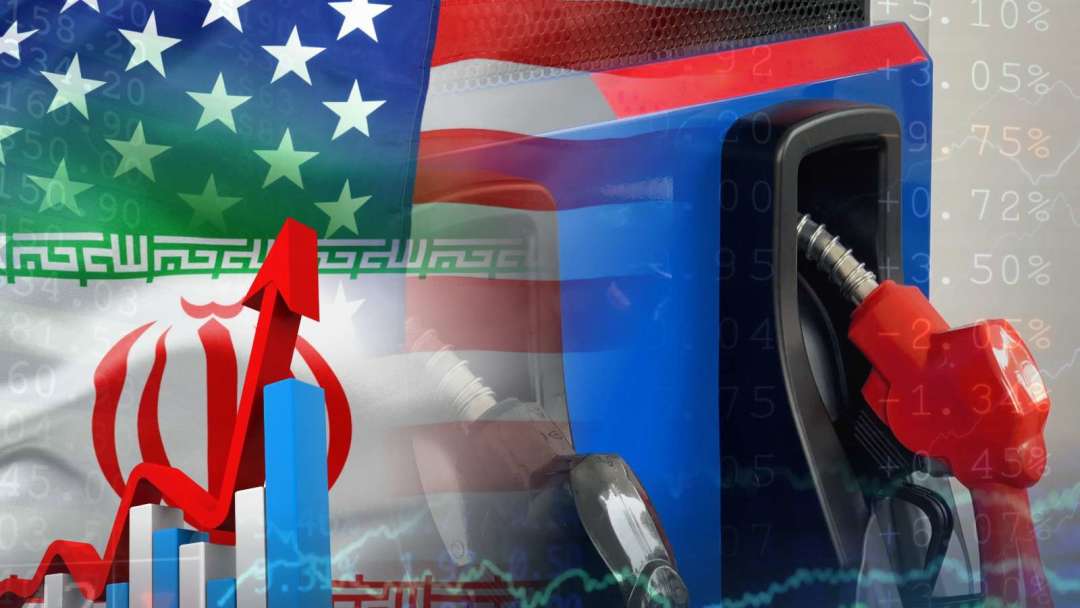
Latest data shows that as U.S.-Iran military tensions escalate once again, gasoline prices—a key driver of U.S. inflation—surged past the critical psychological threshold of $4 per gallon on Monday (the 20th).
According to the American Automobile Association (AAA), the national average price for regular unleaded gasoline reached $4.003 per gallon, ending a one-month period during which prices had hovered below $4. Market concerns over a resurgence of inflation have sharply intensified.
This price surge stems from the crisis in the Strait of Hormuz and the widening conflict. Recent disputes over control of the strait have caused a sharp drop in vessel traffic, Kuwait's oil facilities were damaged in attacks, and Iran claimed that two oil tankers 'exploded' while transiting the strait without authorization.
Militarily, U.S. forces have conducted airstrikes on Iran for nine consecutive days, while Iran has retaliated by attacking U.S. military bases in Jordan and Iraq, resulting in multiple casualties. The temporary ceasefire memorandum reached one month ago has effectively collapsed.
Due to supply chain disruptions, Brent crude oil briefly touched $91 per barrel on Monday, nearly $20 higher than in early July.
This oil price spike comes just before the U.S. midterm elections in November, making it a critical political issue for President Trump.
Although the U.S. June CPI annual growth rate dropped to 3.5%, and Trump had proudly declared in the Oval Office that 'prices have dropped significantly,' renewed fighting is pushing inflation back onto an upward trajectory.
The U.S. CPI annual growth rate had risen from slightly above 2% to 4.2% in May. As gasoline is the most sensitive indicator for household spending perception, persistently high prices will directly undermine voter confidence in economic management.
Mona Yacoubian, Director of the Middle East Program at the U.S. think tank CSIS, pointed out that the breakdown of trust between the U.S. and Iran makes de-escalation difficult. Trump faces a tough choice between 'bad and less bad' options and may have to balance restraint against election pressures to avoid being remembered like Hoover, the president during the Great Depression.
Analysts believe that even before the current crisis, gasoline price declines in the U.S. were already sluggish due to the summer travel peak, attacks on Russian refining capacity, and tight inventories. Now, geopolitical risks are eroding this buffer space. If oil prices remain high, the Federal Reserve (Fed) may maintain high interest rates or even restart rate hikes, further constraining economic growth and adding uncertainty to the November elections.
FACT BOX
- Source: PR Times
- Category: News
- Organizations: AAA / CSIS