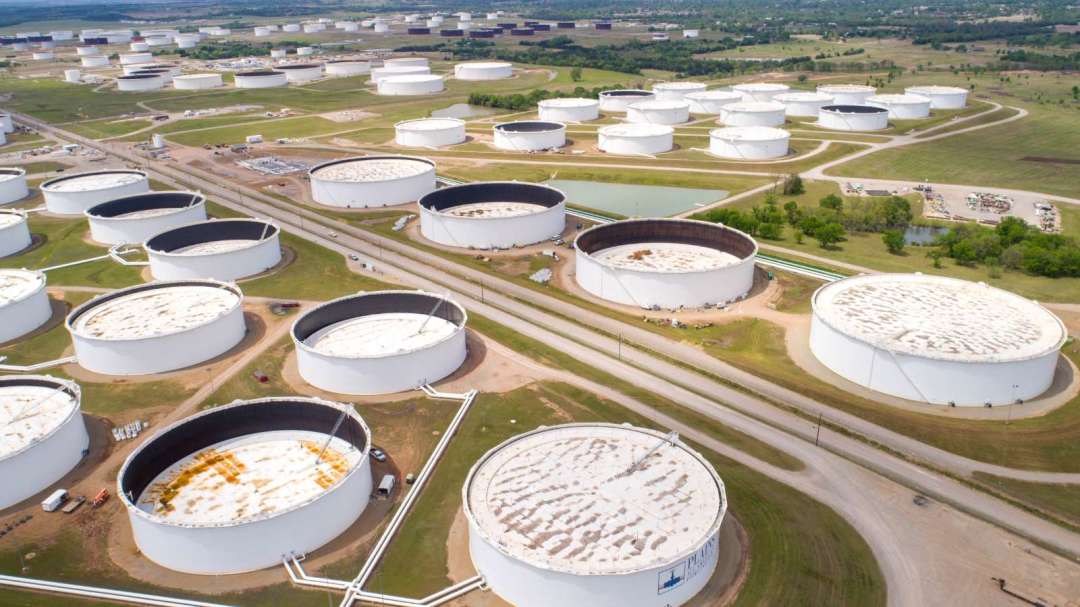
The latest data released by the U.S. Department of Energy shows that, as of the week ending July 17, the U.S. Strategic Petroleum Reserve (SPR) decreased by approximately 5.1 million barrels to 311.4 million barrels—its lowest level since March 1983. This drawdown is part of the U.S. government’s total plan to release 172 million barrels of strategic oil reserves, reflecting the use of emergency energy stockpiles to stabilize market supply amid ongoing Middle East conflict.
According to Department of Energy data, the U.S. SPR has cumulatively declined by 104.04 million barrels since the U.S. and Israel launched military actions against Iran in late February. Market analysts indicate that the continued SPR releases are coordinated with the International Energy Agency (IEA) to stabilize global crude oil supply and mitigate energy supply shocks caused by shipping disruptions in the Strait of Hormuz.
In addition to strategic reserves, overall U.S. oil inventories are also declining. Statistics show that as of July 10, total U.S. oil inventories—including commercial crude stocks and the SPR—dropped by 129 million barrels to 726.2 million barrels, the lowest level since 1984. The Department of Energy is scheduled to release the latest inventory data for the prior week this Wednesday, and markets will closely monitor whether commercial inventories continue to decline.
The recent rapid decline in U.S. strategic reserves has sparked market discussions on energy security. The Wall Street Journal notes that current SPR inventory is now less than half of its design capacity of 714 million barrels. The U.S. Strategic Petroleum Reserve was established in 1975 following the oil crisis, with a current design storage capacity of approximately 714 million barrels, primarily stored in underground salt caverns along the coasts of Texas and Louisiana. Its purpose is to stabilize the domestic market during major energy supply disruptions.
However, the U.S. Department of Energy emphasizes that current inventory levels remain above the technical minimum operational requirements and do not indicate that the U.S. is facing an energy crisis. The Department states that the true technical minimum operational level for the SPR is about 70 million barrels, and sufficient emergency response capacity remains. Furthermore, the government has planned to gradually replenish the SPR once market conditions stabilize, with approximately 200 million barrels of crude oil expected to be repurchased starting next year—exceeding the total volume of the current drawdown.
Market observers note that recent U.S. SPR releases have helped ease upward pressure on oil prices caused by the Iran conflict and shipping restrictions in the Strait of Hormuz. However, if the Middle East situation further deteriorates and global supply remains disrupted, balancing short-term oil market stability with long-term energy security will remain a critical challenge for U.S. energy policy.
FACT BOX
- Source: PR Times
- Category: News