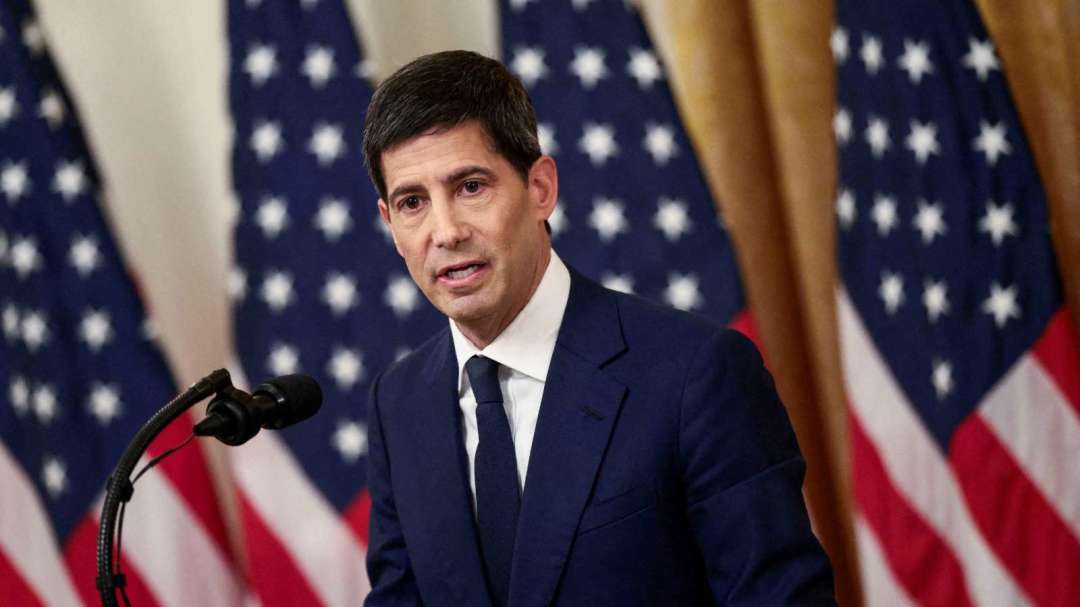
Since Federal Reserve Chair Warsh took office, the central bank's communication approach has undergone a significant transformation. The market-familiar 'forward guidance' is gradually fading, replaced by more concise and conservative policy messaging. In response to this shift, Wall Street investment institutions are seeking new methods to interpret the Fed's moves—turning even to artificial intelligence for analytical tools. Among them, 'WarshGPT,' launched by F/m Investments, has emerged as a focal point.
Alexander Morris, CEO of F/m Investments, noted that investors previously relied on decoding Fed officials' 'jargon' to anticipate policy direction. However, under Warsh's leadership, markets may face greater challenges due to reduced transparency. To address this, F/m developed WarshGPT—an AI tool that analyzes nearly 1,800 of Warsh's past documents and public statements to help users understand his likely analytical framework on economic and monetary policy issues.
Named in imitation of ChatGPT, the tool is actually built on Anthropic's Claude model. It took about two weeks from concept to launch, with development costs under $1,000. In addition to Warsh's public remarks, the system incorporates economic and political historical context. However, F/m deliberately limited its functionality—preventing the chatbot from mimicking Warsh's tone or providing policy forecasts or forward-looking statements.
Wall Street is not alone in adjusting its strategy. UBS has launched an interactive dashboard for clients to track the Fed's policy tone, helping investors assess Warsh's likely messaging during policy meetings. UBS strategists point out that Warsh's policy-related remarks show a clearly hawkish bias, requiring investors to conduct more nuanced analysis of his views on inflation, labor markets, and economic growth.
JPMorgan Asset Management is also preparing for potential declines in Fed transparency. David Kelly, the firm's Chief Global Strategist, stated that if the Fed eliminates key policy signals like the interest rate 'dot plot,' investment teams will increasingly rely on parsing FOMC members' speeches to anticipate future rate decisions.
Market observers believe Warsh's new Fed style could bring financial markets back to the 'reading the central bank's language' era of Alan Greenspan. Back then, a single brief comment from Greenspan could trigger market volatility, even spawning alternative indicators like the 'briefcase index' to infer Fed intentions.
In fact, Warsh has already begun reforming the Fed's communication mechanisms. Within his newly established task force on reimagining Fed operations, improving information disclosure is a key agenda item. The Fed's June policy statement was only about 130 words—significantly shorter than the previous 300+ word statements. Warsh acknowledged the new version is more concise and deliberately removed forward guidance.
According to UBS data, during Warsh's first press conference as chair, only about 5% of his remarks addressed core policy issues—down sharply from the 27% typical under former Chair Powell. This 'say less, do more' approach makes it harder for markets to anticipate the Fed's future policy direction.
In this information-scarce environment, AI tools may become Wall Street's new analytical weapon. Gary Richardson, a former Fed historian, noted that investors still need to judge the central bank's future policy path. Thus, when information is limited, markets will inevitably invest more resources in deciphering the Fed's true intentions.
As Warsh leads the Fed and policy signals become harder to capture, market expectations for future interest rates are diverging. Some traders anticipate a rate hike in September, while others believe the odds of holding rates steady are higher. For investors, decoding the Fed in the Warsh era has become a new market race.
FACT BOX
- Source: PR Times
- Category: New Product
- Organizations: F/m Investments
- Products / services: WarshGPT