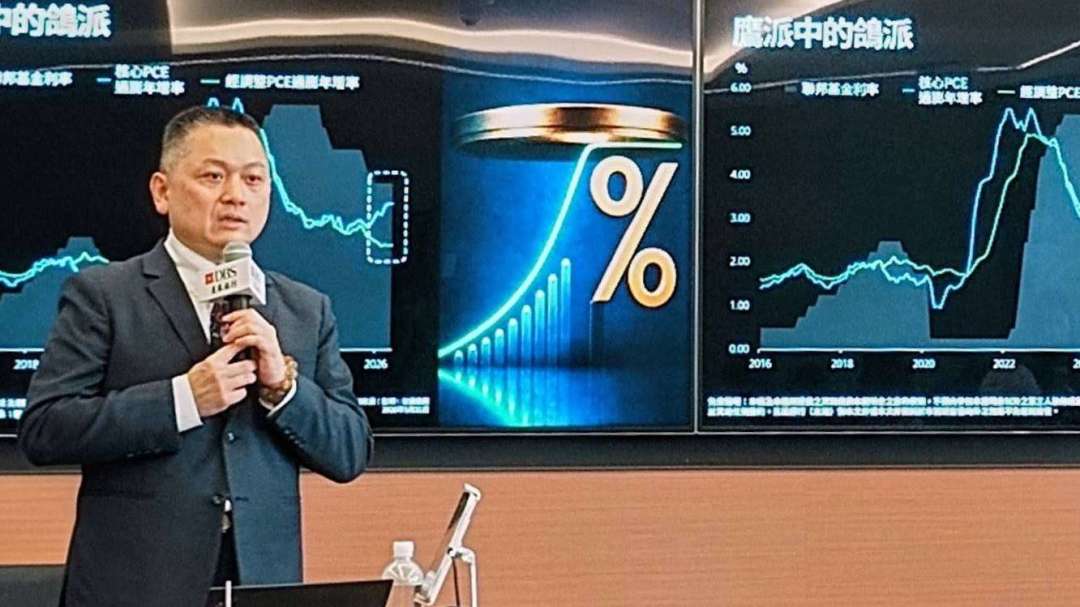
DBS Bank held its Q3 2025 Investment and Economic Outlook briefing today (21st), where Chen Yu-Jia, Senior Vice President of Wealth Management Investment Advisory at DBS Bank (Taiwan), highlighted that the global economy has entered an era of 'scarcity.' Amid intertwined fiscal policies, geopolitical tensions, and rising protectionism, the U.S. economy has demonstrated strong resilience, compelling the Federal Reserve (Fed) to maintain a hawkish monetary stance. DBS forecasts that the federal funds rate will remain elevated at 3.75% from 2025 to 2026, with the U.S. economy outperforming major economies such as the Eurozone. The U.S. dollar is expected to rise moderately in the third quarter. Meanwhile, the Japanese yen may continue its weakening trend and could potentially fall to 170, unless the Bank of Japan implements more aggressive rate hikes.
U.S. Economic Resilience and the New Era of 'Scarce Assets'
Chen Yu-Jia noted that robust consumer spending, energy exports, and investment momentum have underpinned the U.S. economy's strength. In particular, the proposed 'One Big Beautiful Bill' by former President Trump is expected to further boost market confidence and drive significant capital expenditure growth. However, he emphasized that the global landscape has undergone structural changes.
According to Chen, the world has shifted from the previous era of low inflation and low interest rates into a 'scarcity era' since 2022. In this new paradigm, fiscal policies are increasingly interfering with monetary policies, while geopolitical uncertainty and protectionist measures have led to supply shortages in commodities, making inflation persistently sticky.
Fed Turns More Hawkish, High Rates Expected to Last Until 2027
Regarding the pace of interest rate changes, Chen analyzed that strong economic data and persistent inflation may prompt the Fed to keep rates elevated. He believes the Fed is currently using hawkish rhetoric to 'buy time,' allowing financial conditions to tighten moderately while closely monitoring the actual progress of inflation and oil price cooling, thereby avoiding the shock of immediate rate hikes.
DBS Group expects the Fed's policy stance to be more hawkish than previously anticipated by the market, forecasting that interest rates will stabilize at 3.75% in both 2026 and 2027. Notably, U.S. Treasury issuance continues to rise, with issuance in some years exceeding GDP growth. Chen warned that this trend is eroding the traditional safe-haven and risk-diversification functions of U.S. government bonds, urging investors to prepare for structural inflation and central banks' hawkish policies.
USD to Rise Moderately, JPY and European Currencies Face Challenges
In the foreign exchange market, the new macroeconomic landscape shaped by U.S.-Iran tensions has made the U.S. economy relatively stronger compared to major economies like the Eurozone, supporting a moderate rise in the U.S. dollar in Q3. In contrast, the euro and British pound are expected to underperform due to their geographical vulnerability to rising energy prices.
As for the Japanese yen, which continues to suffer from low interest rates and fiscal deficits, Chen believes its weakness may persist longer, with a potential decline to 169–170 unless the Bank of Japan takes more aggressive tightening measures. Meanwhile, the Australian and New Zealand dollars are expected to show relative resilience, supported by yield advantages and stable commodity prices. The Chinese yuan, having approached its cyclical peak, is expected to have limited room for further appreciation under strong dollar pressure.
FACT BOX
- Source: PR Times
- Category: Survey