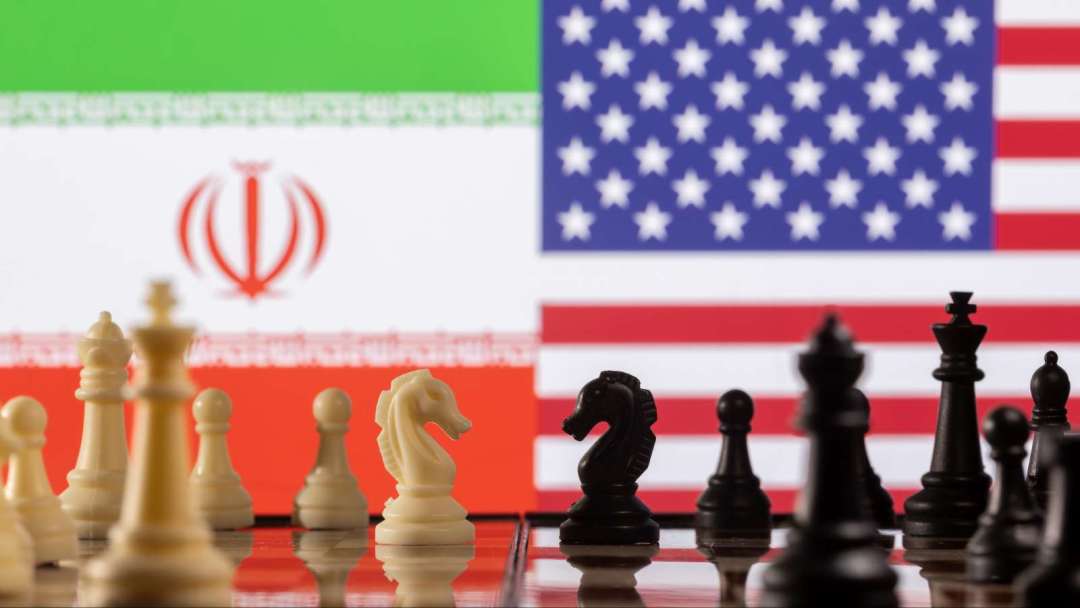
U.S. President Trump on Tuesday (21st) downplayed the likelihood of renewed talks with Iran in the near term, stating that Tehran must be ready for 'meaningful' negotiations, or the U.S. has no interest. As the U.S. and Iran mark their 10th consecutive day of mutual attacks, Iran-backed Houthi movement in Yemen has threatened to blockade Saudi Arabian ports, further endangering Red Sea shipping and global energy supplies.
Speaking at the White House during a meeting with Lebanon’s president, Trump said Iran is eager to hold talks but emphasized that the U.S. will not engage until Iran is prepared for substantive negotiations. He reiterated his threat to continue fighting. Tehran has denied U.S. claims that Iran is seeking more talks.
Mediation efforts by countries like Pakistan and Qatar continue in hopes of reviving the temporary peace agreement reached on June 17. Iran’s Interior Minister Eskandar Momeni arrived in Pakistan on Tuesday, but no progress has been reported.
Oil prices continue to rise amid escalating Middle East tensions. The nearly five-month-long conflict, which erupted after U.S. and Israeli airstrikes on Iran in late February and reignited in July, has pushed oil prices up about 20%. Brent crude traded near $90 per barrel on Tuesday.
U.S. Central Command reported overnight strikes on Iranian military command centers, missile launch sites, and air defense systems. Iran retaliated by attacking facilities in Kuwait and Jordan, with Kuwait reporting damage to power plants and desalination facilities.
The UK Navy reported two vessels attacked near the Strait of Hormuz, where commercial shipping volume has dropped to a three-week low. The Kuwaiti oil tanker Kaifan, operated by Kuwait Oil Tanker Company, became the latest large vessel to be targeted.
Iran insists it has the right to manage traffic in the Strait of Hormuz and has attacked U.S. bases in Kuwait, Jordan, Bahrain, and Iraq. The U.S. military reported three soldiers killed in northern Iraq and Jordan since last Friday, with one missing. Iran claimed U.S. strikes hit a bridge, killing over 50 and injuring more than 500.
Trump stated that even if the U.S. were to withdraw now, the military operation has already achieved significant success, but U.S. forces will not leave immediately. He again threatened to soon attack Iran’s Pickaxe Mountain facility, which the U.S. and Israel suspect is linked to nuclear programs.
A U.S. official said Trump is currently focused on punishing Iran for attacks on shipping in the Strait of Hormuz, and military strikes will continue until the president changes course—though diplomatic efforts to end the war persist.
The Iran-backed Houthi movement in Yemen announced on Monday it would impose a maritime blockade on Saudi Arabia. According to an email seen by Bloomberg, the group warned shipowners not to dock at Saudi ports, potentially disrupting millions of barrels of daily crude exports via the Red Sea.
When asked about the Houthis’ potential attacks on shipping, Trump said the U.S. would handle it if it happens, but did not specify what military or security measures might be taken.
The Saudi-led coalition in Yemen said it is taking steps to protect vessels, while Saudi Arabia’s Foreign Ministry stated it would take all necessary actions under international law to ensure ship safety.
The Middle East conflict has pushed U.S. retail gasoline prices back above $4 per gallon, potentially hurting Trump and the Republican Party ahead of the November midterm elections. Trump even claimed Iran 'might' be trying to influence the U.S. election through attacks on strait shipping, though he provided no evidence.
Pakistan and Qatar believe returning U.S.-Iran relations to their pre-July 9 positions is the first step toward de-escalation. Regarding reports of a proposed 10-day ceasefire, a U.S. official said diplomacy continues but has not altered the military offensive.
Iranian Foreign Minister Abbas Araghchi stated Iran will not abandon diplomacy but will not be forced back to negotiations while under military attack. He emphasized that Iran’s actions in the Strait of Hormuz and Persian Gulf have global impact, and Tehran views control over the strait as both a bargaining chip with the U.S. and a critical national security tool.
FACT BOX
- Source: PR Times
- Category: News
- Organizations: Kuwait Oil Tanker Company