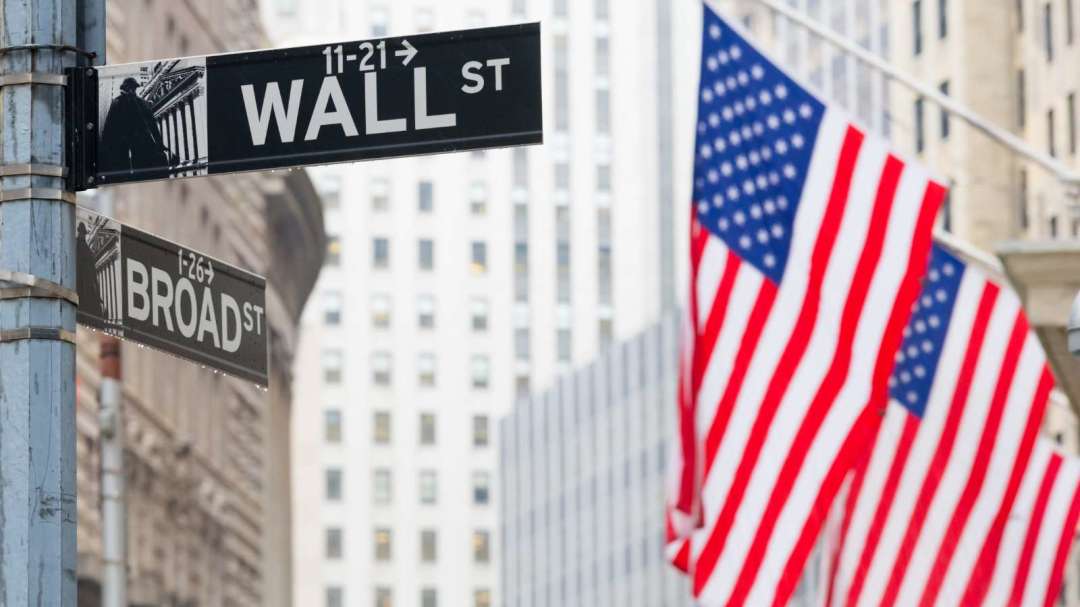
According to Zhitong Caijing, the U.S. economy is showing unexpectedly strong resilience—robust labor markets, steady retail sales, and a rebound in regional manufacturing. Yet for U.S. stock investors, these 'good news' developments are increasingly turning into tangible 'bad news'.
The latest research from Leuthold Group reveals a troubling market pattern: when the Citi U.S. Economic Surprise Index breaks above the critical threshold of 40, the S&P 500 tends to record negative returns within the following three weeks, with an average recovery period of three months. Currently, the index has climbed to 50.3, and the 'good news is bad news' curse is once again looming over Wall Street.
Since Citi first introduced the Economic Surprise Index in 2003, Leuthold Group's tracking data shows that there have been 28 instances where 'Main Street' economic indicators reached 40 or higher, and in every case, the S&P 500 recorded negative returns over the subsequent 21 trading days. On average, markets took about three months to recover from the declines.
Chun Wang, Chief Multi-Asset Strategist at Leuthold, said: 'We have indeed noticed this shift in market dynamics, especially over the past two to three months, where positive news often coincides with weak stock performance.' He believes this 'good news is bad news' phenomenon results from a confluence of factors.
The Citi Economic Surprise Index has remained in positive territory throughout this year, and recent declines in oil prices have further boosted the index. In June, it briefly surpassed 63, the highest level since 2023, indicating that U.S. economic data has outperformed expectations to a degree rarely seen in recent years.
This research also offers a method for gauging investor sentiment. Markets hope economic data is neither strong enough to fuel inflation and force the Fed into more aggressive policy actions, nor weak enough to drag down economic growth—constantly seeking a delicate balance.
Iran War: An 'Extra Interference' Breaking Historical Patterns
Wang specifically highlights the Iran war as the most notable variable in this current 'good news is bad news' phenomenon. The 'extra interference' from U.S.-Iran military conflict is the event most deviating from historical patterns, significantly impacting oil prices and breakeven inflation rates.
Rising oil prices themselves constitute a form of policy pressure. Leuthold's Chief Investment Strategist Jim Paulsen previously found a high negative correlation (0.7) between the Citi Economic Surprise Index and a policy pressure index measuring rising oil prices, higher 10-year Treasury yields, and a stronger dollar. The policy pressure index typically leads the economic surprise index by about three months.
This implies that today's strong economic data may simply be a lagging effect of oil price increases and accumulated policy pressure from three months ago.
Logic 1: Overheating Economy Triggers Inflation and Rate Hike Fears
Strong economic data is a double-edged sword. Bob Lang, Founder and Chief Strategist at Explosive Options, said: 'Monetary policy could shift in the coming weeks and fall, reflecting a more aggressive stance by the government in combating inflation.'
Markets fear that if economic data continues to exceed expectations, the Fed's task of bringing inflation down to its 2% target will become even harder.
Although June's CPI and PPI both came in below expectations, temporarily dampening rate hike expectations, Fed officials remain cautious. Chair Kevin Warsh stated that 'one lower CPI print doesn't mean mission accomplished';理事 Christopher Waller warned that if core inflation heats up again, the Fed may need to tighten policy further in the near term.
Bank of America economists still forecast rate hikes at the Fed's September, October, and December meetings.
Logic 2: Valuations Have Already Priced in the Most Optimistic Scenario
Ken Mahoney, CEO of Mahoney Asset Management, pointed out that the stock market has risen 17% since late March, and current valuations may have already fully reflected the market's most optimistic expectations.
He said: 'The most optimistic scenario may already be priced into stock prices, and now robust economic reports could actually pressure equities. The way the market interprets news has undergone this asymmetric shift.'
Valuation pressure signals are particularly evident. As of July 14, 2026, the S&P 500's trailing P/E ratio (PE-TTM) stood at 28.35x, in the 79.12th percentile over the past decade. If S&P 500 corporate profit margins revert to 2019 levels, the index's implied forward P/E would be about 27x—already higher than the ~26.5x peak during the dot-com bubble in March 2000.
Moreover, the S&P 500's Shiller P/E ratio has already surpassed 42x, roughly 2.4 times the long-term average (17.4x).
Logic 3: Tech Stock Rotation and Position Adjustment Effects
Sameer Samana, Head of Global Equities and Real Assets at Wells Fargo Investment Institute, believes the recent weakness in the S&P 500 may be more attributable to ongoing rotation out of tech and AI stocks.
David Chew's team at Citi notes that recent sell-offs in AI and tech stocks have triggered broad de-risking across markets, with clear bearish capital flows into large-cap U.S. stocks. S&P 500 position adjustments are primarily driven by long liquidations, while the Nasdaq Index shows simultaneous long unwinding and new short positioning.
Citi warns that the unwinding of U.S. equity positions is not yet complete. Nasdaq 100 long positions are now fully underwater, and overall holdings remain elevated, suggesting further liquidation pressure may lie ahead.
Facing this 'good news is bad news' market environment, Wang advises investors to remain 'extra cautious'.
He said: 'We've always believed that the stock market is part of the current economy, and due to wealth effects, it could become the biggest risk to the economy. In asset allocation, we should take a more balanced approach toward risk assets.'
He added that while the short-term situation 'isn't too bad,' investors must remain 'extra cautious' given the current market environment.
However, not all market participants are pessimistic.
HSBC strategists previously warned that overheated sentiment, weakening fiscal stimulus effects, and uncertainty from U.S. midterm elections could trigger a market pullback. Yet they also noted that current market positioning and sentiment indicators are approaching levels seen during the 2021 economic reopening rally.
For investors, the current market environment raises a fundamental question: when stronger economic data makes markets more fragile, is the traditional logic of 'economic growth benefits stocks' changing?
Until the Citi Economic Surprise Index falls from its current high of 50.3, U.S. stocks may remain under the 'good news is bad news' spell.
FACT BOX
- Source: PR Times
- Category: Survey
- Organizations: Leuthold Group / Explosive Options / Mahoney Asset Management
- Products / services: S&P 500 / Shiller P/E