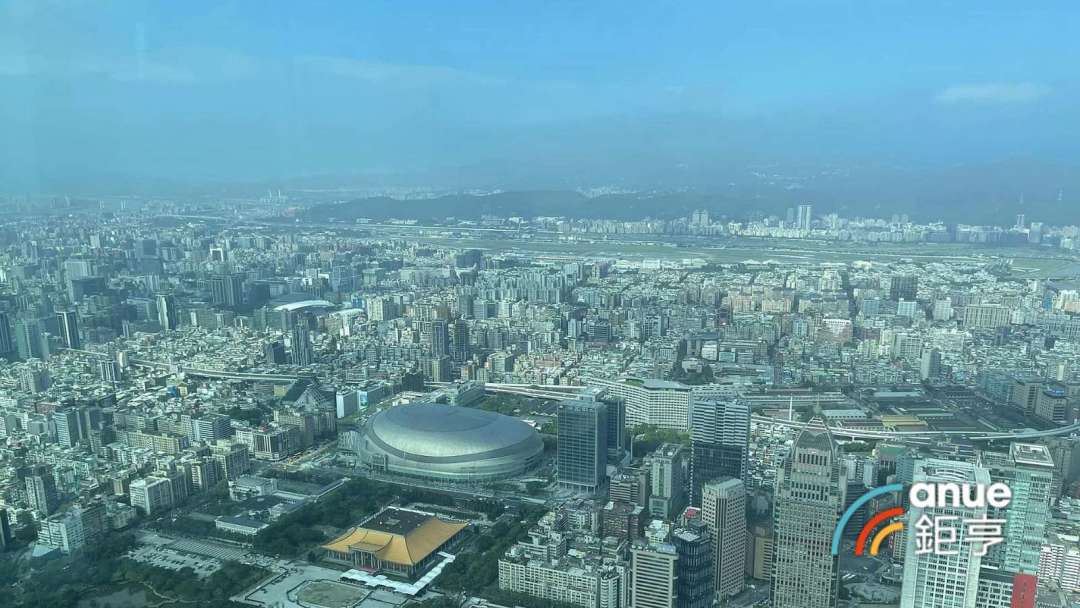
The long-debated location for the New Taipei Dome has been finalized, with construction set in Shulin District. Together with the recently confirmed New Taipei Dome, Taiwan now has three major domes under development or operation in Taipei, Taichung, and New Taipei City, each featuring over 40,000 seats. Based on actual transaction records, real estate agencies have analyzed property prices around these three domes over the past year. Taipei Dome leads with an average price of NT$102.3 million per ping, followed by the New Taipei Dome at approximately NT$38.9 million per ping, and Taichung's Super Dome at around NT$33.4 million per ping.
Moreover, all three dome sites boast substantial population-driven commercial potential. The administrative areas surrounding the New Taipei Dome are home to over one million residents, while both Taipei and Taichung have solid population bases exceeding 500,000.
Chen Ding-zhong, Senior Manager at the Trend Center of Taiwan House Group, stated that domes accommodate tens of thousands of people, making crowd absorption and dispersal a critical factor in site selection—beyond just land size. As such, all three domes are being built at transportation hubs located at the junctions of densely populated districts, facilitating access for visitors from across the region.
The New Taipei Dome will have the largest seating capacity in Taiwan, with a site area of 23 hectares—the largest among the three domes. Emphasis on smooth traffic flow led to the selection of the Shulin Ji-5 site, which is surrounded by key transportation arteries including Shulin Railway Station, the second phase of the Wanda-Shulin MRT line, and Provincial Highway No. 65. Combined with a consumer base of over one million people nearby, this provides a strong foundation for future operations, allowing it to outcompete the Danhai New Town proposal. Currently, the area around the planned site is dominated by metal-sheet factories and is somewhat separated from urban centers. However, the dome’s construction is expected to transform the area from industrial to commercial use, integrating with Shulin’s urban development and boosting local property values.
Zhang Xu-lan, Executive Director of the Trend Center at Taiwan House Group, noted that dome developments integrate sports, entertainment, shopping malls, and hotels, which helps revitalize surrounding business districts. For the local real estate market, the impact on retail storefronts and commercial offices is greater than on residential properties.
For example, since the Taipei Dome opened in 2023, with its underground mall launching the following year, it has injected new vitality into the long-sluggish East District. In recent years, numerous new dining and retail businesses have moved into the surrounding商圈, attracting large numbers of consumers. MRT Sun Yat-sen Memorial Hall Station’s ridership has increased annually: 15.12 million entries and exits in 2023 (the year of dome completion), 17.16 million in 2024, and reaching 20.19 million in 2025. Major sporting events and concerts have stimulated consumer spending and revitalized the local economy. This success has prompted other major cities to pursue their own dome projects.
Chen Ding-zhong pointed out that Taichung’s dome developments are highly concentrated in Beitun District, including the existing mini-dome at the Intercontinental Baseball Park, the under-construction Taichung Dome, and the Super Dome being developed via a BOT model—all located in Beitun. This is primarily because Beitun is the most populous district in central Taiwan, with active land redevelopment, abundant land supply, and well-developed transportation infrastructure such as the Green MRT Line and Provincial Highway No. 74, making it a prime location for large public projects.
FACT BOX
- Source: PR Times
- Category: Event