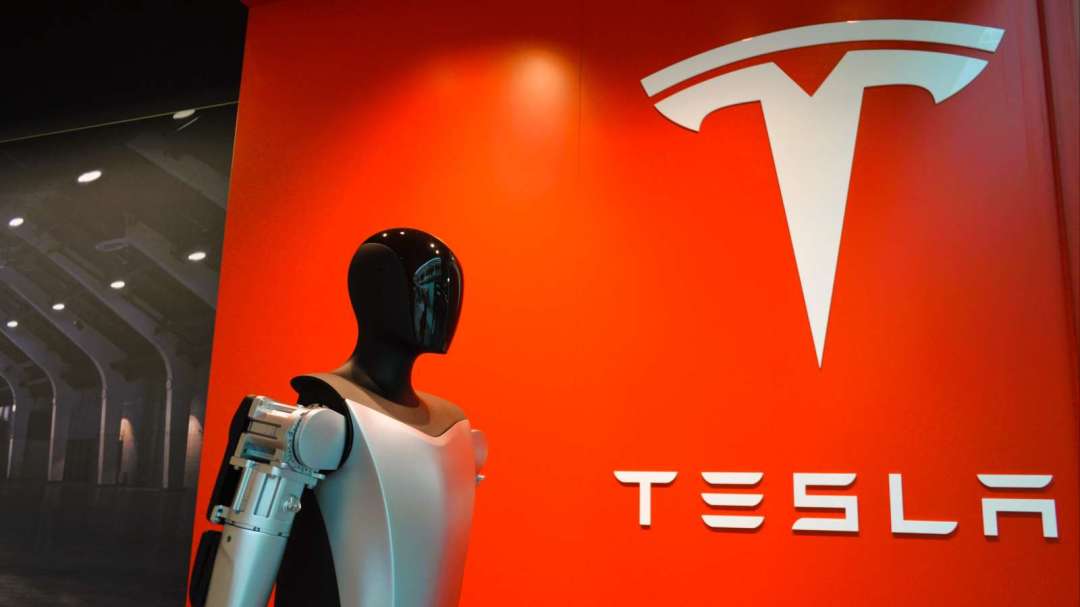
Tesla (TSLA-US) is set to release its 2026 second-quarter financial results after U.S. market close on the 22nd. While recent delivery data shows the automaker's core business has rebounded strongly from earlier slumps, Wall Street's focus has shifted to whether this unprecedented 'AI mega-bet' can justify its sky-high valuation.
Tesla's estimated price-to-earnings (P/E) ratio now stands at 177x, the highest among the 'Magnificent Seven' tech giants, meaning the earnings report leaves almost no room for error.
Sales and Energy Deployment Hit New Highs
Tesla delivered a strong performance in Q2, with global deliveries reaching 480,126 vehicles, a 25% year-on-year increase. This significantly exceeded analysts' expectations of 406,000 units and marks the strongest growth rate since Q3 2023.
This surge was primarily driven by the completion of production ramp-up for the new Model Y and the effectiveness of global price-cutting strategies. Despite the strong rebound in sales, Tesla still lags behind rival BYD, which delivered 557,000 all-electric vehicles during the same period.
In addition to automotive, Tesla's energy storage deployments reached 13.5 GWh, a more than 50% increase from the previous quarter, becoming a crucial pillar supporting improved financial performance. Analysts expect Tesla's Q2 revenue to fall between $26.2 billion and $27.6 billion.
AI Infrastructure Spending Erodes Cash Flow
However, behind the strong sales figures, Wall Street is growing concerned about another issue: massive AI investments are eroding cash flow.
To accelerate development of Robotaxi, Full Self-Driving (FSD), and the Optimus humanoid robot, Tesla plans to spend approximately $25 billion to $26.8 billion in capital expenditures in 2026—far exceeding the $8.5 billion spent in 2025.
Analysts predict that due to AI infrastructure expansion and R&D investments, Tesla's free cash flow will drop to negative $3.25 billion in Q2. This strategic shift from an 'automaker' to an 'AI infrastructure company,' while the foundation of its high valuation, is increasingly raising investor concerns about whether these investments will translate into tangible competitive advantages.
The Reality Gap in Autonomous Driving and Robotaxi
Tesla's Robotaxi (driverless taxi) business is seen as a core driver of future growth, but currently faces significant challenges. Although the Cybercab rolled off the Texas factory line in February 2026, its mass production and commercialization remain constrained by software limitations.
Data shows that Tesla's Robotaxi fleet operating in Austin experiences an accident every 57,000 miles, with an accident rate approximately four times that of average U.S. drivers.
Elon Musk has postponed large-scale autonomous deployment until the release of FSD v15, which is considered a complete architectural rewrite and is not expected until late 2026 at the earliest. Shareholders have raised sharp questions on the Say Technologies platform, asking why the company has failed to meet Robotaxi's short-term goals for three consecutive quarters.
Market Watch: Stock Volatility Under Perfect Pricing
Tesla's stock price has declined about 15% to 17% year-to-date, underperforming the broader market. Investors are closely watching whether Musk will provide a concrete Robotaxi expansion timeline or clear progress updates on FSD v15 during the earnings call. Options markets anticipate a sharp post-earnings stock movement of approximately 5.76% to 8%.
FACT BOX
- Source: PR Times
- Category: News
- Products / services: Model Y / Robotaxi