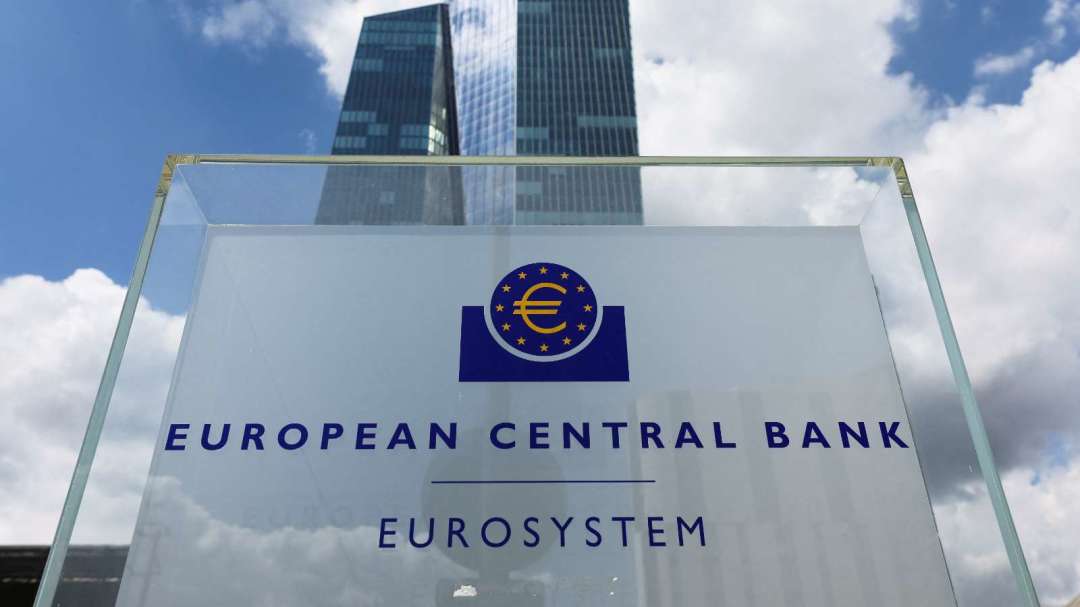
The European Central Bank (ECB) announced on Thursday (23rd) that it would keep interest rates unchanged, in line with market expectations. Decision-makers chose to wait for more data to assess the impact of energy shocks caused by the Iran war on inflation, which could force the central bank to tighten policy again.
The ECB maintained the deposit rate at 2.25%. Economists and investors widely expect that after the June rate hike, the ECB may raise rates by another 25 basis points in September. The ECB reiterated that it will not pre-commit to future interest rate paths, but will make decisions meeting by meeting based on the latest information.
In its statement, the ECB said uncertainty remains high, and the full impact of the energy shock on inflation has not yet emerged. The Governing Council will closely monitor the intensity, duration, and indirect and second-round effects of the shock. The decision-makers also reiterated that the ECB is currently in a favorable position to respond to changing circumstances.
After the interest rate decision was announced, European bond markets saw little movement. The yield on Germany's 10-year government bond rose 2 basis points to 3.19%, briefly touching 3.21% during the session—the highest level since 2011. Interest rate swap markets indicate that investors are almost fully pricing in a 25-basis-point rate hike by the ECB in September, with a near-certainty of another 25-basis-point hike by year-end. The euro fell 0.2% against the dollar, trading around $1.1390.
The ECB became the first G7 central bank to raise rates in June after the outbreak of the Iran war. At the time, officials warned that inflationary pressures from the war were no longer limited to the energy sector, and that the eurozone economy remained resilient, necessitating an assessment of further tightening.
The September meeting is seen as the next potential rate hike window, when the ECB will have access to the latest quarterly economic forecasts, two months of inflation data, and multiple business surveys. Although eurozone inflation slowed to 2.8% in June, rising energy prices could reignite upward pressure on prices.
Iran-backed Houthi rebels in Yemen claimed attacks on two Saudi oil tankers, threatening energy shipments through the Red Sea. Brent crude oil prices are nearing $100 per barrel. Escalating conflict also increases the risk of prolonged disruption in the Strait of Hormuz. If energy supplies tighten further, oil and gas prices—and inflation—could continue to rise.
The ECB previously projected inflation at 3% this year, falling to 2.3% in 2027 and 2% in 2028. However, core inflation, excluding energy and food, is expected to remain above the 2% target through 2028. With neither the U.S. nor Iran signaling a resumption of peace talks in the near term, the ECB chose to pause rate hikes, but its overall policy stance remains clearly hawkish.
FACT BOX
- Source: PR Times
- Category: News
- Organizations: G7