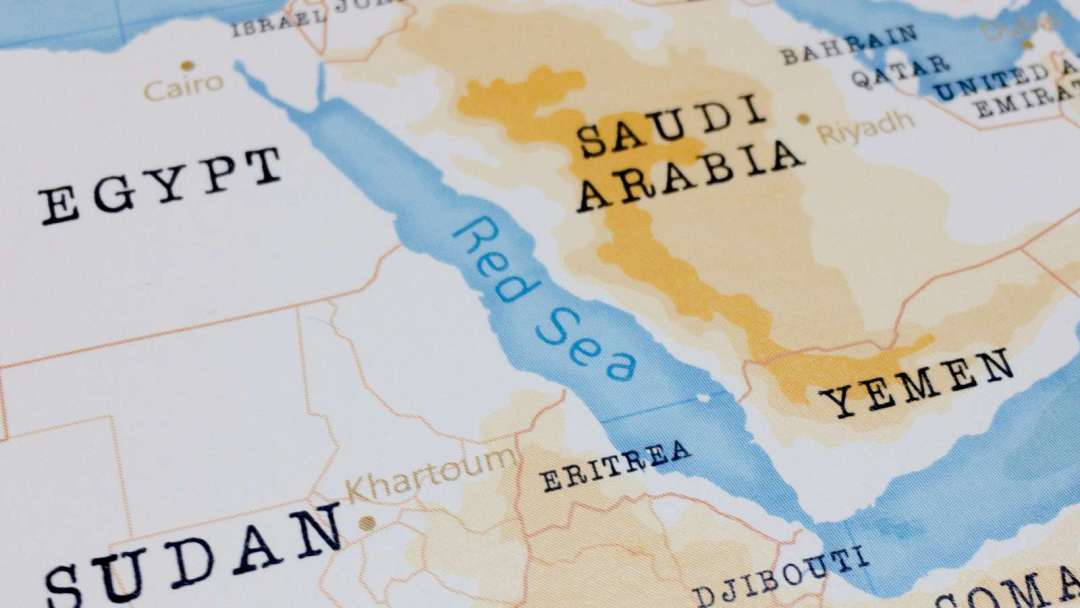
With the Strait of Hormuz in the Middle East still facing disrupted navigation, Yemen's Houthi rebels have renewed threats against international shipping, putting the Bab el-Mandeb Strait on high alert once again. Industry analysts believe that if navigation through the Bab el-Mandeb is blocked, the impact on the oil tanker market would be greater than on the container shipping sector.
On July 20, the Houthis warned international shipping companies that vessels trading with Saudi Arabian ports could face military strikes, expanding their previously declared maritime blockade against the kingdom.
"Given the current Middle East situation, Iran is strictly controlling passage through the Strait of Hormuz, increasing Saudi Arabia’s reliance on its western ports for exports. If the Houthis target ships in the Bab el-Mandeb waters, cargo may need to be rerouted northward from Yanbu port, possibly involving VLCC-to-smaller vessel transshipment north of the Suez Canal, significantly increasing sailing distances," said Wu Jialu, Chief Analyst at CITIC Futures.
Wu further stated that on one hand, geopolitical risk premiums are rising, and on the other, transport distances are lengthening. With global crude oil inventories currently low, shippers are expected to accept higher freight costs and allow vessels to reroute, thereby pushing up tanker freight rates.
Data from the Baltic Exchange shows that as of July 20, the Baltic Dirty Tanker Index (BDTI) for route TD22 (U.S. Gulf to China) stood at $104,000 per day TCE, while route TD15 (West Africa to China) was at $103,000 per day TCE—both still at historical highs.
For the container shipping market, a decline in Bab el-Mandeb traffic would have a relatively minor impact on Europe-Mediterranean routes. Although some carriers have announced the resumption of Suez Canal transit on select routes, most Europe-Mediterranean services continue to reroute around the Cape of Good Hope.
"About 90% of major carriers’ capacity on Europe-Mediterranean routes is already rerouting around the Cape of Good Hope, so a blockade of the Bab el-Mandeb would have limited impact on mainstream operators," said a Europe-Mediterranean route expert at Yunquna.
The expert added, "Currently, market confidence in August cargo volumes is weak, with volumes already showing a downward trend. As August marks the beginning of the traditional off-season for Europe-Mediterranean routes, the impact on freight rates will depend on carriers’ ability to manage capacity and slow the pace of rate declines."
Wu Jialu also noted that major shipping lines continue to favor the Cape of Good Hope reroute for Europe-bound services. A Bab el-Mandeb blockade would mainly affect market sentiment, and ongoing monitoring of the strait’s navigability remains essential.
However, according to a report by Cailianshe on July 22 (Wednesday), Red Sea route freight rates have already risen due to escalating Middle East tensions. Some Chinese freight forwarders have learned that certain carriers have temporarily suspended cargo acceptance on affected routes, while others have received price hike notices—rates are expected to increase by nearly $2,000 per FEU starting August 1 compared to current weekly levels.
FACT BOX
- Source: PR Times
- Category: News