The global dairy industry is accelerating its shift toward 'antibiotic reduction' and 'precision feeding.' A research team led by Professor Chen Ming-Ju of the Department of Animal Science and Technology at National Taiwan University (NTU) has partnered with Sheng Hwa Biotechnology (1295-TW), a leading probiotics manufacturer, to develop a cow-specific probiotic technology. This innovation successfully prevents bovine mastitis, increases milk yield, and improves milk quality.
At the core of this technology are bacterial strains sourced from the rumen of dairy cows. Through multi-omics analysis and animal model validation, the team identified functional strains with host specificity and high colonization ability. Rigorous field trials conducted over 300 days at two major farms in northern and southern Taiwan confirmed that the probiotic formula significantly reduces mastitis, boosts milk production, and enhances milk quality. This innovative achievement, combining 'green sustainability' with 'high economic value,' has been recognized with the '2025 National Innovation Award,' strengthening Taiwan's competitive edge in functional feed and animal health markets.
Professor Chen Ming-Ju emphasized that most commercial livestock probiotics focus on gut health and are not native to cattle, limiting their efficacy due to physiological and microbial differences across species. The research team’s key advantage lies in directly isolating functional strains from the dairy cow rumen, ensuring better adaptation to the host environment and stable performance. Through rigorous multi-omics and animal model testing, the team developed a novel probiotic formula composed of B. longum APL30, L. salivarius K108, and S. cerevisiae T15—offering a revolutionary solution for improving dairy cow health and productivity.
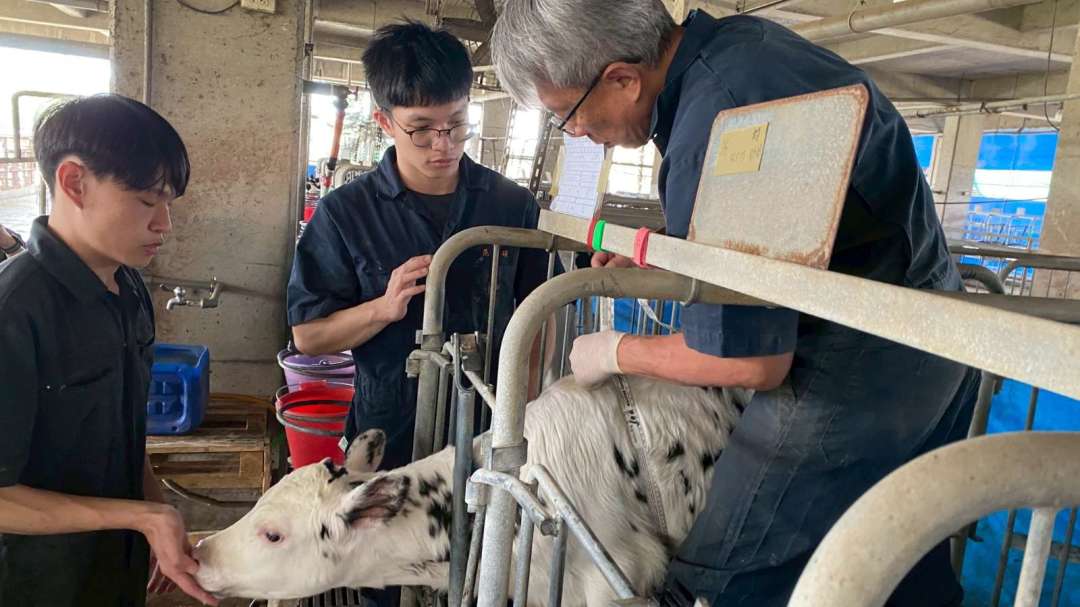
To validate real-world effectiveness, long-term trials were conducted at farms in Taipei and Tainan. In Taipei, 18 lactating cows were fed the probiotic for 180 days, with regular collection of blood, fecal, and rumen fluid samples. In Tainan, 50 pregnant cows were monitored for up to 240 days, extending through two months postpartum, to assess the impact of probiotic use on both mother and calf—comparing scenarios where neither, only the calf, or both received the supplement. Monthly records of disease treatments, milk yield, and milk quality were meticulously documented.
Results from both farms showed clear improvements in health and productivity for the probiotic group. The incidence of disease and mastitis was significantly lower, especially among first-lactation cows. Given that mastitis is a major source of economic loss in dairy farming, this breakthrough directly reduces treatment costs and culling risks, enhancing farm profitability.
In terms of milk quality, the probiotic group exhibited significantly lower somatic cell counts (SCC), indicating improved udder health. Additionally, body condition scores improved during early lactation, and continued supplementation postpartum further increased total milk yield. Milk protein and casein rates also rose significantly, demonstrating the formula’s tangible contribution to milk value and farm revenue.
Further analysis of rumen fermentation and microbiota revealed potential mechanisms. The probiotic supplementation significantly increased microbial diversity in the rumen and boosted the relative abundance of beneficial bacteria such as Ruminococcus and Bifidobacterium—indicators of healthy lactating cows. The team also observed a substantial increase in bacteria positively correlated with microbial protein synthesis. Functional prediction analyses indicated enhanced metabolic pathways for amino acids and carbohydrates, suggesting that the formula optimizes feed digestion, nutrient absorption, and conversion efficiency—enabling precision feeding at its highest level.
Sheng Hwa Biotech CEO Yang San-Lian stated, 'We are honored to have participated in Professor Chen’s research. This achievement exemplifies successful industry-academia collaboration. Our cow-specific probiotic enhances feed efficiency, prevents mastitis, increases milk yield, and improves milk quality—offering high commercial value and market expansion potential. It will become a key tool in livestock health management, helping farms establish lower-risk, higher-efficiency production models and driving new growth in Taiwan’s functional feed and animal health sectors.'
Sheng Hwa emphasized that winning the 2025 National Innovation Award breaks the limitation of most commercial products using non-bovine strains, delivering real health and productivity benefits. The technology perfectly aligns with global demands for low-carbon, antibiotic-free sustainable agriculture. As adoption expands across farms, this innovation—balancing environmental sustainability, animal welfare, and food safety—will fully support the global trend toward green agriculture.
FACT BOX
- Source: PR Times
- Category: Partnership
- Dates in source: 2025