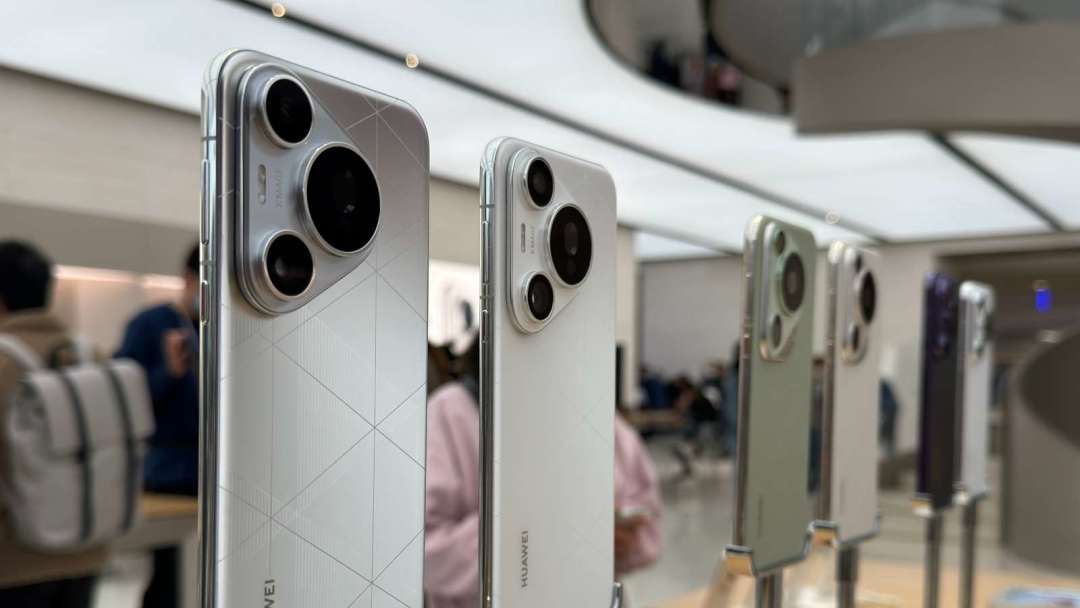
Recently, due to rising global costs of memory chips and other semiconductor components, China's smartphone market has seen a wave of price adjustments. As the summer consumption season peaks, foot traffic at mobile phone stores in Shenzhen has significantly increased.
According to a report by China Economic Net on Thursday the 23rd, visits to major offline smartphone retailers across China revealed that multiple new and existing models from leading manufacturers have raised prices, with increases generally ranging from RMB 300 to RMB 1,000. Some high-end models have seen price hikes exceeding RMB 1,000.
Since the third quarter of last year, nearly all major brands—including Samsung, OPPO, vivo, Huawei, and Honor—have increased their product prices.
In April this year, Richard Yu, Chairman of Huawei's Consumer Business Group, stated that new smartphones face significant pricing pressure, with flagship models seeing cost increases of RMB 1,200 to RMB 1,500 depending on configuration. He added that further price hikes may be unavoidable.
In June, Apple (AAPL-US) CEO Tim Cook announced plans to raise product prices to cope with soaring memory costs. "Unfortunately, price increases are unavoidable. We've done our best to absorb the massive cost hikes and protect customers from price impacts, but this situation can no longer be sustained."
While Cook emphasized that price hikes are "inevitable," he did not disclose specific timing or magnitudes. However, given Apple's product launch cycle, industry observers widely expect the iPhone 18 series and Apple's first foldable iPhone, likely unveiled in September this year, to mark the next phase of price adjustments.
Since the second half of 2025, the global memory chip industry has experienced a rare widespread price surge, particularly affecting LPDDR-type DRAM used in smartphones, with supply remaining tight.
Market research firm Counterpoint noted that LPDDR4 supply will decline by over 40% in 2026, potentially leading to a de facto market exit in smartphone segments priced below $150.
Industry experts say the current round of smartphone price hikes stems from rising component costs—especially memory chips—combined with strategic product adjustments by manufacturers. The tight supply of memory chips is expected to persist.
Counterpoint predicts that global smartphone shipments in 2026 will drop 13.9% to approximately 1.08 billion units, the lowest level since 2013.
FACT BOX
- Source: PR Times
- Category: News
- Organizations: OPPO / vivo
- Products / services: LPDDR DRAM