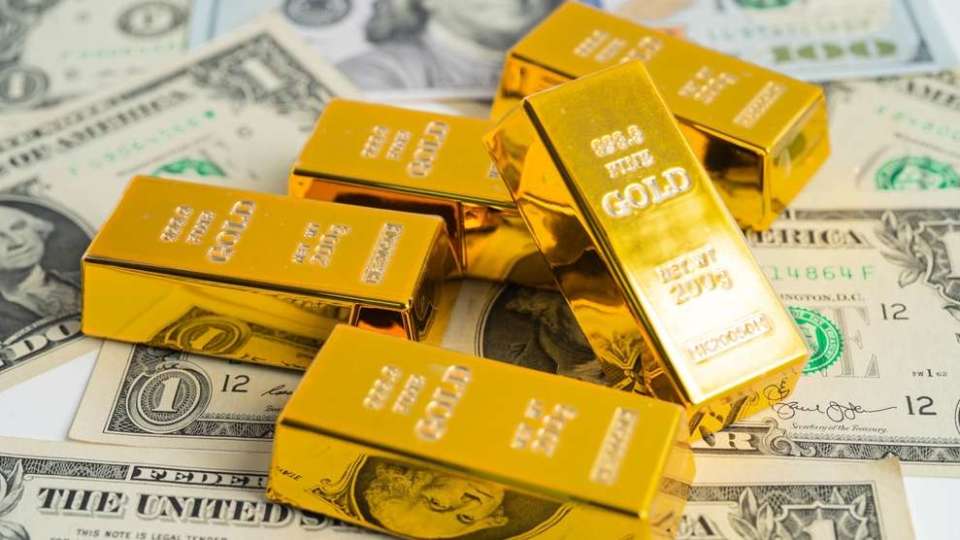
Gold prices have recently been fluctuating around the $4,100 level. UBS Wealth Management's Chief Investment Office (CIO) stated that although geopolitical tensions and central bank gold purchases provide support, the Federal Reserve's hawkish signals and bond market expectations of higher policy rates are weighing on sentiment. With investment demand not yet fully materializing, gold prices may face downward pressure and potentially drop to $3,850 in the short term. However, in the long run, based on de-dollarization trends and growing debt concerns, the target price remains as high as $5,200.
Gold prices have recently remained range-bound around $4,100, pressured by rising oil prices amid escalating tensions between the U.S. and Iran, which could fuel higher interest rate expectations. Although the U.S. June Consumer Price Index (CPI) data provided some relief to investors, suggesting no immediate need for rate hikes, and reports of gold purchases by central banks in China and Poland boosted market sentiment, they ultimately failed to drive gold prices higher.
UBS CIO believes the gold market is still digesting the hawkish signals from the Fed Chair and bond market expectations of rising U.S. policy rates. If U.S. economic activity unexpectedly accelerates and employment data indicates a tightening labor market, compounded by further oil price gains, gold’s near-term outlook may continue to face challenges, and prices could face renewed downward pressure. Under this scenario, gold prices may fall toward $3,850, with downside risks increasing further.
Sustained investment demand and strong central bank buying remain key to keeping gold prices above $4,000. Supported by countries’ long-term desire to reduce their holdings of U.S. dollar assets, central bank purchases are expected to remain elevated, staying within the 750 to 1,000 ton range for the year. However, while central bank buying helps stabilize prices, it is insufficient to drive further price increases. The World Gold Council’s upcoming Gold Demand Trends report, scheduled for release on July 29, may provide clearer insights into central bank buying behavior.
What the gold market truly needs now is stronger investment demand. Approximately 500 tons of investment demand per quarter is estimated to be necessary to push prices higher. For investment demand to accelerate, the U.S. growth narrative must support a more accommodative monetary policy backdrop, or shift toward a challenging mix of stagnation and inflation (stagflation). With consumer spending slowing, real wage growth moderating, and AI-related investment growth expected to ease on a year-over-year basis next year, U.S. policy rates are ultimately expected to decline. The next rate cut could begin as early as March 2027. Market repricing of future interest rate expectations should coincide with a weaker dollar and a resurgence in de-dollarization.
Other arguments supporting higher gold prices—such as a surge in financial market uncertainty—lack strong conviction and are unlikely to have a lasting impact, as they do not affect the ultimate trajectory of interest rates. Nonetheless, institutions continue to monitor whether correlations between gold, market fear indices (like the VIX), and equity markets are changing, as well as how investor sentiment toward gold evolves. Compared to equities or copper, gold has already lost some of its edge, and despite key indicators leveling off, it may still face downside risks.
Where is gold now? In the short term, the market appears stuck, and if investment activity does not rebound, the risks may tilt to the downside. Nevertheless, in the long term, the probability of gold prices weakening to $3,850 or lower is low. A short-term dip is not a reason to abandon gold; the longer-term narrative for gold remains clear and well-supported.
UBS believes that even if strong AI-related spending delays the U.S. economic slowdown, long-term debt concerns, a high U.S. dollar, and global investors’ excessive exposure to the dollar still leave room for gold to strengthen again. In light of this, UBS maintains its gold price targets for September and December 2026, and March and June 2027 at $4,400, $4,600, $5,000, and $5,200, respectively. From a diversification perspective, gold remains attractive, especially for investors who prefer physical assets and have a multi-generational outlook.
FACT BOX
- Source: PR Times
- Category: Survey