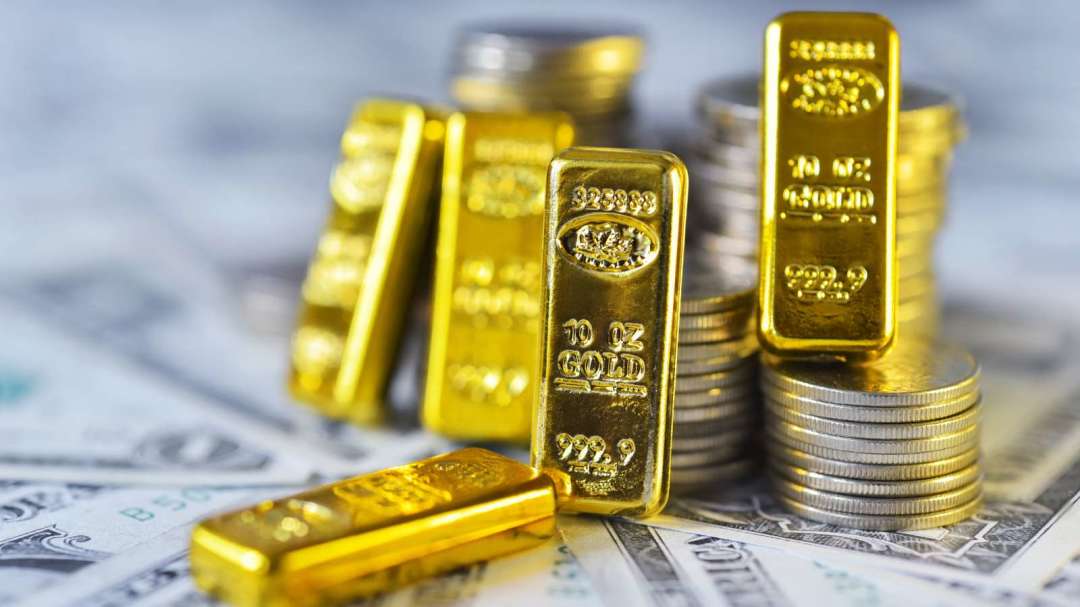
After experiencing selling pressure, precious metals have recently rebounded, but analysts point out that gold and silver prices face a difficult challenge in returning to the historical highs recorded earlier this year. Spot gold closed around $4,145 per ounce on Wednesday (22nd), and spot silver at $59.98 per ounce, up 2.4% and 6% respectively from the previous Friday's closing price. However, due to changes in the Middle East situation and rising oil prices, both softened again during Thursday's trading. As of the deadline, spot gold was temporarily reported at $4,097.70, and spot silver at $59.08.
ING commodity strategists Warren Patterson and Ewa Manthey point out that the recent rise in gold and silver prices mainly reflects investors entering the market as prices fell, rather than significant changes in geopolitical or overall economic fundamentals.
Current gold and silver prices are still far below the historical highs recorded earlier this year. Spot gold reached $5,589.38 per ounce at the end of January this year, and silver peaked at $121.67.
However, the Iranian conflict has pushed up oil prices, maintaining high interest rates and a strong dollar, which has weakened the attractiveness of precious metals and caused market funds to flow into other assets.
Patterson and Manthey say, "While the tension in the Middle East still supports precious metals, the market is also digesting the weakening of US economic data and the inflation risk brought by rising energy prices."
The two analysts point out that the future trend of gold will be highly influenced by changes in the energy market and expectations for US monetary policy. In contrast, if industrial metals continue to strengthen and hedging demand supports, silver's performance is expected to be better than gold.
They say, "The recent trend of silver is not only favored by hedging demand but also driven by the improvement of market sentiment brought by the rebound of industrial metals, especially copper prices."
However, analysts at Bank of America (BofA) believe that after gold's worst quarterly performance in 13 years ended in late June, there is still room for further correction in prices.
In a report on July 16, BofA pointed out, "The death cross signal has already appeared, and the market's long positions are still high, along with the similarity to past major highs, all of which increase the risk of gold falling into a further and longer correction."
The "death cross" refers to the short-term moving average (usually the 50-day moving average) falling below the long-term moving average (usually the 200-day moving average), generally considered a bearish technical signal.
UBS: Silver is not yet at an ideal entry point
UBS (UBS) is relatively conservative about the outlook for silver and warns investors not to rush to position at this stage. The bank this week revised the ideal entry price for silver from the previous approximately $55 per ounce to the $48-50 range.
UBS strategist Dominic Schnider said, "We believe that the short-term headwinds of escalating Middle East tensions, increased holding costs, and a strong dollar will continue to pressure silver investment sentiment."
He pointed out that the current overall macro environment still lacks incentives for investors to increase their long positions in silver, and under weak investment demand, silver prices have not truly bottomed out.
Miners: Bull market not over, AI demand supports silver
However, Diane Garrett, Chairman and CEO of American gold and silver miner Hycroft Mining, believes that the recent price drop is just a "normal correction" and not the end of the bull market. She said, "The fundamentals of the commodity market are still very strong, especially gold. Gold has surpassed US Treasuries to become one of the most important asset classes in the world and is gradually becoming the new foundation of the financial system."
She said that investors are increasingly unwilling to hold financial assets supported by the debt of other countries, and global central banks have been increasing their holdings of gold for 17 consecutive months, showing that demand remains strong.
When talking about silver, Garrett pointed out that silver is not only a monetary metal but also an important industrial metal, widely used in AI, supercomputers, and other fields, and there are currently no substitute materials.
FACT BOX
- Source: PR Times
- Category: Survey
- Organizations: ING / Hycroft Mining