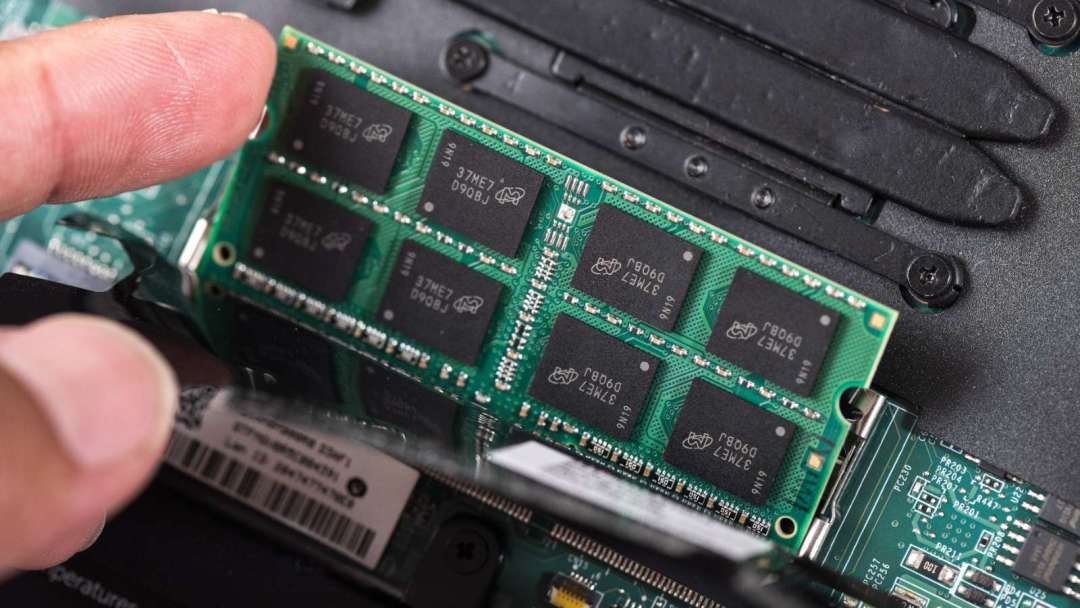
Despite significant volatility in memory-related stocks recently, the memory market continues to heat up, with multiple institutions raising their third-quarter DRAM price expectations.
Counterpoint forecasts that the average selling price (ASP) of DRAM will increase by approximately 20% quarter-on-quarter in the third quarter; TrendForce is relatively conservative, expecting traditional DRAM prices to rise 13% to 18% and NAND Flash prices to increase 10% to 15%; Morgan Stanley has significantly raised its forecast for PC DRAM price increases in the third quarter from a previous 3% to 8% to 15% to 20%.
Although the statistical methodologies of these institutions vary slightly, the signal they collectively convey is consistent—memory market supply remains tight, and supply-demand imbalances have not eased.
SK Hynix's management has further reinforced market expectations of long-term undersupply. Following its U.S. IPO, both the CEO and chairman of SK Hynix publicly stated that memory supply tightness could persist into the 2030s.
Meanwhile, according to market reports, Samsung is seeking a quarterly ASP increase of up to 20% for DRAM in the third quarter, with LPDDR products potentially seeing price hikes exceeding 20%. If implemented, this would mark Samsung's third consecutive price increase, following approximately 90% in Q1 and 60% in Q2—significantly higher than TrendForce's forecast—and suggests Micron and SK Hynix are likely to follow suit.
For server DRAM, TrendForce expects contract prices to rise 13% to 18% in Q3, though the extent of price increases varies significantly among customers.
Large U.S. cloud service providers, having signed multi-year long-term supply agreements (LTAs), face limited price increases. In contrast, customers without LTAs and additional purchases exceeding LTA-protected volumes will bear the brunt of the price hikes.
Reports indicate SK Hynix plans to remove price caps in new long-term agreements, allowing spot market increases to directly reflect in contract pricing, while Micron's supply contracts (SCAs) still retain price floor and ceiling mechanisms.
HBM continues to consume a large portion of DRAM capacity, becoming the core reason for the prolonged supply shortage of traditional DRAM.
TrendForce forecasts that by 2026, HBM will account for 22% of the DRAM wafer input of the three major manufacturers but contribute only 9% of DRAM bit output; by 2027, these figures will rise to 30% and 13%, respectively.
This means HBM consumes far more wafer resources than its bit output, so even as the three major memory makers continue to expand capital expenditures, traditional DRAM—especially server DRAM—may remain in a state of prolonged undersupply.
HBM4 prices are also entering a new upward cycle. Long-term supply contracts for HBM4 in 2027 are expected to begin negotiations in Q4 2026.
According to Digitimes' model predictions, HBM4 prices are expected to rise from approximately $2/Gb in the second half of 2026 to $4–5/Gb in 2027, doubling within about a year.
The NAND market also maintains a tight supply-demand balance. Morgan Stanley believes NAND supply shortages will persist until 2027; TrendForce forecasts that mature SLC NAND prices will surge 120% to 170% in the second half of 2026, driven by shrinking mature process capacity and the migration of MLC to SLC applications.
This will benefit NAND manufacturers such as SanDisk, Kioxia, and Micron, while Silicon Motion is expected to benefit from growing demand for NAND controllers.
At the same time, investment in the NAND supply chain continues. Kioxia has submitted an application for a U.S. ADS listing; SanDisk has recently raised NAND product prices by double digits and extended its joint venture agreement with Kioxia to 2034. Meanwhile, Micron has officially launched its approximately 1.5 trillion yen expansion project in Hiroshima, Japan, aiming to begin mass production of advanced DRAM and HBM products by summer 2028, positioning itself for the next wave of AI memory demand growth.
FACT BOX
- Source: PR Times
- Category: Survey
- Organizations: TrendForce / Counterpoint / Sandisk
- Products / services: DRAM / NAND Flash