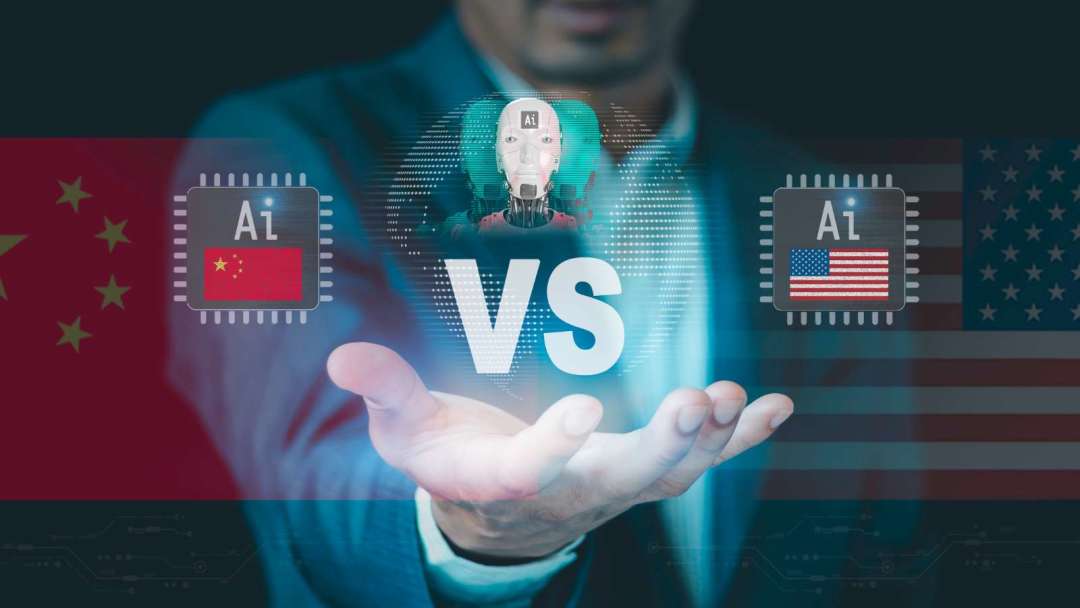
Approximately 200 Silicon Valley startups jointly sent a letter on Wednesday (22nd) to U.S. President Trump and government officials, urging the White House not to block access to China's open-weight artificial intelligence models, warning that such a move would deliver a fatal blow to the next generation of U.S. startup ecosystems. According to Politico, there is a clear division of opinion within the White House on how to respond to Chinese AI.
The action, initiated by the newly formed 'Little Tech Association,' highlights that Chinese models (such as Moonshot AI's Kimi K3 and Alibaba's models) have become a survival foundation for many U.S. developers. These open-source models not only offer excellent performance but are also far cheaper than closed-source models from U.S. giants like Anthropic or OpenAI, and should not be banned lightly.
The association's members include well-known incubator Y Combinator and privacy service provider Proton. Association member Suhail Doshi pointed out that if the ban is implemented, hundreds of U.S. companies will 'collapse instantly' and be forced to shift their budgets to a few closed-source giants, further consolidating industry monopolies.
They recommend that the government adopt 'scalpel, not sledgehammer' precision regulation, rather than a blanket ban based on origin.
Meanwhile, there is a significant divergence within the Trump administration on how to respond to the rise of Moonshot AI. Treasury Secretary Scott Bessent and Office of Science and Technology Policy (OSTP) Director Michael Kratsios have taken a hardline stance, accusing Moonshot AI of large-scale 'distillation' of Anthropic's Fable model, labeling it as industrial-scale intellectual property theft and threatening sanctions. Kratsios further accused the company of improperly obtaining restricted NVIDIA GB300 servers.
However, Commerce Secretary Howard Lutnick has expressed concern over startups' access to technology. The Commerce Department has not yet drafted plans to add Chinese AI companies to the 'Entity List,' and some within the White House are skeptical of the technical claim that 'distillation alone can surpass leading models.'
NVIDIA CEO Jensen Huang, in an interview, strongly supported the open-source ecosystem, stating that these Chinese models are excellent and that openness helps uncover security vulnerabilities, enhancing the resilience of global systems.
In response to U.S. accusations, China's Foreign Ministry criticized the U.S. for politicizing technology and trade issues, stating that such actions disrupt global AI development and serve no party's interests. Currently, Trump has not publicly taken a stance on this controversy, and policy direction remains uncertain.
FACT BOX
- Source: PR Times
- Category: News
- Organizations: Anthropic / OpenAI / Y Combinator
- Products / services: Kimi K3