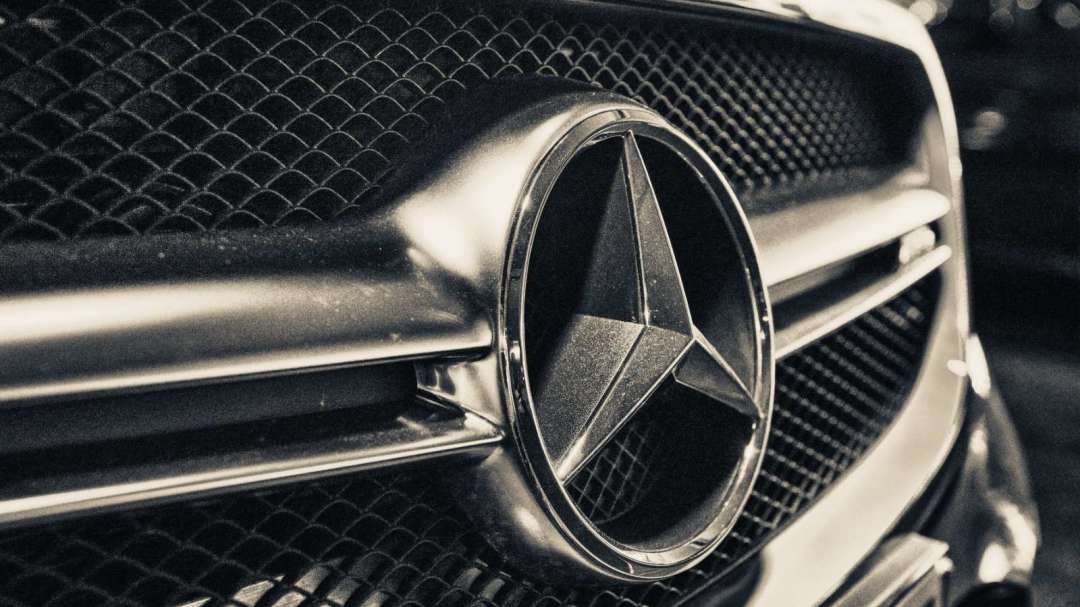
The U.S. Senate Commerce Committee this week passed, via voice vote, the bipartisan 'Connected Vehicle Security Act of 2026,' aimed at blocking automakers linked to China from entering the U.S. market. However, the bill has sparked unexpected political backlash, as German luxury car leader Mercedes-Benz has become the first major automaker potentially affected.
The bill's draft explicitly prohibits the sale or import of vehicles in the U.S. if more than 15% of an automaker’s equity, voting rights, or board seats are directly or indirectly held by entities from China, Iran, North Korea, or Russia.
Currently, Mercedes-Benz’s two largest shareholders are both from China—BAIC Group holds 9.98%, and Geely Group founder Li Shufu holds 9.69%, collectively owning approximately 19.67% of Mercedes-Benz shares. While no single shareholder exceeds 10%, under the bill’s 'aggregation' principle, Mercedes-Benz has already crossed the 15% redline.
Senator Bernie Moreno, the bill’s sponsor, emphasized that the measure is necessary to prevent the 'complete destruction' of U.S. industrial infrastructure and to mitigate national security risks, such as connected vehicles collecting sensitive data or being remotely controlled by foreign actors to manipulate steering and braking systems. He noted automakers would have until 2030 to adjust their ownership structures or apply for exemptions.
However, Committee Chairman Senator Ted Cruz expressed strong concerns, alleging that General Motors (GM) is behind the push for this strict provision, aiming to use legal means to push Mercedes-Benz out of the market and strengthen its Cadillac brand. Cruz warned this is a 'corporate welfare' bill and that the U.S. should not consider banning Mercedes-Benz, a company deeply rooted in the American market for decades.
Mercedes-Benz responded that its Chinese shareholders are 'passive investors' with no board seats or operational control, and emphasized its significant economic contributions, including employing over 10,000 people in the U.S. The company is now actively lobbying to raise the ownership threshold to 25% or shift the evaluation standard from absolute equity percentage to actual control.
Beyond U.S. legislative pressure, Mercedes-Benz also faces challenges in the Chinese market. Its China-specific all-electric CLA L model has reportedly halted production due to weak sales, and the company is shifting focus to the higher-demand all-electric GLC model.
The bill will next proceed to the full Senate for debate, and must eventually pass the House of Representatives and be signed by the President to become law. If enacted in its current form, this could cost the century-old German automaker access to the U.S. market.
FACT BOX
- Source: PR Times
- Category: News
- Organizations: Mercedes-Benz / BAIC Group / Geely Group
- Dates in source: 2030 / 2026
- Products / services: Connected Vehicle Security Act / Mercedes-Benz vehicles