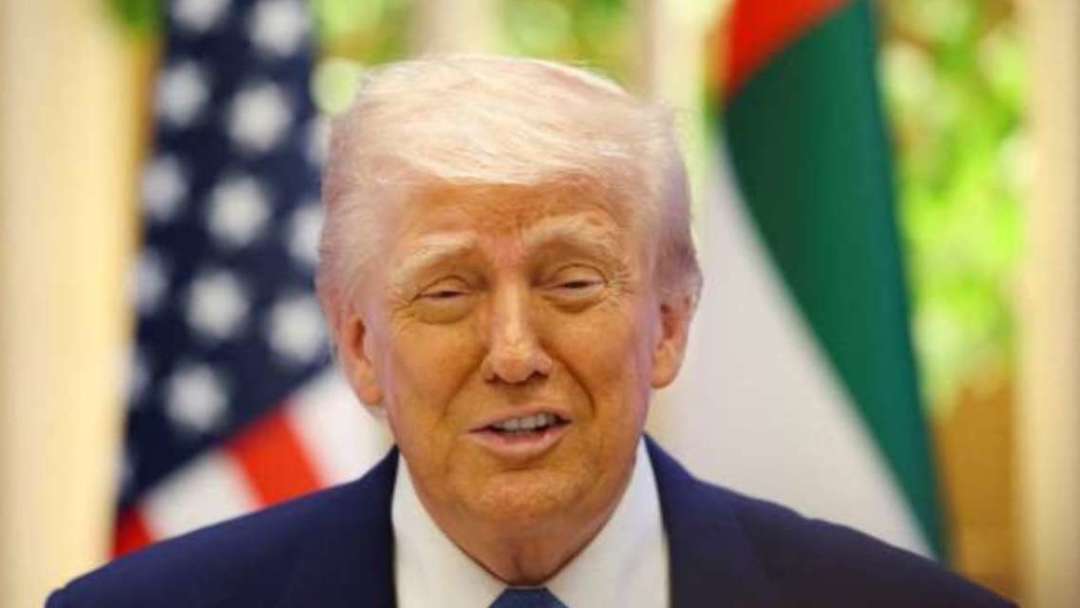
After U.S. President Trump imposed a new round of global tariffs citing "combating forced labor," multiple trade partners from Australia to Brazil have denied the U.S. allegations, though most nations have indicated they will continue negotiations with Washington rather than immediately retaliate.
On Thursday (23rd), the Office of the United States Trade Representative (USTR) announced tariffs on 60 economies under Section 301 of the Trade Act of 1974, arguing these countries have failed to establish and enforce measures banning the import of goods made with forced labor. Under the new policy, economies that have already implemented or committed to implementing forced labor import bans will face a 10% tariff, while those without such measures will be subject to a 12.5% tariff. The measure covers the U.S.'s top 60 trading partners, accounting for approximately 99.4% of total U.S. imports.
The new tariffs will replace the temporary 10% global tariff implemented under Section 122 of the Trade Act of 1974, which expires on the 24th. After the U.S. Supreme Court ruled in February that Trump's earlier tariffs, imposed under the International Emergency Economic Powers Act (IEEPA), were unconstitutional, the administration introduced a transitional 10% tariff. The shift to a Section 301 investigation reflects the U.S. government's effort to establish a more legally defensible basis for the tariffs.
Australian Trade Minister Don Farrell issued a statement saying, "These tariffs are unjustified, violate the U.S.-Australia Free Trade Agreement, and should be immediately withdrawn." He emphasized that Australia's system for combating forced labor and modern slavery is among the most robust globally and has been highly recognized by the international community, including the United States.
New Zealand's Ministry of Foreign Affairs stated in a market report that its trade minister has clearly conveyed to U.S. officials that it disagrees with the investigation's findings and will continue to express its position to Washington. About 30% of New Zealand's exports to the U.S., including beef and kiwifruit, remain under existing exemption arrangements.
Singapore also opposes the new tariffs, with Foreign Minister Vivian Balakrishnan stating the U.S. measures lack any economic rationale.
Japan has similarly expressed dissatisfaction and is seeking confirmation on whether the new tariffs comply with last year's trade agreement with the U.S. Chief Cabinet Secretary Minoru Kihara said at a Friday press briefing, "It is regrettable that the U.S. is imposing tariffs on Japan. We are confirming with the U.S. side that Japan will not ultimately face tariffs exceeding those agreed upon in last year's agreement."
The Brazilian government criticized the new tariffs as "arbitrary and unjustified," with President Luiz Inácio Lula da Silva stating Brazil remains open to negotiations but will seek alternative markets if it cannot export to the U.S.
Due to the叠加 of these new measures with earlier Section 301 tariffs of 25% imposed on Brazilian goods earlier this month, the total tariff burden on Brazilian products has risen to 37.5%, approaching last year's 50% rate, which was ruled illegal by a court.
The Chilean government said the new tariffs contradict Chile's labor standards and the technical, political, and legal evidence it submitted during the investigation. Chile's Undersecretariat of Foreign Trade noted that the U.S. decision does not accuse Chilean exports of containing forced labor products and that Chile will seek exemptions for its key export goods.
Canada has been placed in the lower 10% tariff tier, and goods compliant with the U.S.-Mexico-Canada Agreement (USMCA) are exempt. Canadian Trade Minister Dominic LeBlanc said the move was "not surprising," adding that Canada, like the U.S., values combating forced labor and will continue constructive dialogue with Washington in the coming weeks.
Despite widespread international criticism, no major trading partner has yet announced retaliatory measures against the U.S. "forced labor tariffs."
The Peterson Institute for International Economics (PIIE) stated earlier this week that the investigation "is not truly about labor standards, but rather an extension of the U.S. ban on Chinese goods made with forced labor, while attempting to rebuild a tariff regime previously struck down by the Supreme Court."
Wendy Cutler, Vice President at the Asia Society Policy Institute and former U.S. trade negotiator, said the new tariffs, based on Section 301, have a more solid legal foundation than last year's measures and are therefore less likely to be overturned by U.S. courts.
She added, "U.S. trade partners will be disappointed by this outcome, but retaliation is not expected. However, countries will continue to sign more trade agreements among themselves to reduce dependence on the U.S. market."
Moreover, because the U.S. has free trade agreements (FTAs) with many countries and offers various exemptions and quotas, the actual impact of the new tariffs on certain exported goods may be limited.
For example, over 40% of New Zealand's exports to the U.S. in the last quarter were beef, which currently enters the U.S. market at nearly zero tariff. Australian beef exports similarly maintain tariff-free access.
FACT BOX
- Source: PR Times
- Category: News