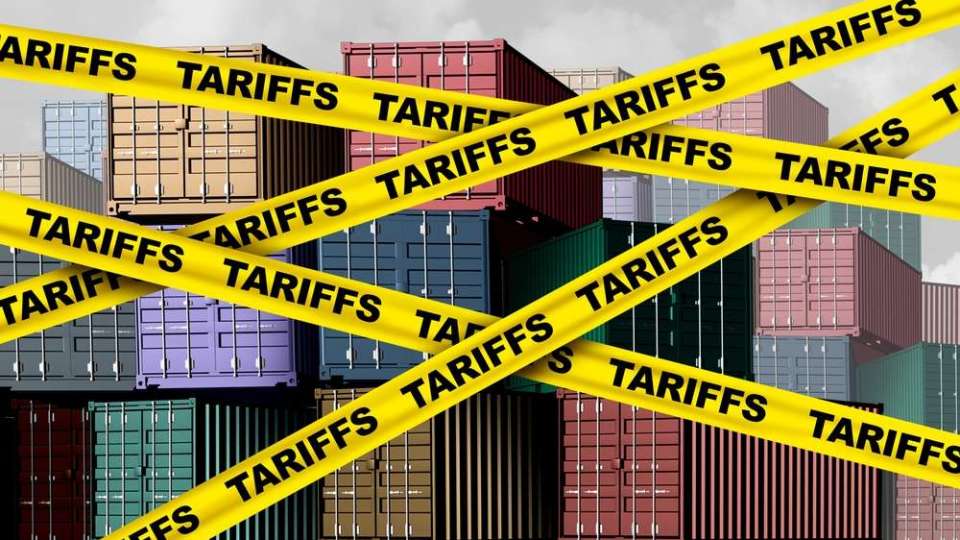
The United States has announced the final actions under its Section 301 investigation targeting trade partners. Taiwan has been granted the most favorable treatment with a 10% tariff rate that does not叠加 with Most Favored Nation (MFN) status, along with a targeted exemption list, based on its policy commitments in the U.S.-Taiwan reciprocal trade agreement. The Executive Yuan stated that the U.S. temporary tariffs expired today, and the administrative team will continue close communication with the U.S. to ensure Taiwan's optimal interests are protected when final tariff rates are finalized. This announcement also includes related exemptions and exclusions, covering goods and components subject to tariffs under Section 232. The U.S.-Taiwan Economic and Trade Working Group will confirm the specific details of the exemption list before publicly disclosing the exact items Taiwan will benefit from.
The United States has announced the final actions under its Section 301 investigation targeting trade partners. Taiwan has been granted the most favorable treatment with a 10% tariff rate that does not叠加 with Most Favored Nation (MFN) status, along with a targeted exemption list, based on its policy commitments in the U.S.-Taiwan reciprocal trade agreement. The Executive Yuan stated that the U.S. temporary tariffs expired today, and the administrative team will continue close communication with the U.S. to ensure Taiwan's optimal interests are protected when final tariff rates are finalized.
Recognition of Forced Labor Commitment Earns Taiwan 10% Best Treatment
U.S. President Trump signed a memorandum on July 23 (Eastern Time), prompting the Office of the U.S. Trade Representative (USTR) to announce final actions under Section 301 of the 1974 Trade Act, targeting imports from the top 60 trade partners accounting for 99.4% of total U.S. imports. Zheng Li-jun, convener of the Executive Yuan's U.S.-Taiwan Economic and Trade Working Group and Vice Premier, stated that the U.S. has acknowledged Taiwan’s commitments under the reciprocal trade agreement regarding the import ban on forced labor goods, thus granting Taiwan a relatively preferential 10% tariff rate without叠加 of MFN treatment, as well as a special exemption list tailored for Taiwan.
Under these final measures, Taiwan and the European Union (EU) have been capped at a 10% tariff rate without叠加 of MFN treatment, as both have committed to enforcing import bans on forced labor products within their agreements. This means that for Taiwanese products currently subject to tariffs below 10%, the Section 301 surcharge will only bring the combined MFN and 301 tariff up to 10%. If the current MFN tariff is already 10% or higher, no additional surcharge will be applied. In contrast, some countries face an additional 10% or 12.5% surcharge on top of existing rates, placing Taiwan in a relatively advantageous position.
Targeting Specific Key Products: Exemption Details to Be Finalized
The U.S. announcement also includes related exemptions and exclusions, covering informational materials, donated goods, personal luggage, and all goods and components subject to tariffs under Section 232. Additionally, certain supply chain-critical and economically essential products are exempted, including raw materials whose taxation could cause domestic supply shortages, products whose taxation could disrupt overall economic supply, goods that the U.S. cannot produce in sufficient quantities domestically or source from other suppliers, and products whose exemption would incentivize economies like Taiwan to comply with forced labor import bans. The U.S.-Taiwan Economic and Trade Working Group will confirm the specific details of the exemption list before publicly disclosing the exact items Taiwan will benefit from.
Temporary Tariffs Expire; Ongoing Communication to Secure Best Interests
The U.S.-Taiwan Economic and Trade Working Group emphasized that the U.S. previously imposed a 10% temporary tariff on top of MFN rates globally under Section 122 of the 1974 Trade Act, effective from February 24 for 150 days. This provision expired on July 24. Analysts anticipate that the two ongoing Section 301 investigations—on forced labor imports and structural overcapacity—are procedural steps to shift the legal basis for U.S. tariff policy. U.S. Trade Representative Grier has stated that the U.S. will consider trade agreements reached with various countries. Taiwan will continue close communication with the U.S. to ensure favorable treatment in the final determination of overall tariff rates.
FACT BOX
- Source: PR Times
- Category: News