On Sunday morning (26th), the international oil market experienced severe volatility. Both New York crude and Brent crude plunged, with losses briefly approaching 4% and exceeding 3%, respectively, as market sentiment dramatically reversed within just a few hours.
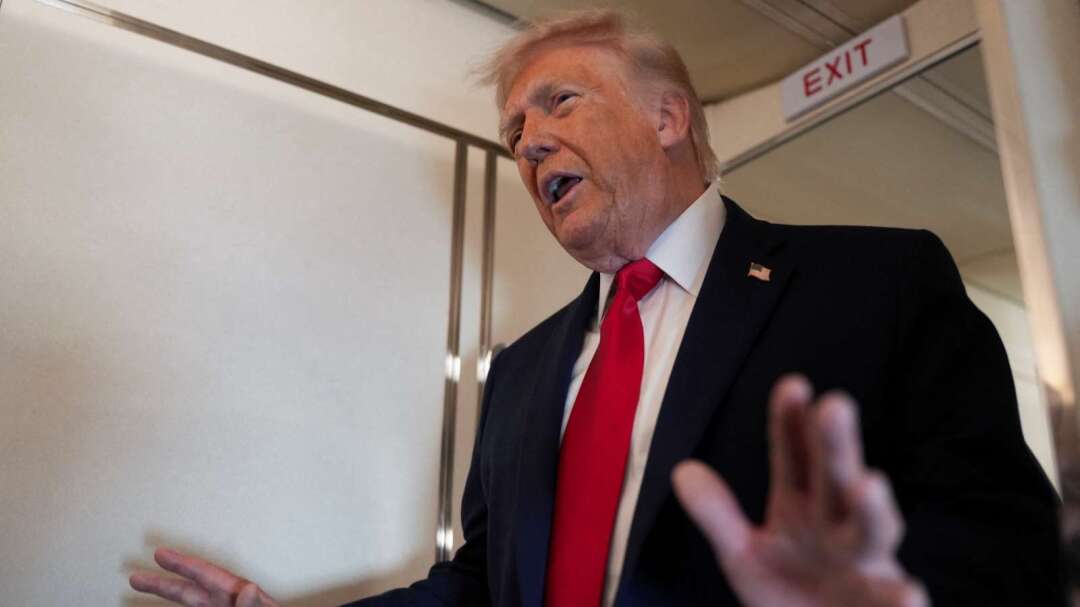
According to Axios on Saturday (25th), the trigger for this downturn was a major decision by U.S. President Trump. Citing sources familiar with the matter, foreign media reported that Trump ordered the U.S. military on Friday (24th) to pause attacks on Iran, ending nearly two weeks of daily airstrikes.
The report indicated that over the past two weeks, Trump had routinely approved military attack plans submitted each afternoon, with operations carried out within hours.
However, on the 24th, after receiving a similar plan, he held back and instead instructed troops to delay the strike. It remains unclear whether this is a one-off decision or a signal of a policy shift.
Analysts interpret this move as Trump seeking more diplomatic maneuvering space, while also reflecting that, without significantly escalating military scale, current airstrikes have limited tangible impact.
Nonetheless, the U.S. military has not entirely abandoned options and continues to develop plans for potentially resuming large-scale operations, with final authority resting with Trump.
Notably, just hours before Trump ordered the pause, Oman sent a delegation to Tehran to begin negotiations on restoring passage through the Strait of Hormuz. Regional sources revealed that talks have made substantial progress, with Oman and Iran potentially finalizing an agreement by the weekend.
Trump himself confirmed on the afternoon of the 24th during a White House interview that dialogue with Iran continues, describing Iran this time as "serious." However, he warned that the U.S. retains the option to escalate militarily, stating, "We can absolutely go to a much stronger level if necessary. We are always ready to act."
Meanwhile, Qatar announced on the 25th that it would fully resume maritime navigation for all vessels within its territory starting the 26th, ending the advisory restrictions on maritime activities implemented since the 12th.
Local maritime authorities reminded shipowners and crews to strictly comply with relevant regulations and complete safety equipment checks before departure.
Market analysts noted that the decline in oil prices helps ease concerns about rising inflation, thereby reducing investor anxiety over the Federal Reserve's (Fed) interest rate path, providing tech stocks with short-term breathing room.
As Middle East geopolitical risks cool, capital may shift from safe-haven assets like gold and oil toward higher-growth tech sectors.
However, analysts caution that this shift in capital flows may only be a short-term emotional correction. Whether tech stocks can sustain gains depends on whether AI-related capital expenditures deliver expected returns and the performance during the upcoming earnings season.
Gulf Oil Producers Accelerate 'Bypass' Routes to Reduce Reliance on Strait of Hormuz
With U.S.-Iran military tensions persisting, navigation through the Strait of Hormuz—the energy export lifeline for Persian Gulf nations like Iraq, Kuwait, Qatar, and Bahrain—is nearly paralyzed. The Bab el-Mandeb Strait, another critical waterway, is also affected.
In fact, last Thursday (23rd), amid attacks on a Saudi oil tanker in the Red Sea and escalating regional military conflict, London Brent crude September futures briefly surged past $100 per barrel, highlighting extreme market anxiety over supply disruptions.
Facing the risk of chokepoint blockages, Persian Gulf governments and energy firms have recently accelerated efforts to bypass the Strait of Hormuz by building pipelines, expanding ports, and establishing land corridors for crude and other cargo exports.
Saudi Arabia has begun expanding its oil pipeline connecting major eastern oil fields to the western port of Yanbu, aiming to export crude via the Red Sea side, avoiding the Strait of Hormuz.
However, due to Houthi militants in Yemen imposing a naval blockade on Saudi Arabia, oil tankers loaded with Saudi crude may be forced to reroute northward through the Suez Canal into the Mediterranean if they cannot pass south through the Bab el-Mandeb Strait—significantly extending transit time and increasing costs.
Another major oil producer, the United Arab Emirates (UAE), owns Fujairah Port, located south of the Strait of Hormuz, currently exporting 1.8 million barrels per day. The UAE has announced a large-scale port expansion project, aiming to double its Hormuz-bypassing export capacity by the end of 2027 to 3.6 million barrels per day.
Kuwait is also actively negotiating with neighboring countries to expand cross-border pipeline systems, seeking alternative export routes for its crude.
Iraq, meanwhile, is deploying large fleets of oil tankers to transport crude overland to Syrian Mediterranean ports, while planning new pipelines and repairing aging ones as long-term solutions to bypass the Strait of Hormuz.
Foreign media citing Gulf officials, energy firms, and market analysts report that at least seven major pipeline projects are currently under construction, in planning, or under discussion, with routes covering the Red Sea, Suez Canal, and Gulf of Oman.
Victoria Grabenwöger, Senior Researcher at commodity data firm Kpler, stated bluntly, "The long-standing model of Persian Gulf oil producers relying heavily on a single chokepoint—the Strait of Hormuz—is no longer a prudent long-term strategy."
FACT BOX
- Source: PR Times
- Category: News