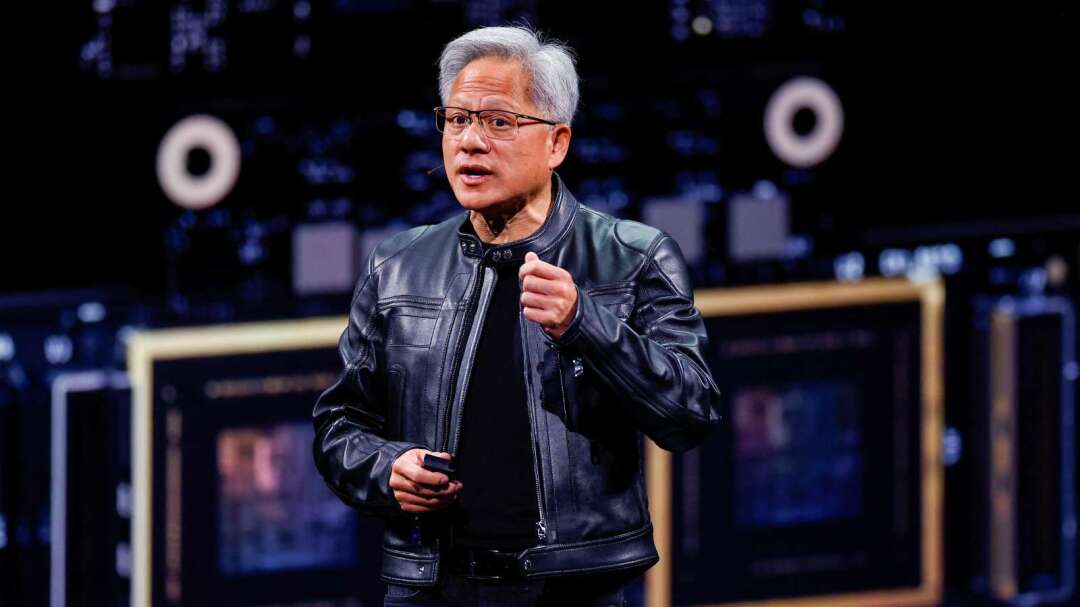
The semiconductor industry has long been known for its boom-and-bust cycles, but NVIDIA (NVDA-US) CEO Jensen Huang recently stated that the sector will not face a downturn in the short term — even though the reasoning he provides bears a striking resemblance to the narratives that preceded past market bubbles.
Artificial intelligence (AI)-related stocks have recently experienced significant volatility. Despite major chipmakers reporting strong earnings and optimistic outlooks, and the market widely acknowledging the ongoing chip supply shortage, investors remain concerned about whether massive capital expenditures can be sustained over the long term, leading to substantial selling pressure on related stocks.
In an interview with Mike Allen, co-founder of media group Axios, Huang was directly asked if the industry was heading toward a crash. He responded firmly: "No, not for now." When the host followed up with, "So this time really is different?", Huang gave an affirmative answer.
He explained that the driving force behind this growth cycle is fundamentally different from past ones. "This time is different because it's not driven by demand, nor is it seasonal. When I say demand-driven, I don't mean seasonal demand — I mean industry-driven. The foundational technology of computing is changing."
Huang further pointed out that the world is moving toward an entirely new infrastructure: AI — and this transformation requires massive amounts of chips. He even boldly predicted that the overall industry scale could expand five to tenfold over the next decade.
As the leader of the world's top AI chip supplier, Huang's optimistic signal is not surprising. However, the phrase "this time is different" itself carries significant controversy.
During the dot-com bubble, the same phrase was used to justify irrational price surges that detached from fundamentals. To seasoned market veterans today, it has almost become synonymous with a warning sign — its negative connotation rivaling the now-infamous "mission accomplished" declaration.
At the same time, major cloud service providers are investing staggering sums into building AI infrastructure at an astonishing pace, with annual capital expenditures reaching hundreds of billions of dollars. These tech companies, which previously relied on stable cash flows from their core businesses to fund operations, now face such large funding gaps that even Alphabet has seen negative cash flow, forcing firms to turn to debt financing.
In response to concerns that NVIDIA's customers may be taking on debt to buy chips, Huang expressed no worry, emphasizing that this reflects a paradigm shift in computing: "The future will involve a completely different kind of computing. The number of computers we need will only grow."
He also noted that the AI wave is generating substantial profits for companies like Anthropic, especially as customers begin to truly appreciate the practical value of intelligent assistants.
In his view, the industry stands at a critical inflection point. As AI continues to generate profits and boost productivity, more resources will inevitably be invested in developing related technologies.
Huang does not deny that the bubble will eventually burst, but he believes it won't happen in the short term because AI infrastructure development is still in its early stages.
He pointed out that resources such as chips, land, electricity, and construction labor are limited. While this slows expansion, it paradoxically acts as a protective umbrella for the industry, delaying the point at which supply catches up with demand.
"We are fundamentally constrained in every way," Huang admitted. "And that constraint is a good thing. It's precisely this constraint that hinders system development and gives us ample time to build this infrastructure."
FACT BOX
- Source: PR Times
- Category: News
- Organizations: Alphabet / Anthropic
- Products / services: GPU