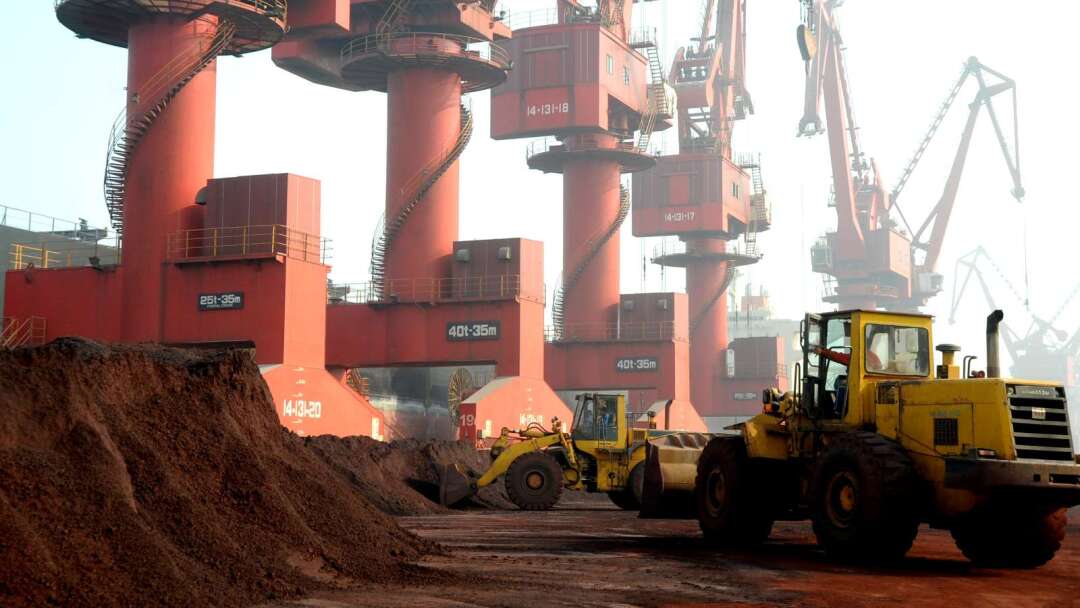
President Trump is pushing for supply chain 'de-sinicization,' requiring the U.S. defense industry to stop purchasing critical minerals such as rare earths, magnets, tungsten, molybdenum, and tantalum from China starting January 1, 2027. However, with only about five months left until the deadline, domestic U.S. mining and processing capacity remains far from sufficient to meet demand, forcing Washington to consider continuing exemptions—or even importing minerals from China to fill the gap.
Since returning to the White House, Trump has prioritized the mining and processing of critical minerals as a national security issue, investing hundreds of billions of dollars into nearly 150 mining companies to reduce reliance on China for weapons and other strategic products. In May, he posted on Truth Social emphasizing that all federal agencies must purchase American-made products, and last week signed an executive order raising the threshold for defense contractors to obtain procurement exemptions.
However, a Reuters survey of 16 industry executives, investors, analysts, and policymakers reveals that U.S. mining supply capacity remains far from self-sufficiency.
U.S. production capacity cannot keep up with demand, making the 2027 ban unlikely to be implemented.
Take the most common rare earth magnet: U.S. demand in 2025 is expected to reach about 48,000 metric tons, but domestic supply is only 300 tons. Even with ongoing capacity expansion, output is projected to reach just 5,000 tons by the end of this year—only about 10% of demand.
The U.S. has not produced tungsten since 2015, and domestic tantalum production ceased as early as 1959. Guardian Metal Resources (GMTL-US) is working to launch a U.S. tungsten mine by 2028, while Lion Rock Resources plans to develop a tantalum mine in South Dakota, though no production timeline has been announced.
Mining analyst Chris Berry bluntly states that it is nearly impossible for the U.S. to produce enough minerals by January next year to end all procurement exemptions, as building infrastructure competitive with China will take years.
The U.S. does not lack mineral reserves, but rather the capacity to mine and process them. China currently controls over 80% of global mineral refining. The International Energy Agency (IEA) warned this month that if Beijing imposes export restrictions on rare earths, $6.5 trillion worth of global manufacturing could be at risk.
Low mineral prices also make U.S. plans unprofitable. Washington accuses China of depressing market prices through subsidies and massive low-cost supply, but Beijing insists it consistently follows WTO rules and strives to maintain market stability.
U.S. startup Ucore Rare Metals originally planned to begin refining in 2025 but had to adjust its plans due to shifting Pentagon demand. Some production lines won’t be operational until 2027 at the earliest. CEO Pat Ryan admits that establishing a full supply chain by 2027 will be a “tough battle.”
Facing an imminent supply shortfall, the Trump administration launched the $12 billion 'Project Vault' in February to build a strategic reserve of critical minerals for U.S. manufacturers. Officials acknowledged in April that initial procurement would have to come from wherever supply is available globally—even potentially from China. Defense giant Lockheed Martin has already submitted a list of minerals it hopes to include in the reserve to the Department of Defense.
However, the stockpiling plan has drawn criticism from U.S. miners. Industry players argue that if defense contractors continue receiving exemptions to buy Chinese products, they won’t place orders with domestic suppliers. Nick Myers, CEO of Phoenix Tailings, which recently received a $500 million loan from the Pentagon, warns that as long as the government keeps issuing exemptions, the defense industry will never truly stop buying Chinese products.
Multiple U.S. refining projects also face challenges such as technical complexity and slow construction. MP Materials (MP-US) is building a magnet factory in Texas, with the first products expected to pass General Motors certification by year-end, but another plant for the Pentagon won’t come online until 2028.
Energy Fuels (UUUU-US) expects to begin small-scale rare earth processing by year-end, reaching an annual capacity of 6,000 tons by 2029. Rare earths supplied by Ucore, Energy Fuels, and ReElement Technologies are scheduled to be delivered to Vulcan Elements, which is building a plant in North Carolina—but that facility won’t be operational until 2030 at the earliest.
Industry insiders suggest that cooperation with allies like South Korea and Japan could temporarily bridge the gap until domestic U.S. capacity matures. However, with the regulatory deadline approaching early next year, the Trump administration may still have to compromise between its 'de-China' goals and the real-world needs of U.S. manufacturing.
FACT BOX
- Source: PR Times
- Category: News
- Organizations: MP Materials / Energy Fuels / Ucore Rare Metals