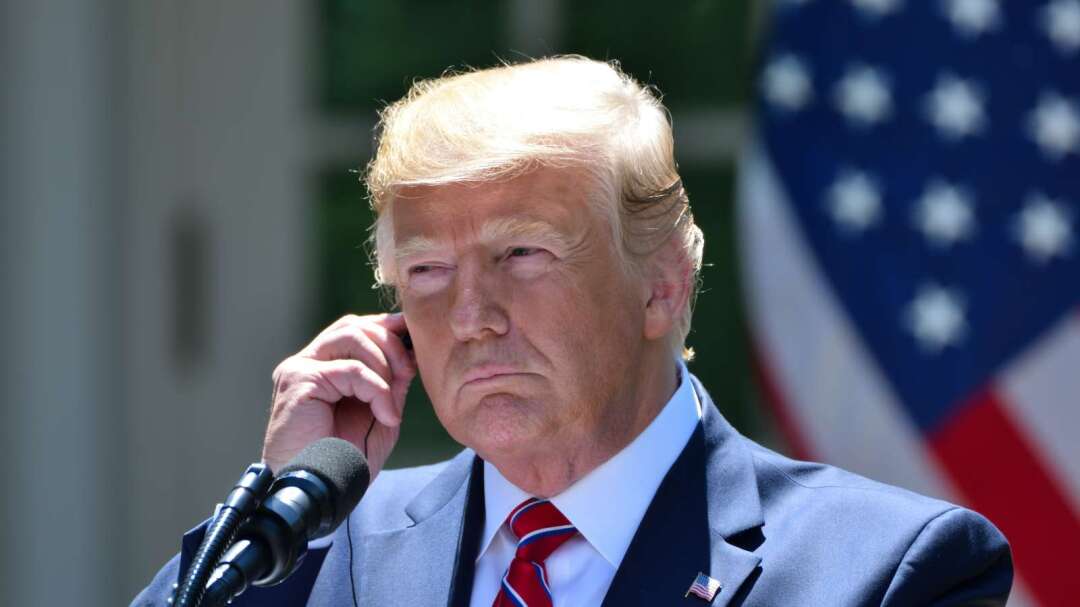
U.S. President Trump said in a Monday interview with Axios that the United States has paused attacks on Iran to give diplomacy another chance, but emphasized that time is running out for Iran. If negotiations fail, the U.S. will resume and may even expand military operations.
Trump stated that the U.S. is engaged in deep negotiations with Iran, and if no results are achieved, the U.S. will resume 'very powerful military action.' When asked how much time he would give diplomacy, he replied, 'Not long. Either we get rapid progress, or we get nothing at all.'
Currently, negotiations are primarily being conducted between Iran and Oman, focusing on reaching a new agreement to reopen the Strait of Hormuz and restart comprehensive nuclear talks. Qatar, Pakistan, Egypt, and Trump envoys Steve Witkoff and Jared Kushner are also actively involved.
Trump revealed that he decided on Friday to pause the attacks after countries involved in mediation and other regional nations urged the U.S. to give diplomacy one more opportunity. He said everyone dealing with Iran asked him 'not to fire,' and added that he believes Iran wants to reach an agreement.
On why he agreed to the mediators' request, Trump described the decision as 'gaining nothing, losing nothing,' and pointed out that after the pause, oil prices dropped and stock markets rose.
On Friday, Trump ordered the U.S. military to halt attacks on Iranian targets along Iran’s southern coast and in the Strait of Hormuz — the first time in two weeks that such attacks had ceased.
The decision came after Trump met with senior advisors and military officials, during which officials presented a new attack plan for that day. Sources indicated that Trump had been leaning toward resuming large-scale operations just days before the meeting, but his stance began shifting on Thursday evening and he finalized the decision to delay bombing operations in the strait area on Friday.
Regional sources say talks between Oman and Iran have made progress but have not yet reached an agreement. Oman’s Foreign Minister Badr al-Busaidi held separate phone calls on Monday with foreign ministers from Iran, Qatar, Saudi Arabia, Kuwait, and Egypt.
In a statement, al-Busaidi said the discussions focused on increasing the likelihood of achieving a practical, fair, and sustainable arrangement to ensure safe passage of vessels through the Strait of Hormuz.
One regional source mentioned that one proposal under consideration is allowing Iran, Oman, and other regional countries to charge a 'reasonable service fee' for maritime safety, environmental protection, and other services.
The source noted that the model of the Strait of Malacca could be referenced. Malaysia, Indonesia, and Singapore currently charge ships for specific services rather than imposing a blanket transit fee.
Another possible approach is to pool related fees into a common fund managed with the involvement of the International Maritime Organization (IMO).
Trump is scheduled to meet Israeli Prime Minister Benjamin Netanyahu at the White House on Tuesday. He said he will discuss Iran’s nuclear issue with Netanyahu and claimed that if he were not U.S. president, Iran would already possess nuclear weapons and Israel would have been destroyed.
FACT BOX
- Source: PR Times
- Category: News